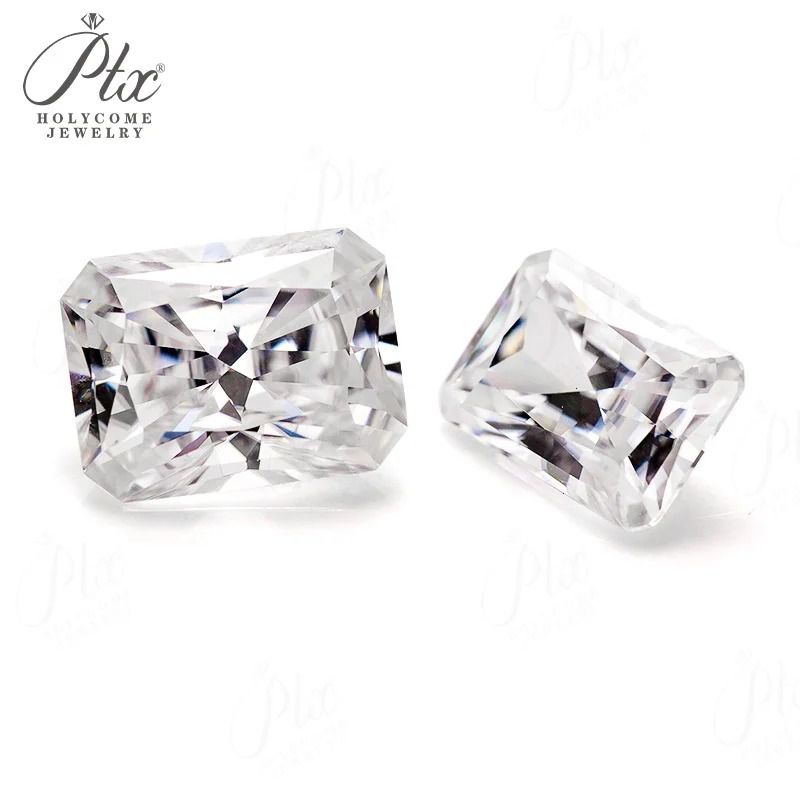
Loose Stones
Heat-Treated vs Standard Loose Moissanite: What Buyers Should Know
Anyone buying loose moissanite at volume has seen the price tiers: near-colorless stones at one price, D-color stones at another. A large part of that gap comes down to how the rough was processed. Heat treatment is a standard step in modern moissanite production, but its prevalence and its results are not always explained on a product page. Understanding it helps you buy the right stone for the right customer rather than overpaying for a grade the stone did not start with.
What heat treatment does to moissanite
As moissanite crystals grow, they trap trace elements and internal stress that can give the finished stone a faint green, grey, or yellow body color, and in some cases hazy inclusions. Controlled heating in a laboratory environment can drive off or rearrange those trace elements, pulling the body color toward the colorless end of the scale and reducing noticeable haze. The result is a stone that grades closer to D or E than its untreated starting point.
Unlike some diamond treatments, moissanite heat treatment is considered permanent and stable under normal wear. It does not wash out over time or reverse with cleaning. It is, in effect, part of the manufacturing process for the higher color grades most buyers expect today.
How this changes pricing and grading
A stone that starts near-colorless and only needs light processing costs less to bring to market than one that required aggressive treatment to reach the same grade. Suppliers price the end grade, but the processing cost is baked in. This is why two stones both listed as D-color can have different price points: they may have begun as very different rough.
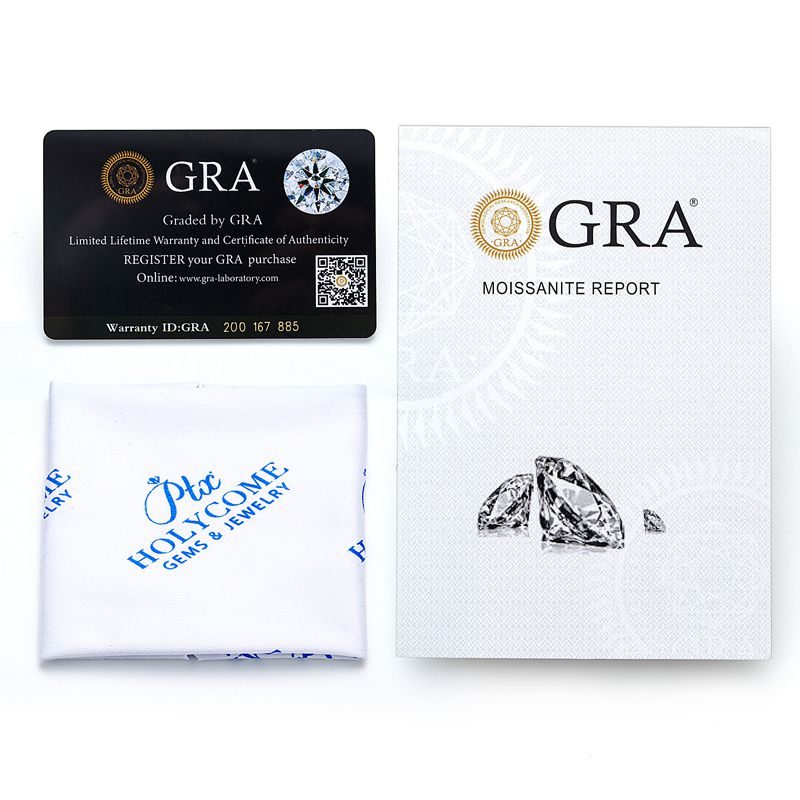
The practical takeaway is that the certificate matters. A GRA or equivalent lab report documents the finished color and clarity grade as tested. It does not, in most cases, list the treatment history, but it confirms what the stone looks like today. Buyers should not assume a treated stone is lower quality; in modern production, almost all colorless moissanite has seen some thermal processing.
What to ask a supplier
When you are building a loose-stone inventory for custom orders, three questions are worth asking every shipment. First, what is the actual body color under daylight-equivalent lighting, not just under studio LEDs? Second, how consistent is the color across a parcel; one pale stone in a parcel of D-color stock is a quality-control failure you want to know about before setting. Third, what is the clarity distribution; heavily treated stones can look clean under magnification but show slight internal texture at the pavilion.
If you are buying for custom design orders, keep a small range of colors on hand. Not every bride wants a stark colorless stone; a faint near-colorless moissanite in a yellow gold setting can look warm and natural. Having both grades lets you match the stone to the setting rather than forcing a colorless stone into a warm gold mounting where it can look icy.
Setting and long-term wear
Heat-treated moissanite sets and wears identically to any other moissanite. It can be cut, faceted, prong-set, bezel-set, and resized the same way. The treatment does not make the stone softer or more brittle; moissanite's hardness around 9.25 on the Mohs scale is unchanged by the process. This is one reason the treatment is accepted without disclosure pressure in the trade: it does not alter the stone's durability, only its appearance.
What does change over time is how the stone looks next to aging metal. A colorless moissanite in a white gold ring will eventually show the warmth of the rhodium wearing thin. The stone itself is not changing; the mounting is. This is worth explaining to customers, because otherwise they may blame the stone for a metal's natural lifecycle.
Bottom line for buyers
Treat heat-treated moissanite as the default, not the exception. The question is not whether a stone was treated; it is whether the finished grade matches the certificate, whether the parcel is consistent, and whether the price reflects what the stone actually is. Buy a few loose stones from a new supplier in person or under a magnifier before committing to a parcel. The certificate tells you the grade; your eyes tell you whether the grade matches the sparkle. That gap between paper and reality is where buying decisions get made.
For end customers who ask directly, honesty is the best policy. A simple line explaining that colorless moissanite is routinely refined through heat in production, just as much fine jewelry is, removes suspicion without overcomplicating the sale. Most buyers care far more that the stone is ethically grown, durable, and priced fairly than they care about the exact thermal history. What they do care about is consistency: receiving a stone that looks like the sample they approved. That expectation is met by buying from a supplier who lets you inspect a parcel before it is set, and by keeping records of which lots performed well. Over time, your eye learns which suppliers hold their color and which drift, and that knowledge becomes far more valuable than any single certificate.
The Gemological Institute of America’s gem encyclopedia is an authoritative, widely cited reference on moissanite and diamond quality factors.
Frequently Asked Questions
Is moissanite a good diamond alternative for retail buyers?
Yes for price-sensitive customers who want brilliance and hardness. Moissanite ranks 9.25 on the Mohs scale, holds up to daily wear and costs a fraction of a natural diamond of the same size, so it resells fast in bridal and fashion lines.
What is the minimum order for wholesale moissanite?
MOQ starts at 50 pieces per design for stock items. Custom cuts and private-label settings usually start at 100–300 pieces depending on the mold.
Do you provide certificates with moissanite stones?
Yes. Every parcel ships with GRA or IGI documentation listing carat weight, color grade and cut. We recommend passing the certificate to your end customer for trust.
How long does sample and bulk production take?
Samples ship in 3–5 days. Bulk runs take 15–20 days under 500 pieces, and 25–30 days for custom work.
Send your spec sheet — stone, cut, size, plating and quantity — and we will return a costed timeline.
Ask the workshop