Loose Stones
Buying Certified Loose Moissanite: IGI, NGTC and What the Card Means
A buyer in Dallas told us she used to buy loose moissanite by the ounce from a supplier who shipped unmarked stones in plastic bags. Then a customer asked what the grading was, and she had no card to show. She switched to certified loose moissanite with an IGI or NGTC card, and her custom ring orders went up because brides trusted the paper. If you sell loose stones to bridal boutiques or to custom jewelers, the card is the difference between a commodity and a product. Here is what the card actually tells you and what to spec on every order.
What a grading card covers
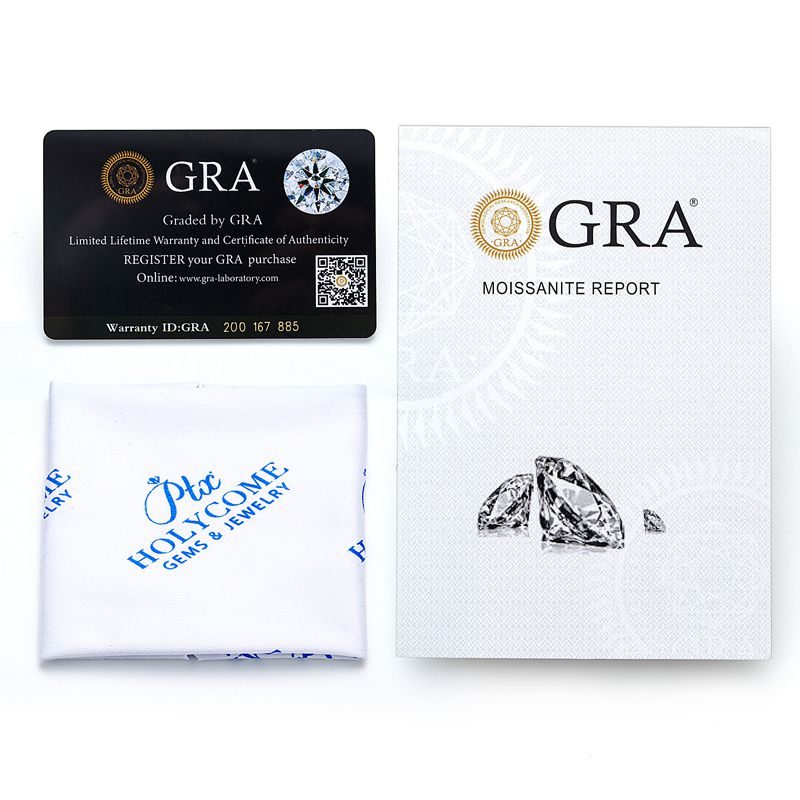
A loose moissanite grading card lists the shape (round, oval, cushion, emerald, radiant, pear, marquise, heart), the measurements in millimeters, the carat equivalent weight, the color grade (near-colorless EF, or faint GH), the clarity grade (VVS, VS, SI), and the cut grade. For moissanite, the card also notes the stone is lab-grown silicon carbide, which is required disclosure under FTC Jewelry Guides and 16 CFR Part 23 so the buyer does not mistake it for diamond. The card from IGI laboratory grading is recognized internationally; the NGTC card is the Chinese national gem testing center report, widely accepted in Asia and increasingly in the US. We ship every loose stone with one of the two, and on request we add a laser inscription on the girdle matching the card number, so the stone can be re-identified later. For background on how grading works, shoppers can read moissanite reference and GIA 4Cs education on the 4Cs framework that the card mirrors.
What to spec on the order sheet
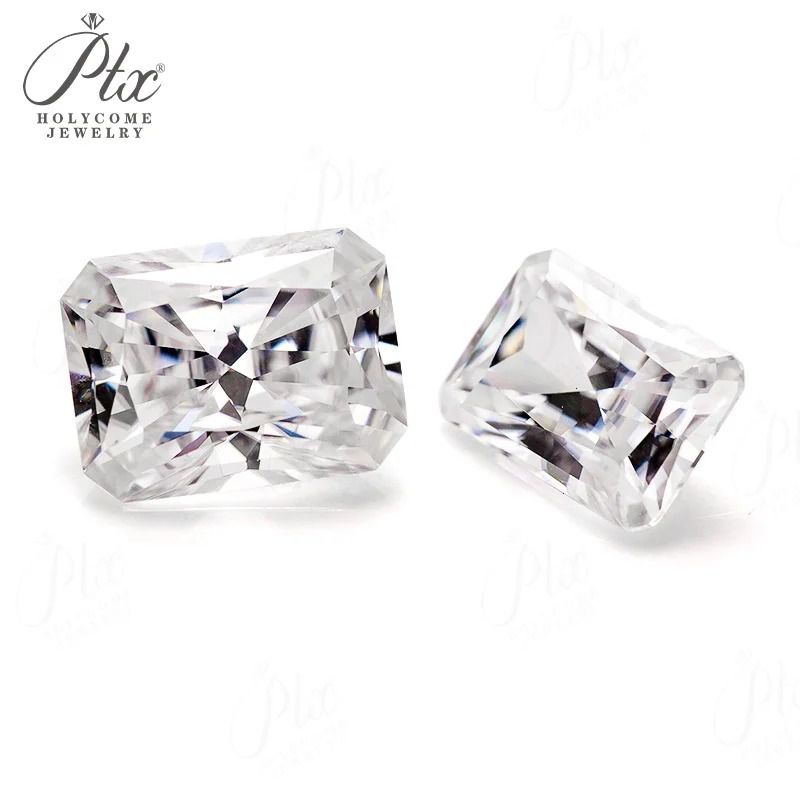
When you order loose moissanite, write the shape, the size in millimeters, the color grade and the clarity grade. The bridal default is near-colorless EF and eye-clean VVS. If you do not write eye-clean, you may receive a stone with visible inclusions that you cannot set into a solitaire. Also write the cut ratio if it is an elongated shape: for an oval, 1.4 to 1.5:1; for a pear, 1.5 to 1.6:1. The factory will cut to the ratio you specify. If you order by carat equivalent only, you will get whatever stone the bench happens to have, which is how boutiques end up with inconsistent stock. Our note on ordering by shape shows how to build a shape-based order, and our custom engagement ring guide explains what to do with the stone once it arrives.
Why certified beats unmarked
Unmarked loose moissanite is cheaper per carat, but it carries three costs. First, you cannot prove what the stone is, so a bride cannot insure it or resell it later. Second, the color and clarity are unverified, so half the stones may be lower grade than you expected. Third, you have no replacement guarantee if a stone arrives chipped, because there is no serial number to tie it to the shipment. Certified stones cost a few dollars more per carat at wholesale, but they come with a card, a laser number and a replacement process. For a bridal boutique reselling the stone in a custom setting, the card is the document that justifies the price. Our choosing a loose moissanite vendor page explains how to compare suppliers beyond the stone itself.
Packaging and shipping
Certified loose stones ship in a sealed tamper-evident box with the card inside, and the girdle laser number matches the card. We pack stones individually in foam-lined slots so they do not knock against each other in transit. For orders over 10 stones, we include a sorting sheet listing each stone by number, shape and size, so you can check the shipment against the card stack. All our gold settings and bands ship stamped to ISO 9202 gold fineness per karat fineness standard, and for EU buyers we include a nickel release statement aligned to ECHA REACH registry. If you are building a custom ring program, our loose vs pre-set rings page explains when to buy loose stones and when to buy pre-set rings.
Is an IGI card enough for a US bridal boutique?
Yes. IGI is recognized internationally and acceptable for resale and insurance documentation.
What color grade should I order for bridal?
Near-colorless EF. GH grade reads slightly warm, which some brides prefer, but EF is the neutral default.
Do I need to ask for eye-clean?
Yes. Write it on the order sheet. VVS does not always mean eye-clean in larger stones.
What is a laser inscription?
The card number etched on the girdle. It lets a bench or appraiser confirm the stone matches the card without removing it from the setting.
Can I return a certified stone if it is chipped?
Yes, if it arrives with the card and the laser number matches. Unmarked stones have no such process.
Order a certified loose moissanite sample lot with 10 near-colorless EF eye-clean VVS stones in round 6.5mm, oval 8x6mm and cushion 6x6mm, each with an IGI or NGTC card and a laser girdle number. MOQ 10 stones, sealed packaging, ready for custom ring programs.
Frequently Asked Questions
Is moissanite a good diamond alternative for retail buyers?
Yes for price-sensitive customers who want brilliance and hardness. Moissanite ranks 9.25 on the Mohs scale, holds up to daily wear and costs a fraction of a natural diamond of the same size, so it resells fast in bridal and fashion lines.
What is the minimum order for wholesale moissanite?
MOQ starts at 50 pieces per design for stock items. Custom cuts and private-label settings usually start at 100–300 pieces depending on the mold.
Do you provide certificates with moissanite stones?
Yes. Every parcel ships with GRA or IGI documentation listing carat weight, color grade and cut. We recommend passing the certificate to your end customer for trust.
How long does sample and bulk production take?
Samples ship in 3–5 days. Bulk runs take 15–20 days under 500 pieces, and 25–30 days for custom work.
Send your spec sheet — stone, cut, size, plating and quantity — and we will return a costed timeline.
Ask the workshop