Loose moissanite is the product that turns a retailer into a custom-jewellery business. Instead of only selling finished rings, you can design pieces to order: a customer brings a sketch, you source the stone, you set it. The margin on custom work is higher than on finished stock, and the customers it attracts are loyal and high-spending. But buying loose stones is a different discipline from buying finished rings — shapes, millimetre sizes and certificates all matter more.
This guide covers how to buy loose moissanite wholesale. See our loose stones range.
Why sell loose stones at all
Loose stones open three revenue streams: custom engagement rings, replacement stones for existing rings, and repair work. A customer who comes in with a loose setting needs a stone; a customer who wants a one-of-a-kind design needs a loose stone to build around. Stocking a small range of loose stones means you never turn away a custom order. Our loose stones are GRA certified and ready to set.
Shapes to stock first
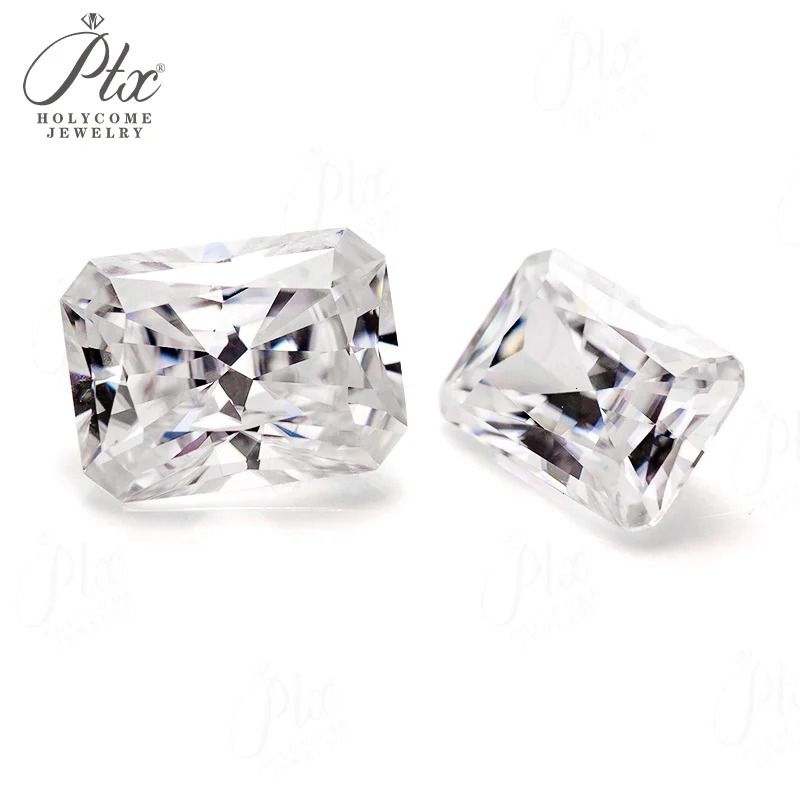
Start with round and radiant. Round is the default for solitaires; radiant is the rising shape for custom work. Add oval and cushion once the business is established. Avoid exotic shapes (heart, marquise, trilliant) on a first purchase — they are ordered to spec, not stocked. The 5x5mm radiant and the 6x6mm radiant are the starting sizes.
Millimetre sizes, not carats
Loose moissanite is sold by the millimetre, not the carat. A 6.5mm round is roughly a 1-carat equivalent. Stock the middle sizes: 5x5, 6x6 and 7x7mm radiant, and 6.5 to 8mm round. These cover most custom orders. Keep the larger sizes (8x8 and up) as special orders rather than stock, because they tie up cash. Our size range lists the exact mm to carat equivalents.
Colour and clarity grades
Stock D colour, VVS clarity stones. These are the top grades, and they are what customers expect for a custom engagement ring. Stepping down in colour shows a warm tint under certain lights, which disappoints a customer who is paying for a colourless look. The GRA certificate confirms the grade on every stone. Our certificates are included with every loose stone.
The GRA certificate is essential
A loose stone without a certificate is just a pretty rock. The GRA certificate is what lets you sell it as a certified moissanite, at a custom-jewellery price. Every stone you stock should ship with a matching certificate. When you set it into a custom ring, you hand the certificate to the customer — that is what justifies the price. Our factory page explains how each stone is graded.
Pricing and margin on custom work
Loose stones are cheap relative to the custom ring price. Buy a stone at wholesale, add a setting, and the finished custom piece retails at a strong margin. The margin on custom work is typically higher than on finished stock, because the customer is paying for design and service as well as the stone. This is why loose stones are such a good category for a growing retailer.
Common mistakes
- Buying too many exotic shapes that never get set.
- Stocking edge sizes that sit unsold.
- Forgetting the certificate, which kills the custom price.
- Buying lower colour grades to save money, then disappointing customers.
The bottom line
Start with round and radiant loose stones in middle millimetre sizes, D colour and VVS, every one GRA certified. That small range lets you take on custom orders without tying up cash. When you are ready to stock, request a wholesale quote for the shapes and sizes you want.
Why a small loose-stone stock beats a big one
The mistake retailers make with loose stones is buying too many shapes and sizes and tying up cash. A focused stock — round and radiant, three middle sizes, D VVS — covers most custom orders without a big investment. Anything outside that range you order to spec when the customer asks. This keeps your working capital free and means you are never holding an exotic stone that never gets set. The loose stones range is priced so a focused first stock is affordable, and our wholesale terms make reordering fast.
Frequently asked questions
What shapes should I stock? Round and radiant first; add oval and cushion once the custom business grows.
What sizes? 5x5, 6x6 and 7x7mm radiant, and 6.5 to 8mm round — the middle of the demand.
What grade? D colour, VVS, with a GRA certificate on every stone.
What to actually stock, and what to order to spec
The mistake with loose stones is buying too many shapes and sizes and tying up working capital. A focused stock covers most custom orders: round and radiant in three middle sizes (5x5, 6x6, 7x7mm radiant; 6.5 to 8mm round), all D colour and VVS clarity, each with a GRA certificate. Anything outside that range — an emerald cut, a 3mm, a fancy intense colour — you order to spec when the customer commits. This keeps your cash free and means you never sit on an exotic stone that no one sets.
Buying loose stones wholesale is different from buying finished rings. You are buying potential: each stone is a custom engagement ring, a pendant, or a pair of studs waiting to be designed. That means you need a supplier who can ship quickly and certify every stone. Our loose stones range lists exact millimetre sizes and grades, and the wholesale terms cover MOQ and shipping. Start focused, reorder the sizes that move, and expand shapes as your custom business grows.
How to read a GRA certificate
Every loose moissanite stone you sell should come with a GRA certificate, and you should know how to read it. The certificate lists the stone's shape, its measurements in millimetres, its colour grade, its clarity grade, and the carat equivalent. A matching laser inscription on the stone edge ties the physical stone to the paper. When a customer asks "is it real?", opening the certificate and walking her through each line does more than any sales pitch. It turns doubt into confidence.
Hand-picked stones differ from bulk parcels. A bulk parcel gives you volume but variable cut quality; hand-picked stones are inspected individually for better symmetry and fire, which is what makes a custom engagement ring look truly premium. For a small retailer, hand-pick the stones you display and keep in stock, and order bulk only for a confirmed custom order. This keeps your reputation high and your working capital low. The loose stones range lists exact millimetres and grades, each with its own certificate.