Loose Stones
How to Read a GRA Certificate for Wholesale Moissanite
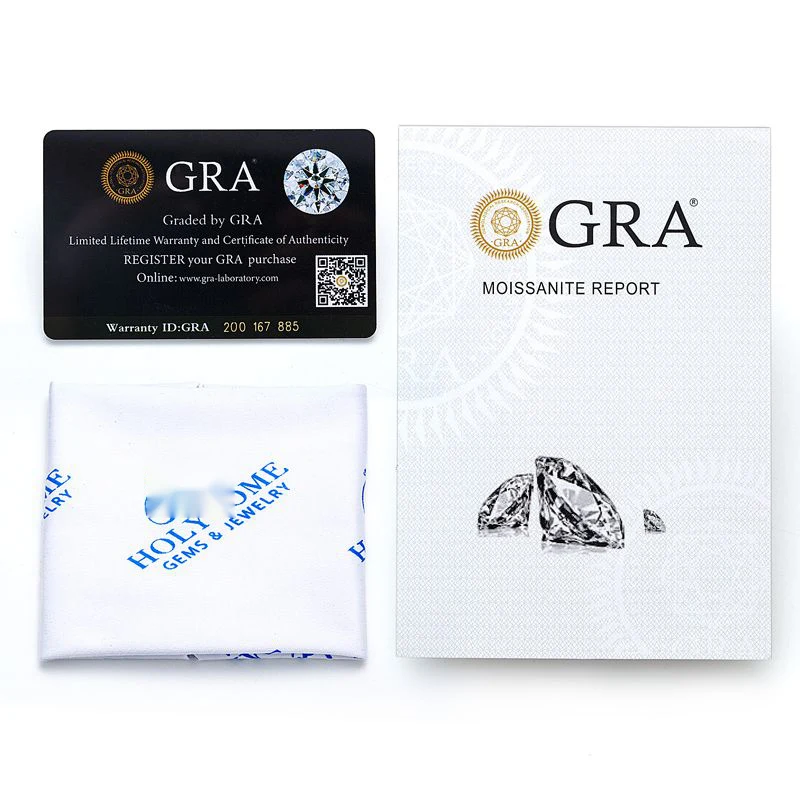
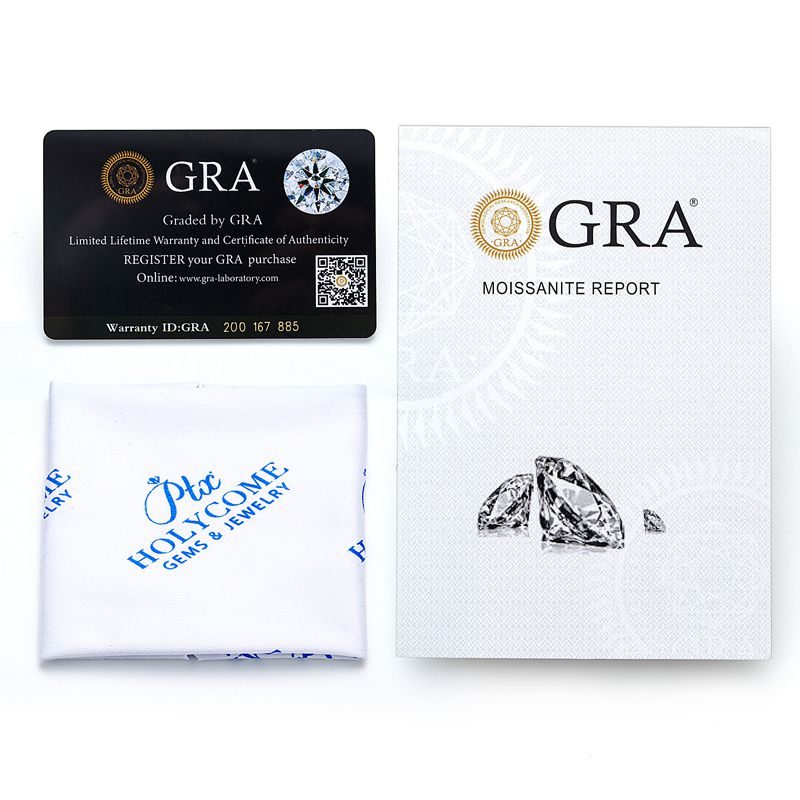
When a box of loose moissanite arrives at your bench, the stone itself is only half of what you are buying. The other half is the card that comes with it. A GRA certificate (per GIA's diamond grading standards) does three jobs: it documents the stone's grade, it gives the customer something to hold at the counter, and it lets you trace a stone back to its production run if a batch ever turns out inconsistent. Most new buyers glance at the card, see the letters and numbers, and put it aside. Read it properly and you catch mistakes before they reach a customer's finger.
The fields that matter
A standard GRA report for a round brilliant lists the following. Each field has a practical meaning when you are reselling the stone, rather than a theoretical one.
| Field on card | What it says | Why your retail staff cares |
|---|---|---|
| Shape and cut | Round brilliant, cushion, oval, and so on | Confirms the stone matches the setting head you ordered |
| Color grade | D, E, F on the card | Lets the salesperson quote a consistent grade to the customer |
| Clarity grade | VVS1, VVS2, VS | The word customers remember and ask about |
| Measurements | Actual mm diameter, e.g. 6.48 - 6.52 | Tells you whether the stone fits a standard head |
| Carat equivalent | Visual diamond equivalent, not metric weight | Sets the honest customer expectation at the counter |
Measurements are the field to cross-check
The single most useful line on the card is the measured diameter. Moissanite production tolerances run roughly plus or minus 0.05mm on a 6.5mm round, but batches occasionally run a touch larger or smaller. If your card says 6.50mm and your caliper says 6.65mm, the stone may not seat cleanly in a head sized for a true 6.5. Measure every stone as it arrives. The thirty seconds with the caliper prevents the bench headache of a stone that rocks in the head because the diameter is off.
This also matters when you are matching stones for a pair of earrings or a tennis bracelet. Two stones both labeled 6.5mm can differ by enough that one sits higher in its setting than the other. Pair stones by measured diameter, not by the label, and the finished piece looks intentional rather than assembled.
Color and clarity: what the card does and does not prove
A GRA card says the stone was graded D color and VVS1. It does not, on its own, guarantee that every D stone reads identically face-up. Production lots vary, and two cards that both say D can sit slightly differently under a daylight lamp. Treat the card as a starting point, not the final word. Keep a master comparison stone on your bench and hold every new batch next to it. The card tells you what the factory intended; your eyes tell you what actually arrived.
When the card does not match the stone
Occasionally a card and a stone get swapped at the packing stage. The check is simple: measure the stone, compare the number on the card, and look at the shape. A card that says oval on a stone that is round is an obvious mismatch. A card that says 6.5mm on a stone you measure at 7.0mm is a quieter one. If the card does not match the stone, set the stone aside and contact the supplier. Do not set it in a customer's ring with the wrong card; the moment she has the piece appraised or resized, the mismatch surfaces, and it surfaces on your reputation.
Keeping the card with the stone
File the card with the stone in a labeled bag, and write the measured diameter on the bag as well. When a ring comes back years later for a resizing, you will be able to tell the customer exactly what stone she is wearing. That small record-keeping habit is what separates a shop that feels professional from one that feels like a reseller. You can review the current graded stone stock and the cards that ship with each size inside our wholesale loose stone range.
The bench checklist when a stone arrives
We recommend a fixed checklist every time a box of loose stones opens. It takes about ten minutes for a ten-stone order and catches the problems that otherwise surface weeks later at a customer's finger.
- Open the box under a daylight-balanced lamp, not under warm store LEDs.
- Measure each stone with digital calipers and compare the diameter to the card.
- Set every stone next to a known D-color master and note any that read warmer.
- Match the card number to the stone bag and write the measured size on the bag.
- Photograph any stone that looks off before contacting the supplier.
That checklist is not bureaucracy. It is the difference between a supplier relationship that gets better over time and one where every reorder feels like a gamble. When you photograph a mismatched stone and send it back with a measured caliper reading, the supplier knows you are checking the work, and the next batch arrives tighter. The loose-stone trade runs on that kind of quiet accountability.
Frequently Asked Questions
Is moissanite a good diamond alternative for retail buyers?
Yes for price-sensitive customers who want brilliance and hardness. Moissanite ranks 9.25 on the Mohs scale, holds up to daily wear and costs a fraction of a natural diamond of the same size, so it resells fast in bridal and fashion lines.
What is the minimum order for wholesale moissanite?
MOQ starts at 50 pieces per design for stock items. Custom cuts and private-label settings usually start at 100–300 pieces depending on the mold.
Do you provide certificates with moissanite stones?
Yes. Every parcel ships with GRA or IGI documentation listing carat weight, color grade and cut. We recommend passing the certificate to your end customer for trust.
How long does sample and bulk production take?
Samples ship in 3–5 days. Bulk runs take 15–20 days under 500 pieces, and 25–30 days for custom work.
Send your spec sheet — stone, cut, size, plating and quantity — and we will return a costed timeline.
Ask the workshop