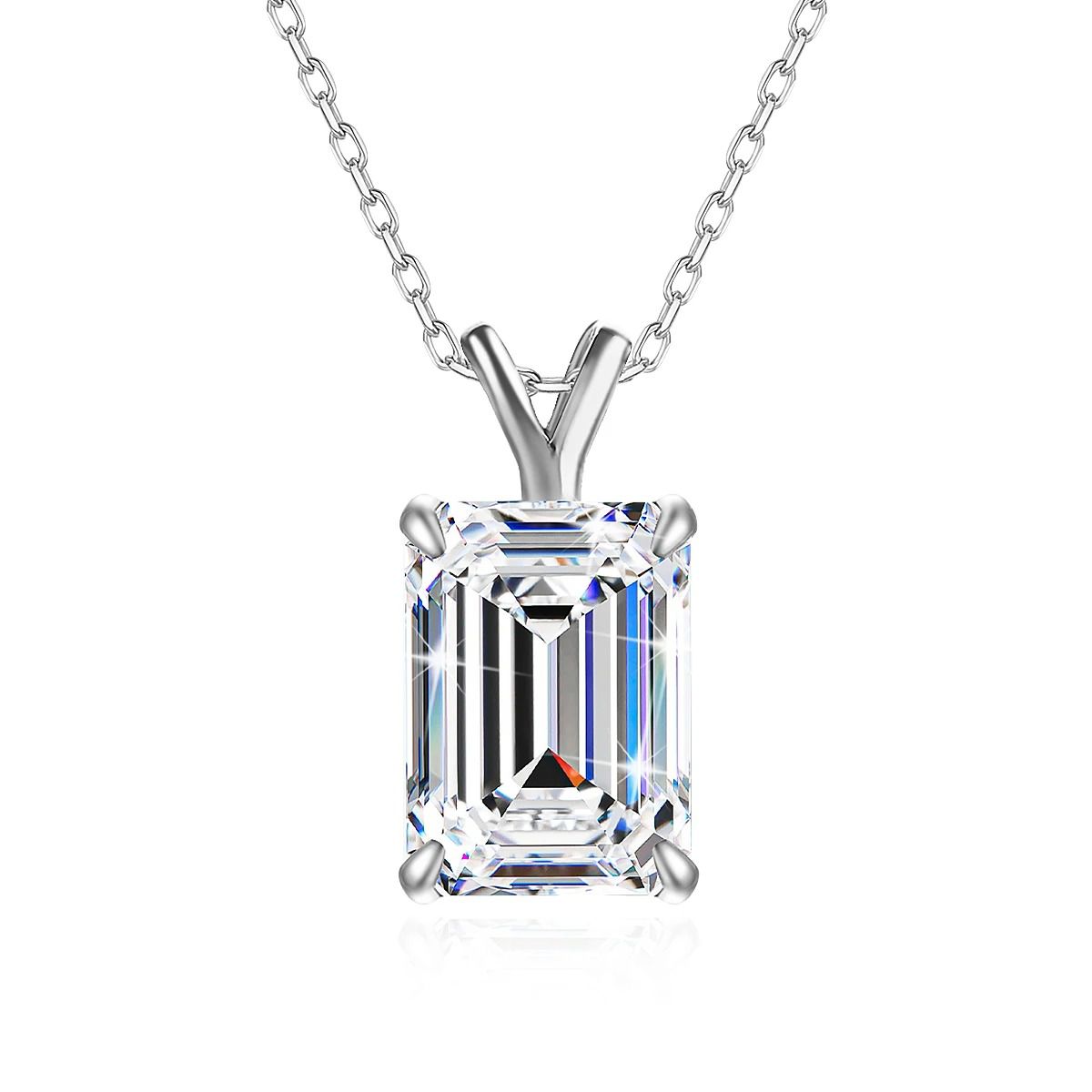
The tennis necklace is the piece that quietly anchors a fine-jewelry display. A continuous line of individually set stones, worn close to the collarbone, it reads as expensive in a way that customers are comfortable paying for. But it is also the category with the highest return rate in the chain section, because when a tennis necklace fails, it fails catastrophically: a clasp pops, a prong loosens, and stones scatter. For independent US jewelers sourcing moissanite tennis necklaces factory-direct from Wuzhou, clasp safety and stone security are the two sourcing decisions that most directly protect your store's reputation.
Why tennis necklaces drive average order value
Tennis necklaces are rarely an impulse buy. They are the piece a customer saves for, the piece she wears to a wedding, a corporate event, or an anniversary dinner. That emotional weight means you can price them at a meaningful tier, and it means the customer is comparing your piece against diamond tennis chains that retail at many times the cost. Moissanite, with its higher fire and similar white appearance to the eye, is the natural bridge: you can offer the continuous-line look at a price point that feels generous without selling it as a diamond substitute.
Well-merchandised tennis necklaces also pull through earring and bracelet sales. Customers who buy a tennis necklace frequently return for a matching tennis bracelet within the same season.
The clasp problem: why chains break and customers return
Box clasps versus lobster clasps
A basic box clasp, where a tongue slides into a rectangular housing and snaps shut, is the cheapest closure on the market and the most common source of tennis-necklace returns. Box clasps work for lightweight chains, but on a continuous line of prong-set stones, the weight of the piece shifts the angle of pull during dressing and undressing, and a simple box clasp will eventually release. A lobster claw clasp, by contrast, is spring-loaded and self-correcting under lateral pull; it is the minimum closure you should accept for any tennis necklace priced above a fashion tier.
Figure-8 safety latches and double locks
The clasp standard for a resellable tennis necklace is a lobster or box clasp plus a figure-8 safety latch that folds over the clasp housing. Better factories fit a double-lock box clasp, which requires two distinct movements to open. For bridal and formal wear, specify the figure-8 safety as non-negotiable. The incremental cost is small, but the reduction in "it just came undone" complaints is substantial.
Chain gauge and stone setting security
Clasps are only half the story. The stones themselves must be set into the chain with properly closed prongs, and the underlying chain must be thick enough to resist twisting. A 2 mm-wide tennis necklace with thin prongs will show loosened stones within months of customer wear. Ask the factory for the prong count per stone and the underlying chain gauge; for moissanite in the 3 to 4 mm range, a reinforced four-prong setting with a trace or cable-style base chain is the combination most likely to survive daily wear.
Sizing: 16, 18, and 20-inch lengths
The 16-inch tennis necklace sits at the base of the throat and reads as formal; the 18-inch length is the everyday bridal and evening standard; the 20-inch length works for larger collarbones and for layering over higher necklines. Most US boutiques stock 18-inch as the core SKU, with 16-inch reserved for bridal and 20-inch as a special-order option. Always confirm the clasp extension: a 1-inch extender on 16- and 18-inch pieces reduces sizing-related returns.
Moissanite versus CZ in tennis chains
Cubic zirconia tennis necklaces have their place in a fashion display, but they yellow and abrade quickly, and customers who bought a CZ piece from a discount retailer will not trust your pricing. Moissanite tennis chains hold their clarity over years of wear because the stone is harder and more thermally stable. When you sell moissanite, describe it as a lab-created gemstone and let the visual fire do the selling; do not position it as a diamond replacement, position it as a premium alternative.
How to position resale pricing and warranty claims
Because clasp and prong failures are the dominant complaint, your warranty language should address them directly. A reasonable in-store promise covers prong tightening and clasp inspection for the life of the piece, which costs you very little in bench time but removes the customer's fear of being stuck with a broken necklace. Price the piece at a tier that leaves margin for that service; do not compete on the lowest tennis-chain price in your region.
In-store QC checklist before you stock
Before a new batch of tennis necklaces goes into the display, run each piece through a short QC pass: tug gently at the clasp from multiple angles, open and close the clasp twenty times to feel for softness, run a finger along the prong lines to catch any open prong, and lay the chain on a flat surface to confirm it drapes without kinking. Document the few pieces that fail and return them to the factory in the next shipment rather than repairing them in-house. A consistent QC pass is what separates a store whose tennis necklaces last from one whose customers quietly stop buying chains.
Care, cleaning, and after-sales education
Customers rarely cause clasp failures deliberately; most happen when the necklace is pulled over a head while dressing, or when perfume and hairspray residue dull the rhodium finish and make the clasp feel loose. Include a short care card with every tennis necklace: remove the piece before showering, applying lotion, or sleeping, and store it flat in its own pouch so the chain does not tangle. Offer a complimentary annual check and prong tighten; the bench time is minutes, but the customer relationship it builds is worth far more. When a clasp does fail, repair it promptly rather than arguing about warranty terms, because one visibly unhappy tennis-necklace customer in a small US market will influence dozens of future buyers.
Marketing the piece without overpromising
When you describe a tennis necklace in your store or online, focus on how it looks and feels rather than on how it compares to diamond. Words like "continuous line," "collarbone length," and "secure figure-8 clasp" give the customer concrete reasons to trust the piece, while claims about being "indistinguishable from diamond" invite the kind of comparison that ends in disappointment. A confident, factual description of the clasp, the prong setting, and the moissanite grade will close more sales with fewer returns.
Conclusion
A moissanite tennis necklace is one of the highest-emotion pieces you can sell, and the one most likely to be remembered if it fails on the customer's skin. Specify a lobster clasp with a figure-8 safety, reinforced prongs on a properly gauged chain, and 18-inch sizing as your default, and back the piece with a clear prong-and-clasp warranty. Done correctly, the tennis necklace becomes the SKU that customers return to buy for every major event in their lives.