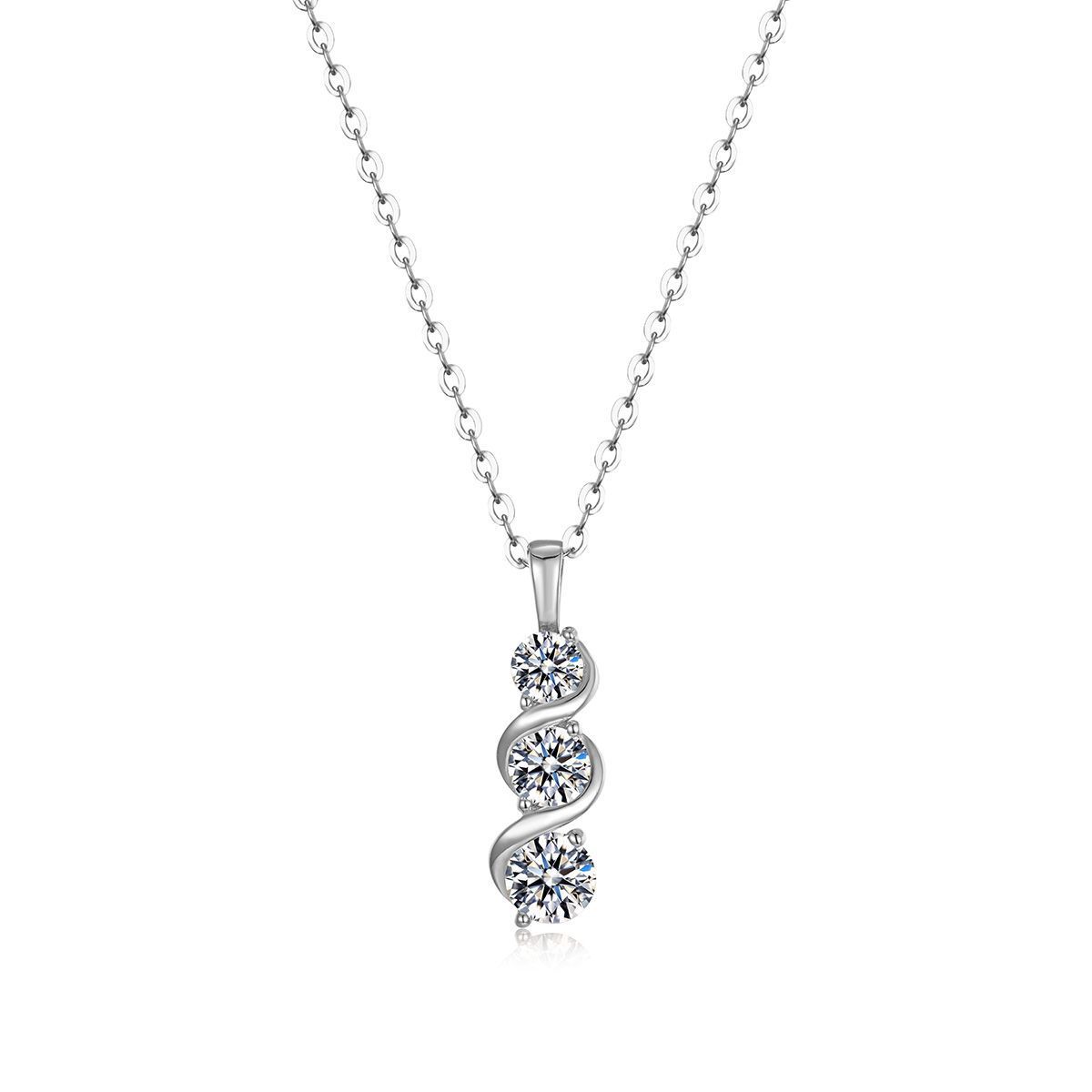
Personalized jewelry is one of the few categories in which small retailers can meaningfully differentiate themselves from mass-market websites. A customer who has ordered a nameplate necklace with her child's name, or a layered set of initial pendants for her bridal party, does not comparison-shop the way she does for a solitaire ring. She returns to the store that got the letters right and delivered on time. For independent US jewelers working with factory-direct suppliers in Wuzhou, an OEM program for personalized name and initial necklaces is one of the most manageable ways to build that loyalty. This guide covers what the category actually requires, how to scope it, and what to ask your supplier.
The personalized jewelry market in the US
US buyers treat personalized necklaces as gifts for Mother's Day, birthdays, bridal parties, and new-baby announcements. The category skews female and younger, but it has expanded into initial pendants for men (single-letter or bar-style pieces) and into memorial nameplates. The price band most independent boutiques find profitable is thirty to ninety US dollars, which places a 925 sterling silver nameplate or initial pendant well within impulse-gift range.
Because the piece is made to order, inventory risk is lower than for pre-finished bridal jewelry: you carry the tooling and chain stock, not a warehouse of finished pendants in every possible name.
What "OEM" actually means for small retailers
Custom nameplate production
A nameplate pendant is a flat, stamped or cast plate engraved with a name, word, or date. Most factories produce these from a digital file: you send the spelling, the font, and the requested plate size, and the factory casts or laser-engraves the piece. For a boutique, the practical workflow is to collect orders weekly, batch the files into one production run, and ship the finished pieces together. A typical lead time is ten to fifteen working days, which is fast enough for pre-event gifting if you set customer expectations correctly.
Initial and letter pendants
Initial pendants are simpler than nameplates because the alphabet is finite. A smart OEM move is to stock all twenty-six letters in a standard script or block font, finished in rhodium-plated 925 silver or gold vermeil, and sell them as ready-wear pendants on a 16- or 18-inch chain. You can then layer letters on the display, photograph them as stacks, and offer a "pick your initial" merchandising format that requires almost no bespoke production.
Birthstone-accented pieces
Adding a small moissanite or CZ birthstone to an initial or bar pendant lifts the price tier and gives the piece a birthday-specific selling angle. For US retail, the month-to-stone mapping should follow the standard US birthstone calendar, and the accent stone should be small enough not to overwhelm the letter. Moissanite is only available in colorless near-colorless, so birthstone accents are typically cubic zirconia in the appropriate hue; be transparent about that labeling rather than implying a colored gemstone.
Materials: 925 silver, gold vermeil, and finishes
Nameplates and initial pendants are produced most reliably in 925 sterling silver. Silver holds fine script detail well, takes rhodium or yellow-gold plating cleanly, and is acceptably hypoallergenic for the large majority of US customers. Gold vermeil (thick gold over sterling) is the standard upgrade for a warmer look. Avoid solid-brass or alloy nameplates for a fine-jewelry-adjacent program; they tarnish quickly and generate nickel-related complaints that undermine the personalization premium.
Lead times, MOQs, and file setup
Before you launch, ask the supplier three operational questions. First, what is the minimum order per production run, and can mixed names in the same batch count toward the MOQ? Second, what file format do they need for custom engraving, and is there a one-time setup or die fee per font? Third, what is the re-order lead time for repeat nameplate shapes? A supplier that batches twenty pieces across multiple names into one run is the right partner for a boutique; one that demands two hundred identical pieces is not.
Sizing and chain selection
Nameplates should be sized to the length of the name: a three-letter name works on a narrow plate, a ten-letter name needs a wider plate and a correspondingly longer chain. Standard chain lengths are 16 and 18 inches; offer a 2-inch extender on longer nameplates so the piece does not sit too high. Initial pendants are typically worn on a 16- to 18-inch cable or trace chain in the same metal finish, which makes layering easy.
Compliance, lead, and nickel considerations for the US market
The US market has specific rules under the Federal Trade Commission Jewelry Guides and state-level restrictions, particularly in California, on lead content in jewelry intended for adult wear. Your supplier should be able to provide lead- and nickel-compliance documentation for the silver alloy and the plating process. Personalized pieces are often given to minors and new mothers, so compliance paperwork is not optional; keep it on file for each production batch.
Marketing personalized pendants in your store
The most effective merchandising for personalized necklaces is a physical display with sample letters and a few finished nameplates, alongside a tablet or QR code that opens your order form. Customers want to see the font, hold the plate, and picture the letters. Train staff to confirm spelling out loud and to take a deposit at the time of order, which reduces no-show pickups and protects your margin on made-to-order pieces.
Pricing, deposits, and margin structure
Because personalized pieces are made to order, they carry less inventory risk but require clearer pricing up front. Price the pendant itself, the chain, and the setup fee as separate line items on your order form, and collect a deposit at the time the order is placed. A common US retail structure is a small setup or design fee for custom nameplates, waived on repeat orders in the same font, plus the unit price of the finished pendant and chain. Build in a margin that reflects the service you provide: spelling verification, lead-time communication, and a final quality check before pickup. Customers who have already paid a deposit are unlikely to comparison-shop, which is why the deposit model protects both your margin and your bench schedule.
Conclusion
An OEM program for personalized name and initial necklaces is one of the most direct ways for an independent US jeweler to build repeat business. By starting with a stocked alphabet in 925 silver, batching custom nameplate orders into weekly production runs, and insisting on lead- and nickel-compliance documentation, you can offer a product that mass-market websites cannot match for service, while keeping inventory risk low. The customers you earn through a nameplate order will be the same customers who come back for solitaire pendants and tennis necklaces later.