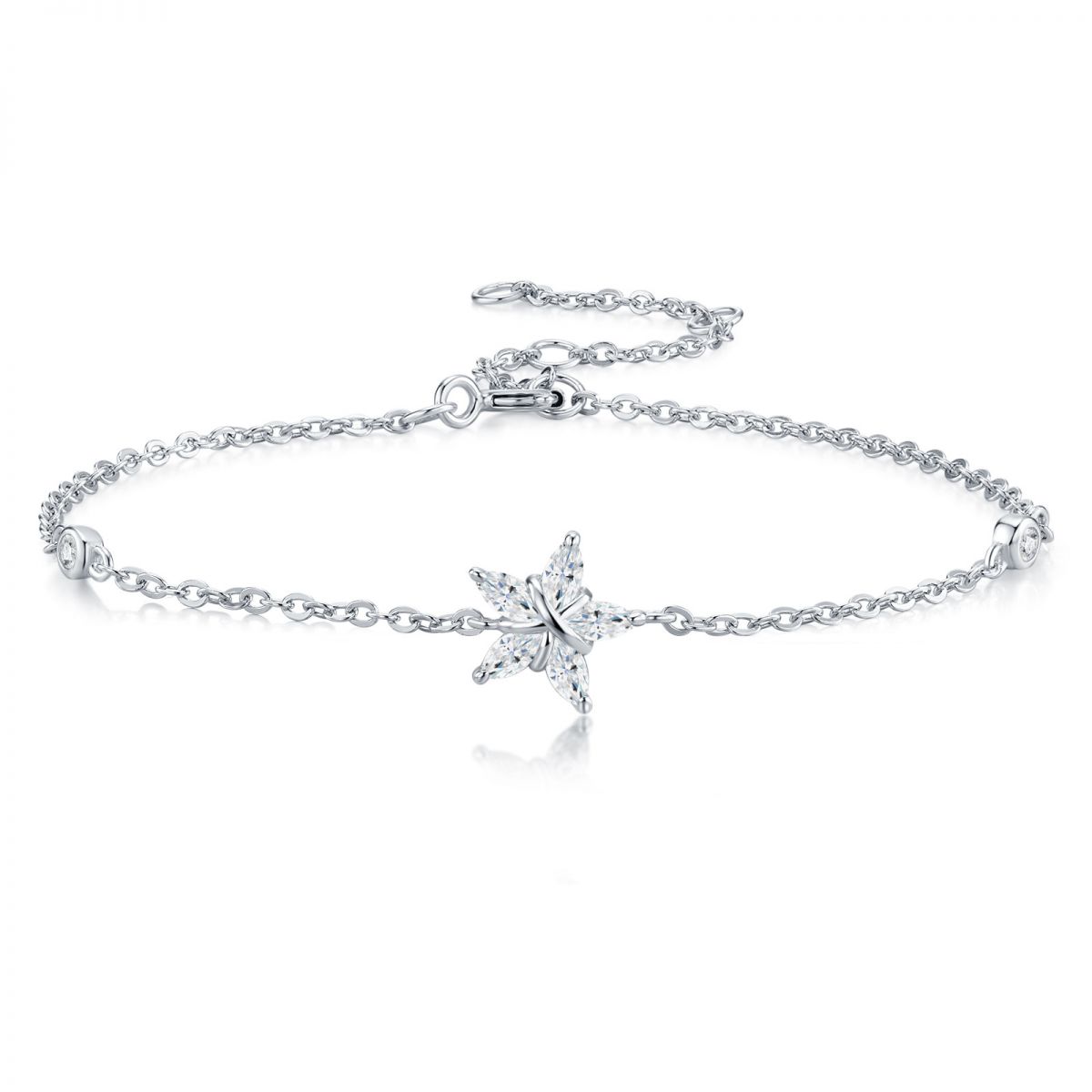
Why clasp failure is the single biggest returns risk
For independent jewelers, a returned tennis bracelet is rarely a small event. It means a disappointed customer, a reputation for craftsmanship that takes a hit, and a restocking operation that quietly eats into your margin. In years of supplying Wuzhou-made moissanite and 925 sterling silver bridal lines to US retailers, the complaint we hear most often is not about the stones. It is about the clasp. A tennis bracelet that slips off the wrist during dinner, a wedding dance, or a holiday party is the piece that ends up in a complaint email instead of a five-star review.
The math is unforgiving. A single clasp failure can erase the profit from two or three healthy sales once you factor in goodwill, remake work, and word of mouth. That is why clasp engineering deserves a place at the center of your wholesale buying decisions rather than being treated as a detail you only notice after something goes wrong.
What a safe clasp actually looks like
Not all clasps are equal. When you source tennis bracelets wholesale, ask your supplier exactly which clasp mechanism sits inside each SKU. The minimum standard for a retail-grade bridal bracelet is a box clasp paired with a figure-eight safety catch. This is not a marketing suggestion; it is the baseline expectation of American bridal customers who expect heirloom-quality construction at accessible price points.
- Box clasp with figure-eight safety: the tongue slides into a rectangular box and a secondary spring-loaded figure-eight wire locks over the outside. Even if the primary latch releases, the secondary catch holds.
- Fold-over safety clasp: common on thinner or more flexible bracelets; reliable, but inspect the hinge thickness on your sample.
- Spring ring or lobster clasp: acceptable for fashion stackers, but inadequate for a premium moissanite piece marketed as bridal.
Request clasp samples in your own hand before committing to a full order. Open and close the clasp two dozen times. It should feel firm, deliberate, and precise, not gummy, not loose, not clicky in a way that suggests worn springs after only a few uses. A clasp that already feels marginal on day one will fail long after the return window has closed.
Drop protection: the safety chain that saves the sale
A clasp can still fail. Every responsible manufacturer builds a secondary safety chain, often called a lifeline or retention chain, into the bracelet. If the clasp opens, the bracelet stays on the wrist instead of striking the floor. This is the difference between a customer who never notices a glitch and a customer scanning the restaurant carpet for her bracelet.
When you vet wholesale suppliers, ask three questions. Is a safety chain included on every tennis SKU? Is it soldered on both ends rather than crimped? And is the chain length calibrated so it never pulls against the clasp during normal wrist movement? A poorly fitted lifeline can actually accelerate wear by tugging at the hinge every time the customer gestures, drives, or carries a bag.
Build a clasp scorecard into your buying process
Smart retailers keep a clasp column in their wholesale scorecard. On a scale of one to five, rate each SKU on clasp feel, secondary catch, presence of a safety chain, and the polish finish right at the clasp junction. Moissanite tennis bracelets that score below a four should be flagged, returned to the supplier, or kept out of your bridal case display.
The bracelet that looks beautiful under showroom lighting but latches like a toy will cost you more in service than it ever earns at the register. Buyers who grade clasps before they price a piece for resale almost never regret the discipline. Buyers who skip the step discover it during a busy Saturday afternoon rush.
Turn clasp safety into a selling story
Clasp safety is not only a risk control; it is a competitive advantage. When a customer tries on a tennis bracelet in your store, walk her through the figure-eight catch and the lifeline chain. Explain that the bracelet is engineered to stay on through dancing, travel, and everyday wear. This small demonstration converts a price comparison into a trust decision.
Trust is what turns a one-time buyer into a repeat client who sends her bridesmaids, her sister, and her coworkers to you. A moissanite tennis bracelet at an accessible price point already competes on value; the clasp story is what lets you compete on confidence.
Service after the sale: what a clasp failure actually costs
When a clasp fails six months after a sale, the true cost is larger than the price of the piece. A customer who loses a bracelet in public does not merely return an item; she loses confidence in the entire category and often in the store she bought it from. That is why a clasp warranty policy is worth drafting before a problem ever arrives. Decide in advance how you will handle a broken clasp on a moissanite tennis bracelet that leaves your counter, and communicate that boundary to your wholesale supplier in writing.
Ask your supplier what replacement terms exist for clasp defects. A manufacturer confident in its hardware will stand behind a reasonable defect window. A supplier who hedges on clasp replacement is quietly telling you where its quality budget ended. That conversation, held before you order, saves a far more uncomfortable conversation held after a customer is upset in your showroom.
Train staff to inspect clasps at the point of sale
Most clasp failures never need to become complaints if staff notice the early warning signs. A bracelet that has already sat in a showcase may have a slightly weakened spring or a catch that does not fully seat. Before handing a purchased piece to a customer, your staff should open and close the clasp once and confirm the figure-eight catch clicks firmly into place. It is a ten-second habit that catches weak pieces before they leave the building.
This same habit applies to your incoming wholesale deliveries. As you unpack a new order, test a random sample of clasps across the batch. Consistent feel across the batch signals consistent manufacturing. One or two weak clasps among dozens is normal variation; a whole batch of marginal clasps is a quality drift you should escalate immediately.
Your wholesale clasp checklist
- Confirm a box clasp plus figure-eight safety on every bridal tennis SKU.
- Require a soldered safety chain, not a crimped one.
- Inspect samples across at least twenty open-close cycles.
- Document a clasp grade per SKU before you set your retail price.
- Reject spring-ring clasps on pieces marketed as fine bridal jewelry.
At GemWSL, every moissanite tennis bracelet we ship to US retailers is built to this clasp standard. If your current supplier cannot show you the safety chain and the figure-eight catch before you place a bulk order, that limitation is the most informative piece of product research you will gather all quarter.