Engagement Rings
Moissanite Solitaire: The Setting That Lets the Most Light In
A buyer in Toronto pulled a 1-carat equivalent moissanite solitaire from our tray and frowned. It looked dull. We swapped it for an identical stone in an open-basket, four-prong head, and it lit up so brightly she asked if we had changed the stone. We had not. The stone was the same grade, same color, same cut. The only difference was the setting. That moment is the whole story of why moissanite solitaire buying is as much about the head as the stone.
Why moissanite needs an open setting more than diamond
Moissanite has a refractive index of about 2.65, higher than diamond's 2.42, which means it bends and returns more light per facet. It also has double refraction, which gives it a characteristic rainbow fire. But light can only perform if it can get in and get out. A closed basket, a thick gallery, or a head that covers the pavilion blocks the very light that makes moissanite special. Where a diamond tolerates a closed setting, a moissanite demands an open one. The optical basics are laid out in the moissanite reference on Wikipedia.
Prong count: four beats six for brilliance
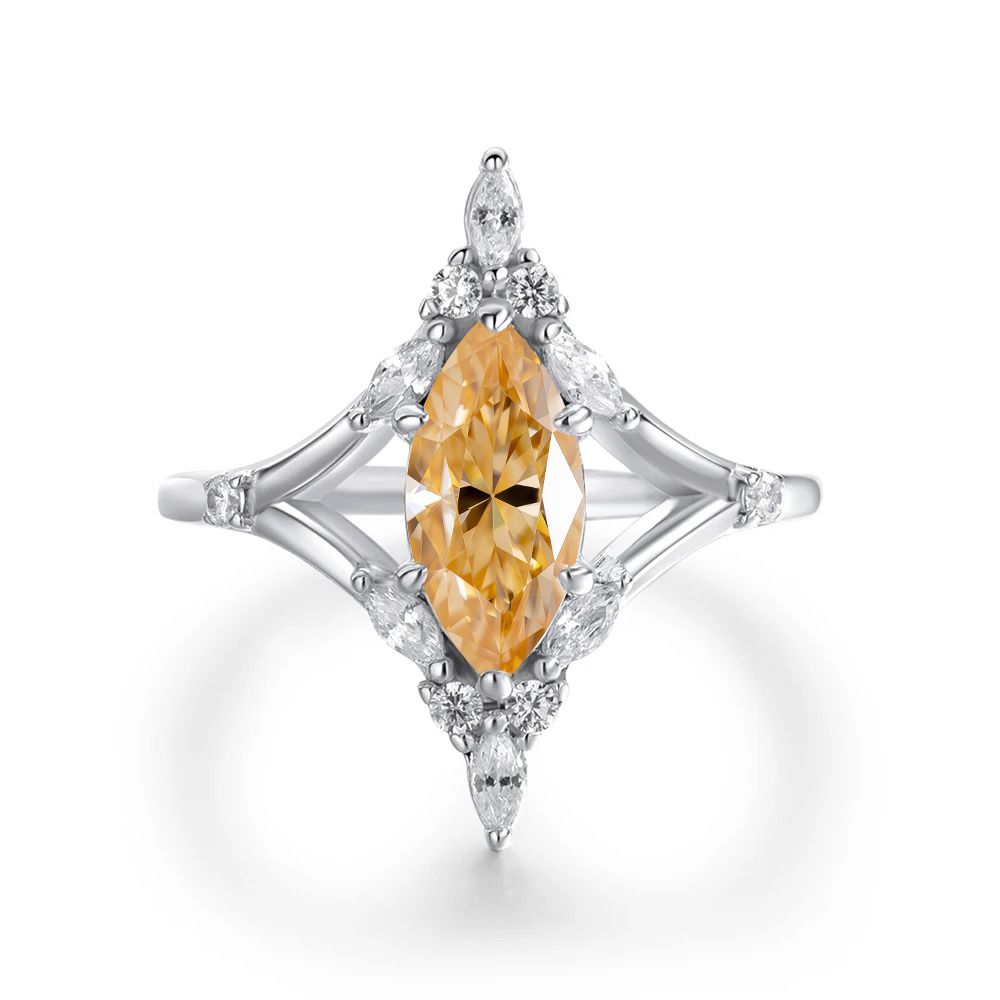
Six prongs look like a classic diamond solitaire, and they hold a round stone very securely. But each prong covers a facet and blocks light. Four prongs expose more of the crown and let more light enter from the sides. For a round moissanite solitaire, a well-made four-prong head is the brilliance choice. For an oval, marquise or pear, prong placement matters more than count: tuck the prongs onto the points and into valleys so they do not cover the broad facets. See marquise prong and point handling.
The basket and gallery: openwork is non-negotiable
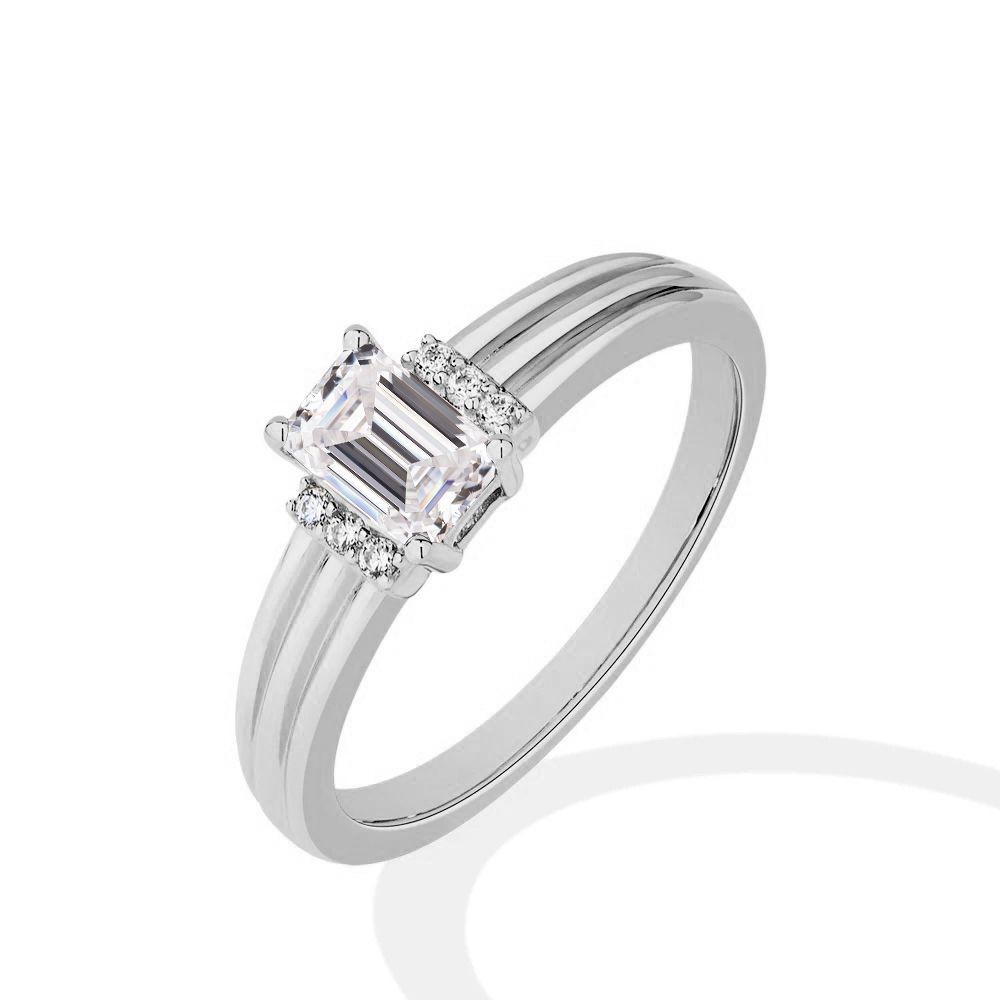
The basket is the metal cage under the stone. A closed (solid) basket reflects dark metal back through the pavilion and mutes the stone. An open (woven or pierced) basket lets light pass up through the stone from below. When you stock a moissanite solitaire, turn the ring over and look through the bottom: you should see the table of the stone clearly. If the bottom looks like a solid disc, reject the head. This single check separates a glowing solitaire from a dull one.
Shoulder design that frames, not blocks
The shoulders are where the head meets the shank. Split (or cathedral) shoulders lift the stone off the finger and create a gap of light under it, which improves brilliance and makes the ring look delicate. A full shoulder that flows straight into the shank sits low and blocks side light. For a light-maximizing solitaire, prefer split shoulders and a slightly raised head. Balance the lift against the security logic in tension vs bezel security comparison.
Metal color and moissanite fire
White metal (white gold or platinum-look) lets a near-colorless moissanite show its true tone. Yellow metal warms the stone and is a deliberate choice for a vintage feel. Because moissanite already runs toward a slight green-gray in poor cuts, a white setting is the safer default for a bright, diamond-like look. Match the metal to the customer's existing pieces using platinum, white gold and silver guidance.
What to tell a customer who wants more sparkle
When a customer asks for the sparkliest ring on the tray, the answer is not a bigger stone; it is an open-basket, four-prong head on a well-cut moissanite. The setting delivers the flash. Train your staff to turn the ring over and show the open bottom, then hold it under the spot light. That demonstration converts more solitaire sales than any spec sheet, because the customer sees the light working in real time. It also sets the right expectation: brilliance is engineered into the head, not just stamped on the stone.
Does a bezel kill moissanite brilliance?
It softens it, not kills it. A thin 0.5mm bezel blocks only a little side light; moissanite's high fire carries through. A thick 1.5mm bezel will visibly mute it. Choose thin bezels if you want coverage plus sparkle.
Four prongs or six prongs for a moissanite solitaire?
Four for brilliance, six for the classic diamond look and extra security on a high-wear stone. Most bridal buyers stock four-prong as the hero SKU and six-prong as the "traditional" option.
Can you upgrade a closed setting to open light flow?
Not without rebuilding the head. That is why we sell open-basket heads as the default for moissanite, rather than converting closed ones after sale.
Does a higher stone setting look bigger?
Yes, a raised head lifts the stone above the finger and adds face-up presence. It also catches more light. The trade-off is slightly more knocks, balanced by split-shoulder design.
Wholesale note: HOLYCOME sets near-colorless moissanite in open-basket, four-prong split-shoulder heads, so the stone's double-refraction fire is fully visible. If your store wants a solitaire that photographs as bright as it wears, request a sample in the open-basket head and compare it side by side against a closed basket. Build the range with cushion cut settings, cross-sell loose moissanite for custom work, and reference independent grading from IGI certification on every packet.
Frequently Asked Questions
Is moissanite a good diamond alternative for retail buyers?
Yes for price-sensitive customers who want brilliance and hardness. Moissanite ranks 9.25 on the Mohs scale, holds up to daily wear and costs a fraction of a natural diamond of the same size, so it resells fast in bridal and fashion lines.
What is the minimum order for wholesale moissanite?
MOQ starts at 50 pieces per design for stock items. Custom cuts and private-label settings usually start at 100–300 pieces depending on the mold.
Do you provide certificates with moissanite stones?
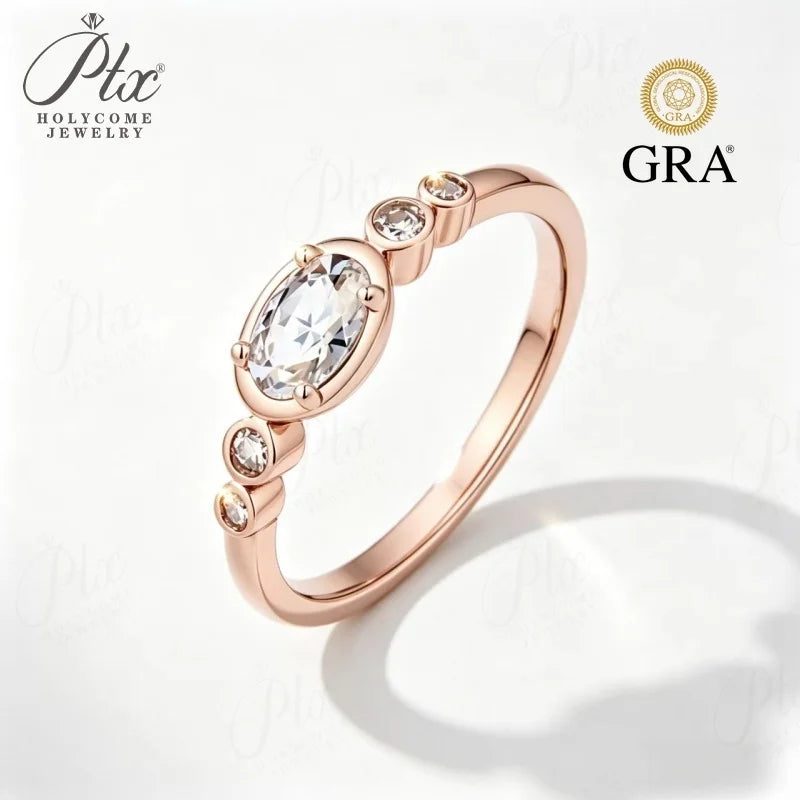
Yes. Every parcel ships with GRA or IGI documentation listing carat weight, color grade and cut. We recommend passing the certificate to your end customer for trust.
How long does sample and bulk production take?
Samples ship in 3–5 days. Bulk runs take 15–20 days under 500 pieces, and 25–30 days for custom work.
Send your spec sheet — stone, cut, size, plating and quantity — and we will return a costed timeline.
Ask the workshop