Engagement Rings
Tension vs Bezel Settings: Security and Look Buyers Compare
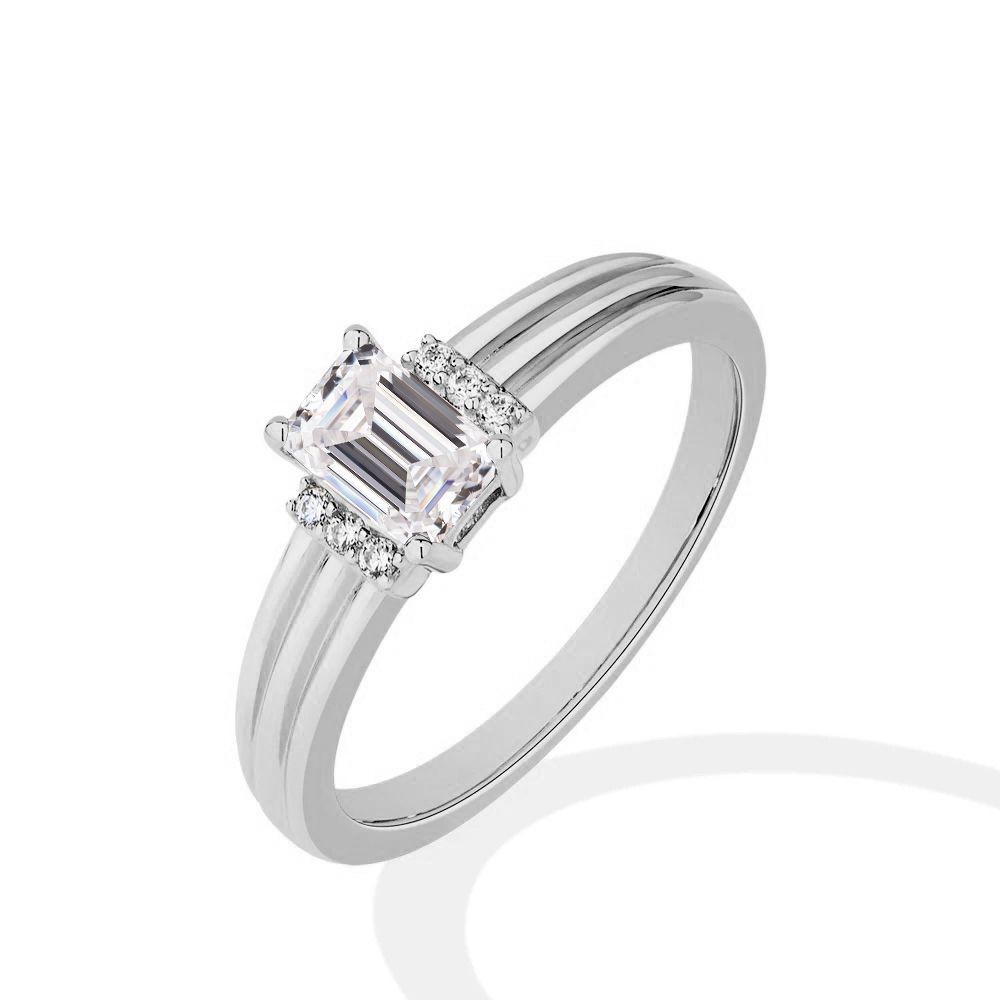
A jewelry buyer in Berlin stopped us at a trade fair last year holding two display rings: a tension-set moissanite and a bezel-set moissanite, same stone size, same platinum-look white metal. She wanted to know which one had the lower return rate after six months on her sales floor. That is the right question, because tension and bezel are both "modern" settings, but they fail in completely different ways. One trades security for light. The other trades light for coverage. This comparison breaks down the trade-offs a wholesale buyer should stock around.
How each setting actually holds the stone
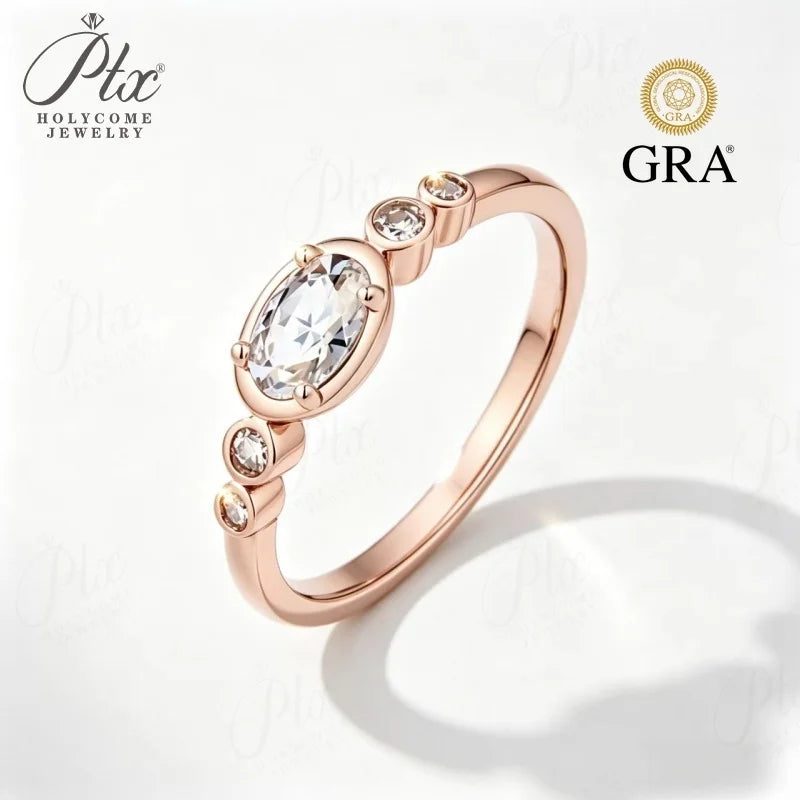
A tension setting grips the stone between two spring-loaded ends of a split shank. The stone's girdle sits in precision-cut notches, held by outward pressure of the metal. There are no prongs over the crown, so the stone appears to float. A bezel setting wraps a continuous wall of metal around the girdle, fully encircling the stone. The stone is captured inside the wall rather than clamped by points.
The structural difference matters. Tension relies on exact metal temper and notch depth; a poorly cut notch and the stone can shift. A bezel is forgiving: even a slightly off stone size is seated by the wall. For an authoritative baseline, the diamond setting references on Wikipedia describe how prong, bezel and tension each distribute force differently.
Security: which setting survives daily wear?
A bezel is the most secure setting outside a full pave channel. The metal wall shields the girdle and pavilion from knocks, and nothing protrudes to catch on fabrics. Brides who garden, type, cook or lift consistently prefer it. We see bezel stones come back for polishing, not for lost stones.
A tension setting is secure only when built to tolerance. It is not the "fragile" gimmick people assume, but it has one failure mode: a hard side-impact can compress the shank and pop the stone out. For an active-lifestyle customer, or one who works with her hands, recommend the bezel. For a low-routine customer who wants the look, tension is fine. Compare the logic with solitaire vs halo security trade-offs.
The look: floating versus shielded
Tension is the more photogenic setting. With prongs absent, light enters the stone from the sides as well as the top, and the floating effect reads as high-design. It suits a bride who wants a sculptural, architectural ring. A bezel reads as protective and timeless; the continuous metal border gives a vintage, almost deco silhouette. It flatters customers who want the stone framed rather than exposed.
Brilliance splits accordingly. Tension lets more side light in and flashes more. A bezel blocks some side light, which can soften a very fiery stone. With moissanite's high refractive index (2.65 versus diamond's 2.42), that side-light loss is barely noticeable, which makes moissanite a natural fit for bezel settings that would mute a less fiery diamond.
Repair, resize and after-sales cost
A tension ring is hard to resize. The shank is pre-tensioned; cutting and re-tensioning it is a specialist job. Stock tension pieces in half-size steps or be ready to offer exchange. A bezel resizes like any solitaire: the wall opens and closes, and the stone reseats. For a brand with limited after-sales capacity, the bezel is the lower-headache SKU. Pair the choice with the right band width from comfort-fit width guidance.
Which customers ask for which look
In our showroom, the tension ring draws customers who want a modern, sculptural statement and already wear minimal metal. The bezel draws customers who lead active lives and want peace of mind. Stocking both lets a sales associate match the setting to the customer's routine rather than pushing one look. Most boutiques sell roughly two bezel pieces for every one tension piece, which suggests keeping bezel as the deeper inventory line and tension as the differentiated fashion SKU.
Are tension settings safe for moissanite?
Yes, when built to tolerance. Moissanite's hardness means the girdle notch stays crisp. The risk is not the stone material; it is the shank temper. Always buy tension settings from a factory that re-tensions after each batch.
Does a bezel make a stone look smaller?
Slightly. The metal border eats into the face-up outline. To offset it, buyers choose a bezel that is 0.5mm narrow rather than a heavy 1.5mm wall, so the stone still reads large.
Which setting has better resale and insurance appeal?
A bezel is easier to insure and resell because stone retention is self-evident. Tension rings raise questions from appraisers who want to verify the holding mechanism. See insuring a moissanite ring for the documentation each setting needs.
Can you put a tension-set stone next to a wedding band?
Tension rings usually sit proud of the finger, so a band sits beside rather than flush. A bezel, being low-profile, pairs cleanly with a straight band. For tight pairing, prefer bezel.
Wholesale note: HOLYCOME produces both tension-style and full-bezel moissanite settings in sterling silver cores plated to 18k white gold, with nickel-safe plating that meets EU REACH nickel-release limits. If your store wants a modern minimalist line that returns low, request a paired sample of both settings and compare them on the size 7 demo hand. Build the range around light-maximizing solitaire settings and cross-sell with cushion cut setting choices.
Frequently Asked Questions
How do I verify a factory before placing a bulk order?
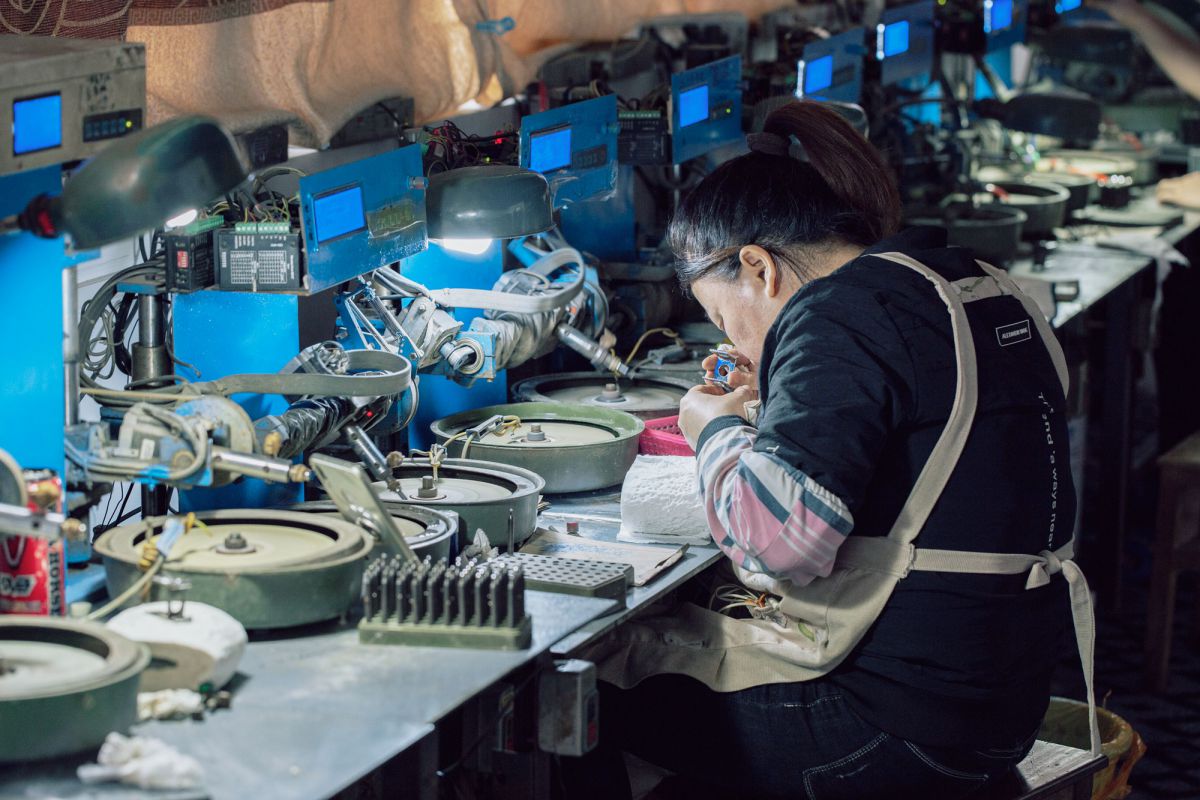
Request a production video, business license, export records and a paid sample run. A factory that accepts a 50-piece test order is usually a real manufacturer.
What payment terms do you offer?
30% T/T deposit with the balance against the bill of lading. This protects both sides on first orders and can move to net terms after a track record.
What is your normal reject rate?
3–5% under 10x loupe inspection for cast and set pieces. Defective units are replaced free in the next shipment.
Where is the factory located?
Wuzhou, Guangxi, China—the core lab-grown and moissanite manufacturing cluster. Shipments go via Guangzhou or Shenzhen ports.
Send your spec sheet — stone, cut, size, plating and quantity — and we will return a costed timeline.
Ask the workshop