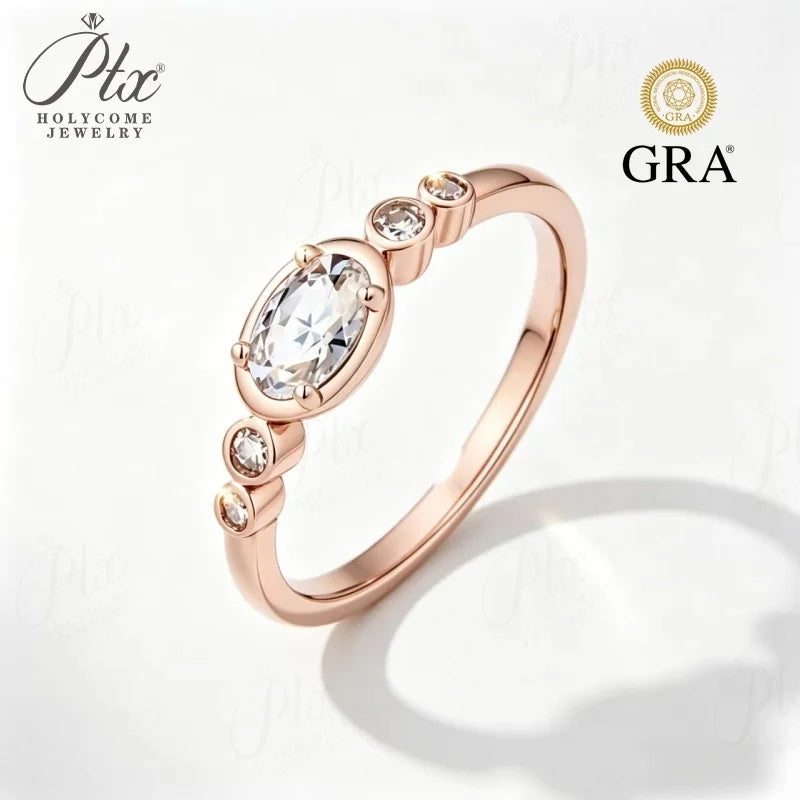
Every retailer who sells moissanite gets the same question: "So is this just a better CZ?" The answer matters, because the customer has seen cubic zirconia rings for $20 online and cannot understand why a moissanite ring costs more. Being able to explain the difference in thirty seconds — without jargon — is the difference between a sale and a walk-out to Amazon.
This guide gives you the plain-language script, the three points that close the sale, and the answer to the follow-up questions you will get. If you are stocking the range, see our wholesale engagement rings.
The one-sentence answer
"A CZ is a cheap glass-like crystal that scratches in a year. Moissanite is a lab-grown gemstone nearly as hard as a diamond, with a certificate, and it lasts for decades." That is the whole distinction. Everything else is detail. Say it calmly, while the customer holds the ring, and most of the price objection dissolves.
The three points that close the sale
- Hardness — CZ scratches within months; moissanite is 9.25 on the Mohs scale and keeps its polish for years.
- Certificate — every moissanite ring you sell comes with a GRA certificate; CZ has no certificate because there is nothing to certify.
- Optical character — moissanite returns real light and fire; CZ looks flat and glittery in office light.
The price objection, handled
The customer says: "I saw a CZ ring online for $30." Your answer: "And it will look like a $30 ring in a year. This is a bridal piece with a certificate, a warranty, and a setting built to last. When she wears it to a wedding next summer, the CZ will be cloudy and this will look the same as today." Compare like with like: a $30 CZ versus a $30 fashion ring is fair; comparing it to a GRA moissanite is not. The 1ct round solitaire is the SKU to demonstrate this on.
What about diamond testers?
Customers sometimes ask whether moissanite "passes" a diamond tester. The honest answer: some basic testers cannot tell moissanite and diamond apart because both conduct heat. That is not the point. The point is that moissanite is a real, certified gemstone, not a fake diamond. Retailers who are open about this build trust; those who pretend it is diamond get exposed. Our loose stones range shows the certificates up close.
Why this matters for your store
Customers who buy moissanite from you leave happy, refer friends, and come back for wedding bands and gifts. Customers who buy a $30 CZ online once and see it cloud leave with a bad impression of "moissanite". Your job is to be the trusted source that explains the difference, and to stand behind the GRA-certified pieces you sell. The margin on a properly explained moissanite sale is far better than the margin on a $30 CZ you would never stock anyway.
Follow-up questions to prepare for
- "Will people be able to tell?" — No, at a normal distance; the certificate proves what it is.
- "Does it cloud over time?" — No, a GRA moissanite does not cloud; it can be cleaned like diamond.
- "Can I resize it?" — Yes, the ring is resized like any gold or silver ring.
- "What if she wants a diamond later?" — Many customers start with moissanite and upgrade; that is a future sale for you.
The bottom line
Moissanite is not an expensive CZ. It is a certified, durable lab-grown gemstone that happens to look like a colourless diamond. Say that clearly, show the certificate, and the price objection handles itself. If you want to stock the pieces that make this explanation easy, browse the engagement rings range or request a wholesale price list.
Building trust on the floor
The retailers who win the moissanite sale are the ones who are openly knowledgeable rather than defensive. Customers can smell a sales pitch, and they respect a seller who explains the stone honestly. When you explain that moissanite is a real, certified gem — not a fake diamond — and show the certificate, the price objection fades because the customer feels informed rather than sold to. This is also why training matters: a confident, honest staff member converts browsers, while a defensive one sends them online. The engagement rings range gives your staff certified pieces to show.
Frequently asked questions
Is moissanite a good buy for the customer? Yes, for anyone who wants a colourless, durable stone at a fraction of a mined diamond's price. It is certified and long-wearing.
Do customers ever regret buying moissanite? Regret usually comes from a cheap, uncertified piece, not from the stone itself. Selling GRA-certified pieces prevents that.
How do I handle "is it real diamond?" questions? Be direct: it is moissanite, a lab-grown gemstone, and here is the certificate. Honesty builds the sale.
How to price moissanite against CZ on your floor
The price gap between moissanite and CZ is real, and it is worth explaining to the customer rather than hiding. A CZ ring looks great on day one but clouds, scratches and loses fire within a year or two of daily wear. A GRA moissanite ring, at 9.25 on the Mohs scale, keeps its looks for decades. When a customer hesitates on the price, show her both stones side by side, and point out the certificate. The honest comparison — "this CZ is $80 and will look dull next year; this moissanite is $250 and will still look like this on your tenth anniversary" — almost always closes the moissanite sale.
For you as a reseller, the margin structure favours moissanite. CZ is a race to the bottom online, and a customer can buy a CZ ring from a marketplace for the price of your margin. Moissanite, sold with a certificate and a personal experience, is something the customer wants to buy from a trusted local jeweller. Stock a small number of CZ fashion pieces for the budget buyer, but build your bridal case around certified moissanite. The engagement rings range gives you the certified pieces to anchor that case.
The diamond tester question, answered honestly
Some customers bring a diamond tester into the shop and hold it to a moissanite ring, expecting it to behave exactly like a diamond. A tester that reads "moissanite" is not a flaw — it is the stone being correctly identified. Explain this to the customer calmly: the tester is doing its job, and the GRA certificate proves the stone is genuine moissanite, not an undisclosed CZ. A confident explanation turns a suspicious moment into proof that you are an honest expert.
The key distinction the customer needs is between moissanite and cubic zirconia. Both are colourless, but moissanite scores 9.25 on the Mohs scale against CZ's 8 to 8.5, and it keeps its polish and fire for decades where CZ clouds and scratches within a year or two. When you show the customer both stones side by side under a jeweller's loupe, the difference in longevity does the selling. The certified pieces in our engagement rings range are what make this honest comparison possible.