Engagement Rings
Is Moissanite Durable Enough for an Everyday Engagement Ring?
When couples compare a center stone for a ring they plan to wear Monday through Sunday, the conversation usually starts with sparkle and price. It should end with durability. A beautiful stone that chips or scuffs within a year stops being beautiful, no matter how brilliant it looked in the jewelry store case. So how does moissanite hold up to the reality of daily wear?
What the Mohs scale actually tells you
Mohs hardness measures a mineral's resistance to being scratched, not its strength against blows. Diamonds sit at 10, corundum (sapphire and ruby) at 9, and moissanite comes in around 9.25. That places moissanite between diamond and sapphire on the scratch-resistance ladder. In practical terms, the only common substances that can scratch moissanite are diamond itself and harder man-made abrasives like silicon carbide grit. Dust, sand, and household dirt rarely reach that threshold, so a moissanite face stays smooth against keys, countertops, and the normal friction of a day.
What Mohs does not promise is chip resistance. Even a hard mineral can fracture if struck at the right angle. A sharp, localized blow against a pronged setting or a hard edge is the more realistic risk for any center stone, moissanite included. Think of hardness as scratch protection and toughness as impact protection; moissanite scores well on the first and respectably on the second.
Toughness: the number buyers rarely ask about
Toughness describes how well a material resists breaking once a crack starts. Moissanite is considered tough enough for jewelry use, and modern lab-grown stones are grown under controlled conditions to minimize inclusions that could spread. Still, certain cuts are more exposed than others. Very thin girdles, large open culets, and pavé-set side stones all carry slightly higher chip risk than a well-proportioned round or cushion cut with a medium to thick girdle.
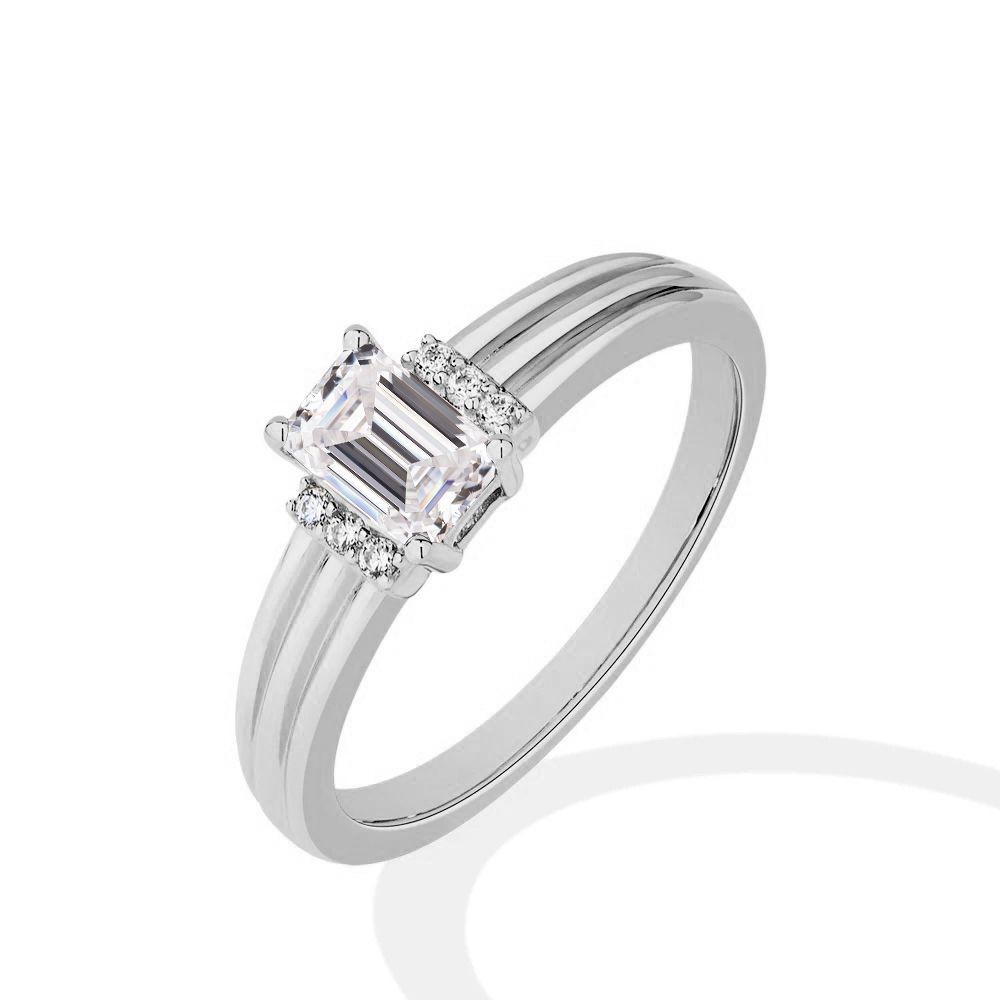
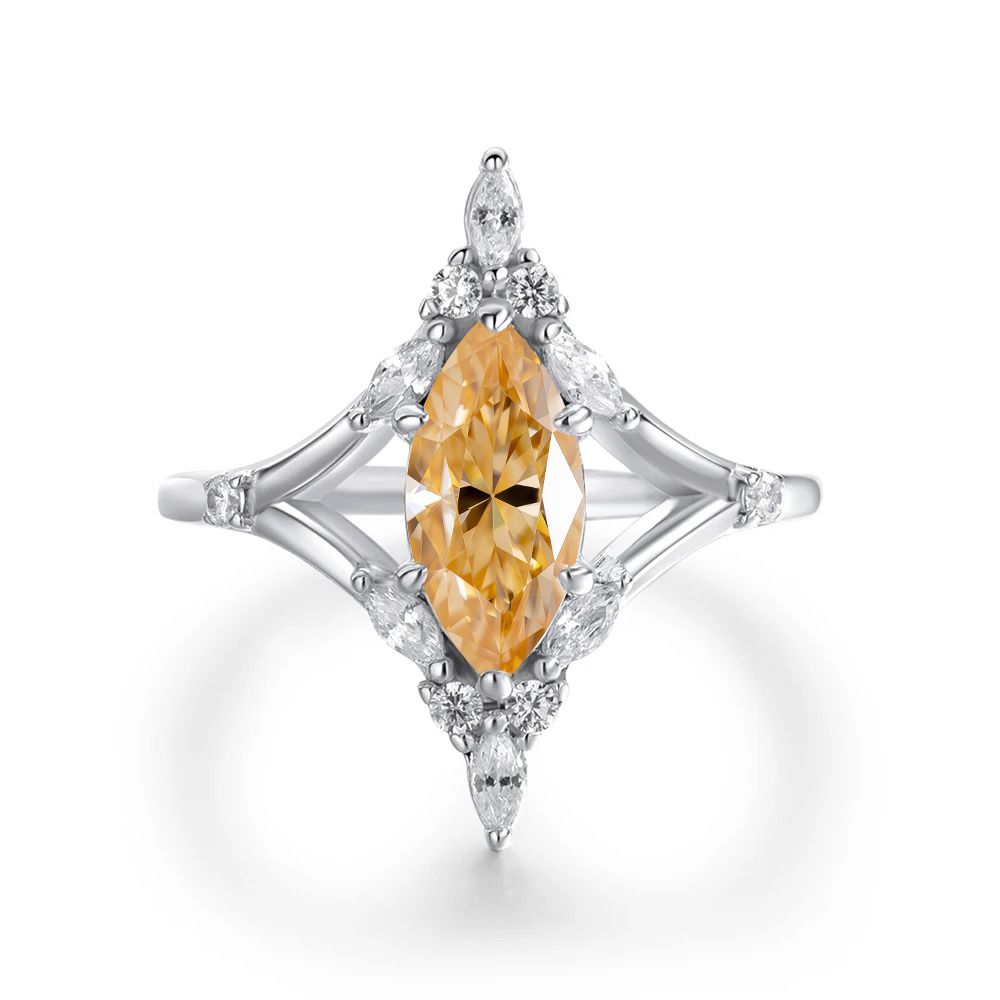
For a ring worn every day, cut choice matters. A round brilliant or cushion shape distributes impact evenly. A long, thin marquise or an emerald cut with open corners has more points that can catch a blow. If a bride leads an active life, a bezel or halo that wraps the girdle adds a layer of metal around the most vulnerable edge.
What daily wear actually does to the setting
Most engagement ring damage over years is not a broken center stone. It is a loosened prong, a bent shank, or a buildup of lotion and soap that dulls the sparkle. Moissanite's durability means the stone itself rarely fails, but the prong and bezel settings holding it can loosen with time. A six-prong solitaire distributes contact and gives each prong a rest, while a four-prong setting shows more stone but means each prong bears more of the work.
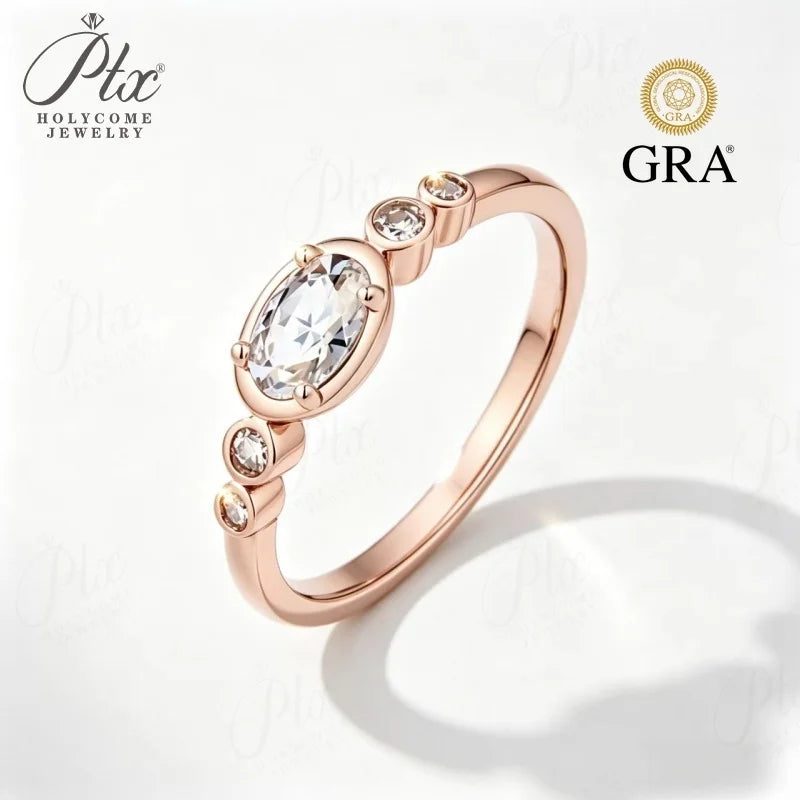
Hands-on jobs matter. If she types, cooks, gardens, lifts weights, or works with her hands, a bezel or halo setting that shields the girdle tends to age better than a high, exposed solitaire. That is a styling decision as much as a durability one, and it is worth raising before she chooses the setting rather than after a prong bends.
When to actually take the ring off
Durability does not mean invincibility. There are a handful of moments where removing the ring saves a repair later. Take it off before lifting weights, because a barbell pressing against a stone is the kind of localized force that can bend a prong. Take it off before swimming, both because cold water shrinks fingers and because chlorine can discolor certain metal alloys over time. Take it off before applying perfumes, self-tanner, and heavy cleaning products, which leave a residue that builds up around the setting. For travel, many brides keep a simple stand-in band on days they do not want to risk the real ring.
Real-world wear patterns
In practice, moissanite engagement rings worn daily for several years show almost no surface scratching. What owners notice first is reduced brilliance, and that almost always traces back to a film of skin oils, soap residue, and hand cream trapped behind the stone. A quick soak in warm water with mild dish soap and a soft brush restores the fire in minutes. Our guide on cleaning an engagement ring at home walks through that routine without risking the setting.
Comparing it to the alternatives
Diamond remains the hardest natural stone, and sapphire sits just below moissanite on the Mohs scale. Moissanite's advantage is not hardness but price-to-durability: a one or two carat equivalent center stone costs a fraction of a fine diamond, yet behaves almost identically in daily use. Couples worried about losing or damaging a precious stone often find that peace of mind worth the trade. For a deeper side-by-side, read our moissanite vs. diamond engagement ring comparison.
The bottom line for everyday wear
Moissanite is durable enough for a lifetime engagement ring, provided the setting is sensible and the owner does basic maintenance. Choose a protective cut, inspect prongs once a year, clean the stone monthly, and the ring will look as bright on the tenth anniversary as it did on the proposal day. That is the standard any engagement ring should meet, and moissanite clears it comfortably.
Independent background on moissanite — how its hardness and refractive index compare with diamond — is documented in the Wikipedia article on moissanite.
Frequently Asked Questions
Is moissanite a good diamond alternative for retail buyers?
Yes for price-sensitive customers who want brilliance and hardness. Moissanite ranks 9.25 on the Mohs scale, holds up to daily wear and costs a fraction of a natural diamond of the same size, so it resells fast in bridal and fashion lines.
What is the minimum order for wholesale moissanite?
MOQ starts at 50 pieces per design for stock items. Custom cuts and private-label settings usually start at 100–300 pieces depending on the mold.
Do you provide certificates with moissanite stones?
Yes. Every parcel ships with GRA or IGI documentation listing carat weight, color grade and cut. We recommend passing the certificate to your end customer for trust.
How long does sample and bulk production take?
Samples ship in 3–5 days. Bulk runs take 15–20 days under 500 pieces, and 25–30 days for custom work.
Send your spec sheet — stone, cut, size, plating and quantity — and we will return a costed timeline.
Ask the workshop