Loose Stones
Moissanite vs Diamond: An Honest Comparison for Brides
When brides first compare engagement stones, the question usually comes down to diamond versus moissanite (per Wikipedia). Marketing on both sides can make it hard to get a straight answer, so here is the plain version: what each stone is, how it performs on the hand, and what you actually give up or gain by choosing either.
What each stone is
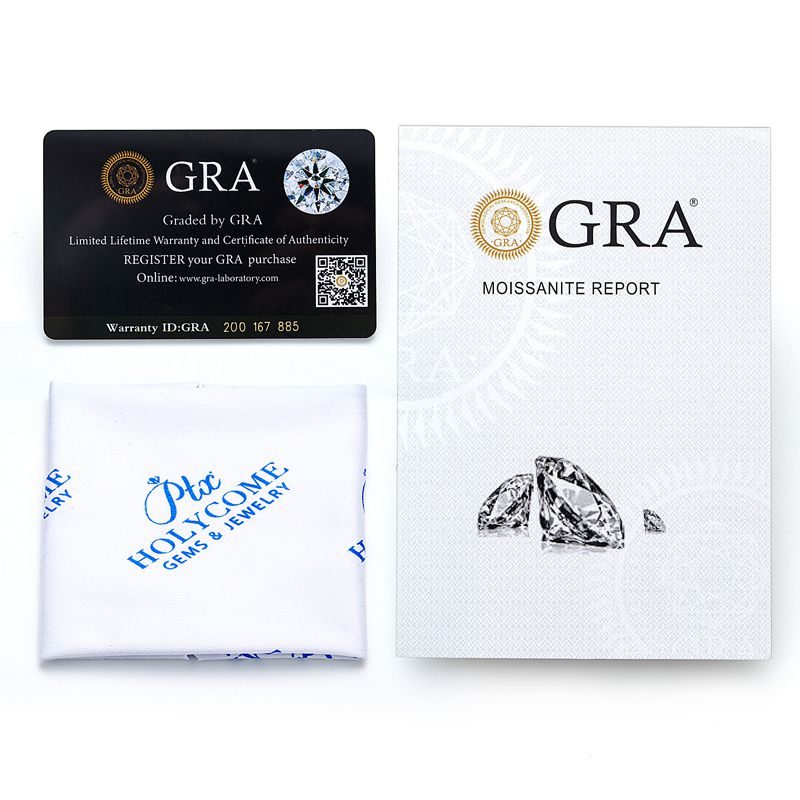
A diamond is a natural or lab-grown form of crystallized carbon, prized for hardness and fire. Moissanite is silicon carbide, first discovered in a meteorite and now produced in controlled laboratory settings. It is not a diamond simulant like cubic zirconia; it is a distinct gemstone with its own properties, and it carries its own grading documentation such as a GRA report.
Hardness and everyday durability
This is the practical heart of the comparison. Diamond ranks 10 on the Mohs scale, the hardest known natural material. Moissanite sits around 9.25, which is still exceptional and well above almost every other gemstone. For an engagement ring worn daily, both are tough enough. Moissanite resists scratches and holds up to handwashing, lotion, and ordinary wear. It is not a fragile stone; it is a durable one.
Look and brilliance
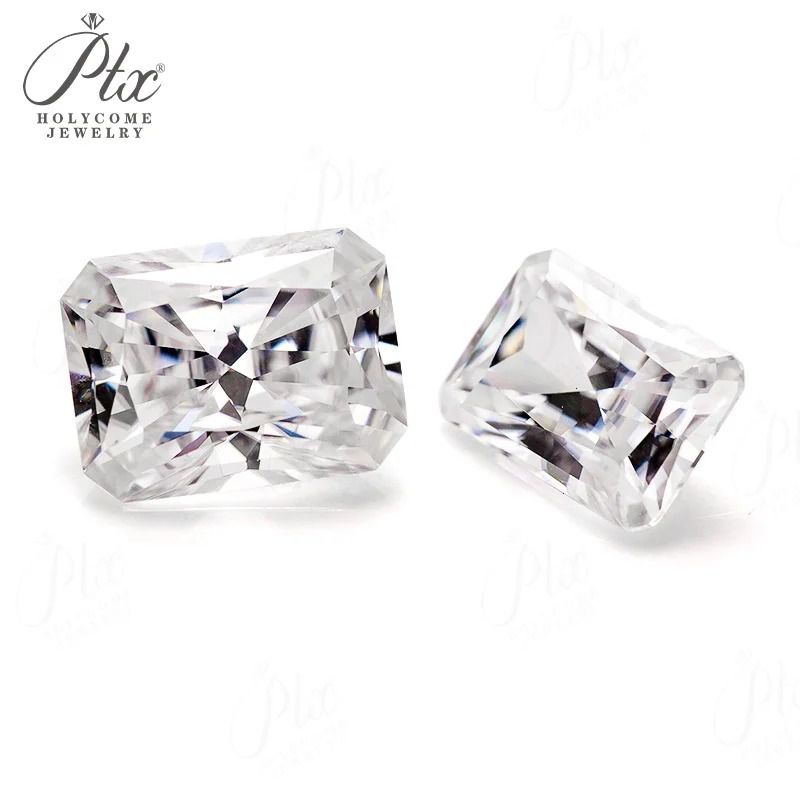
Moissanite actually refracts more light than a diamond, which gives it strong fire, meaning the colored flashes it throws. In bright light it can look exceptionally lively. Because of its double refraction, it has a slightly different internal appearance than a diamond up close, though most viewers cannot tell the difference at a normal distance. Moissanite is graded toward the near-colorless range, and higher grades read beautifully white in a setting.
Price and value
This is where the difference becomes life-changing for many couples. A moissanite stone of a given size costs a small fraction of a comparable diamond, whether natural or lab-grown. That means you can choose a larger, cleaner-looking stone for the same budget, or keep the savings for a wedding, a home, or travel. The trade-off is that moissanite does not carry the same resale or perceived value as a diamond, which matters most if you are thinking of the ring as an investment rather than as a wearable symbol.
Ethics and origin
Moissanite is entirely lab-created, so it is conflict-free by default and has a light environmental footprint. Lab-grown diamonds share the ethical advantage of avoiding mined sourcing, while natural mined diamonds carry concerns around origin and ethics that some brides want to avoid. If a clean, conflict-free story matters to you, both lab-grown options clear that bar.
Which should you choose?
Choose a diamond if the traditional identity of a diamond engagement ring matters deeply to you, if you value its historical meaning, or if resale and recognition are priorities. Choose moissanite if you want maximum brilliance and size for your budget, a sustainable and conflict-free stone, and you are comfortable with a gem that looks stunning on the hand even if it is not a diamond. Many brides land on moissanite precisely because the ring on the finger is what they see every day, and it looks beautiful there.
Care either way
Both stones love a gentle wash in warm water and mild soap, and both benefit from periodic prong checks. Whichever you choose, a well-set stone on a comfortable band is what will stay on her hand for decades.
What about resale and recognition?
This is the most honest place to separate the two. A diamond carries broad cultural recognition and some resale market, though even diamonds rarely return what was paid for them. Moissanite has little resale value because it is affordable to begin with. If you imagine the ring as a family heirloom that will be valued as a stone decades from now, a diamond or lab-grown diamond fits that story better. If the ring is a wearable symbol you love and you would rather spend the difference on a life together, moissanite makes more sense. Neither choice is wrong; they simply reward different priorities.
Setting and care are identical in practice
Once a moissanite or diamond is set, you wear, clean, and protect it the same way. Both love a warm soapy wash, both need prongs checked twice a year, and both work in solitaire, halo, pavé, and vintage settings. The setting you choose says more about the ring's look than the stone underneath does. Compare loose center stones in our loose moissanite collection, and see how they sit across our engagement ring settings before deciding.
The honest summary: moissanite is not a cheap knockoff of a diamond. It is a separate, durable, brilliant stone that lets many couples buy the ring they actually want instead of the one their budget originally seemed to allow. Try both side by side on the hand, and let your eyes and your budget make the call.
Frequently Asked Questions
Is moissanite a good diamond alternative for retail buyers?
Yes for price-sensitive customers who want brilliance and hardness. Moissanite ranks 9.25 on the Mohs scale, holds up to daily wear and costs a fraction of a natural diamond of the same size, so it resells fast in bridal and fashion lines.
What is the minimum order for wholesale moissanite?
MOQ starts at 50 pieces per design for stock items. Custom cuts and private-label settings usually start at 100–300 pieces depending on the mold.
Do you provide certificates with moissanite stones?
Yes. Every parcel ships with GRA or IGI documentation listing carat weight, color grade and cut. We recommend passing the certificate to your end customer for trust.
How long does sample and bulk production take?
Samples ship in 3–5 days. Bulk runs take 15–20 days under 500 pieces, and 25–30 days for custom work.
Send your spec sheet — stone, cut, size, plating and quantity — and we will return a costed timeline.
Ask the workshop