Engagement Rings
Marquise vs Pear Cut Moissanite: The Bridal Proportions Guide
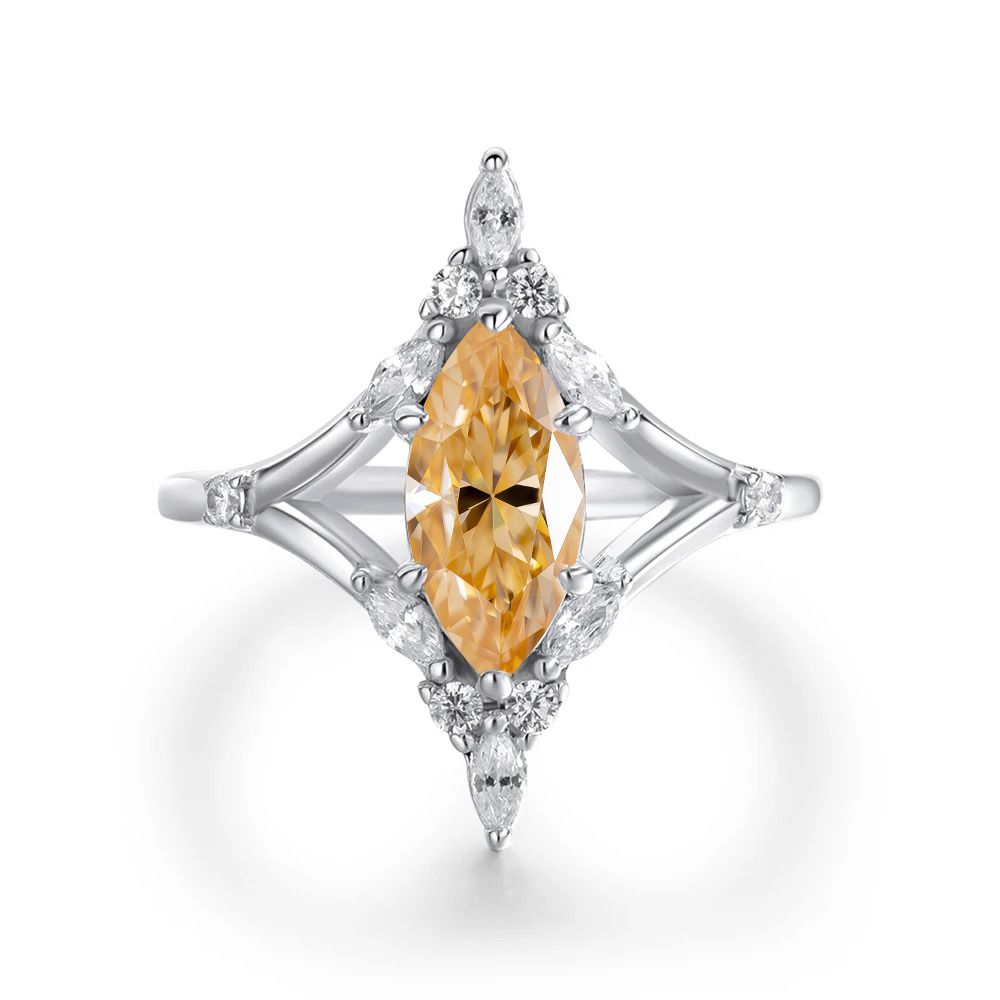
A buyer in Denver kept losing brides who asked for a teardrop ring. She had a pear in the case, but she kept showing them a marquise. The two shapes look related on a website and nothing alike on a hand. The marquise is a symmetrical boat: two pointed ends, equal on both sides. The pear is a teardrop: one round end, one point. Choosing between them is the difference between a bold, symmetrical ring and a soft, directional one. Here is how to sell both without mixing them up.
What each shape does on the finger
The marquise elongates. A 10x5mm marquise runs the length of the finger and makes the hand look slimmer, which is why it came back in style after a decade of ovals. Its symmetry reads architectural and slightly androgynous, which is part of the appeal for brides who want a ring that does not read as traditional. The marquise ratio guide covers the length-to-width numbers that flatter a shorter finger.
The pear elongates too, but in one direction. The round end sits toward the knuckle and the point faces the fingertip, which makes the hand read longer and the shape read soft. The pear is the more traditional of the two by a wide margin; it is the shape on the engagement ring of almost every royal bride of the last century. Our pear proportions guide covers the round-end size that keeps the shape from looking off-balance. GIA's cut guidance applies the same proportion math to both shapes.
Setting differences that prevent returns
Both shapes have two points, and both points need prong support. The marquise is the harder setting: because the points face opposite ends of the finger, a bride who turns the stone clockwise by a few degrees ends up wearing a crooked ring. A four-prong head on a marquise should seat the prongs on the four corners, and the setting should include a small stopper or a bezel on the lower point to keep the stone from spinning. The prong count guide covers why we default to six prongs on any fancy shape above 9mm.
The pear is more forgiving because the round end resists rotation. The classic pear setting is a solitaire with a V-prong on the point and three round prongs on the round end. The most common return on pears is a lopsided stone where the two shoulders are not equal, so require a hand-cut photo before accepting a wholesale parcel. The teardrop earring guide uses the same proportion language, which helps when a bride wants matching drops. For a pear, a length-to-width ratio between 1.45 and 1.65 reads balanced; below 1.40 the shape looks squat, above 1.70 it looks thin. The marquise sits at 1.75 to 2.00 for the same reason.
How they photograph
Wedding photographers favor both shapes because they read long from the camera angle. The marquise photographs as a bold, graphic shape; the pear photographs as a softer, more romantic one. The risk on the marquise is the bow-tie shadow across the center, which shows as a dark band in direct flash. Quality moissanite cut at a 1.8 to 2.0 length-to-width ratio minimizes it. The risk on the pear is a point that faces sideways on the hand if the bride rotates it; advise her to wear the point toward the fingertip and the setting will read correctly in every photo. For the boutique, both shapes sell to a bride who wants something other than the oval that every cousin is wearing. The marquise buyer is usually a modern bride who likes architectural jewelry; the pear buyer is usually a romantic bride who wants the royal silhouette. Keeping both on the same tray lets the bride see the difference on her own hand, and most boutiques report that the choice becomes obvious once the two shapes sit side by side. Price both the same per mm, because the margin is the same and the choice is about style, not budget.
Which shape makes the finger look longer?
Both, but the marquise elongates more because it runs the full finger length. The pear elongates in one direction and reads softer. For a short finger, a marquise at 1.9:1 is the strongest lengthener.
Is a marquise too bold for an everyday ring?
It reads bold on the hand but wears like any solitaire if the points are bezel or corner-prong set. Brides in desk jobs should choose a lower setting to avoid catching the paper edge.
Can a pear ring be worn either way?
Yes, but the correct orientation is round end toward the knuckle, point toward the fingertip. Worn upside down, the shape reads as a comma and photographs wrong.
Which shape has more bow-tie shadow?
The marquise, especially at wide ratios. Reputable moissanite suppliers cut bridal marquises at 1.8 to 2.0:1 to keep the center bright. Require a video in direct light before accepting a parcel.
Request a wholesale marquise and pear moissanite sample pair in matching 9x6 and 10x7mm sizes, eye-clean VVS with signed IGI or NGTC cards. We cut bridal ratios to order and include hand-cut photos before shipment, and MOQ starts at 12 pieces per shape for boutiques that want to show both on the same hand.
Frequently Asked Questions
Is moissanite a good diamond alternative for retail buyers?
Yes for price-sensitive customers who want brilliance and hardness. Moissanite ranks 9.25 on the Mohs scale, holds up to daily wear and costs a fraction of a natural diamond of the same size, so it resells fast in bridal and fashion lines.
What is the minimum order for wholesale moissanite?
MOQ starts at 50 pieces per design for stock items. Custom cuts and private-label settings usually start at 100–300 pieces depending on the mold.
Do you provide certificates with moissanite stones?
Yes. Every parcel ships with GRA or IGI documentation listing carat weight, color grade and cut. We recommend passing the certificate to your end customer for trust.
How long does sample and bulk production take?
Samples ship in 3–5 days. Bulk runs take 15–20 days under 500 pieces, and 25–30 days for custom work.
Send your spec sheet — stone, cut, size, plating and quantity — and we will return a costed timeline.
Ask the workshop