Engagement Rings
Cathedral Setting Engagement Rings: A Wholesale Buying Guide
If a solitaire is a simple pedestal and a halo is a spotlight, the cathedral setting is a stage. Two or more arched rails rise from the shank to cradle the center stone, lifting it above the band. The effect is unmistakably elegant, and brides who try one on almost always comment on how much bigger the stone looks. Cathedral settings have quietly become one of the most requested silhouettes in the mid-tier bridal case.
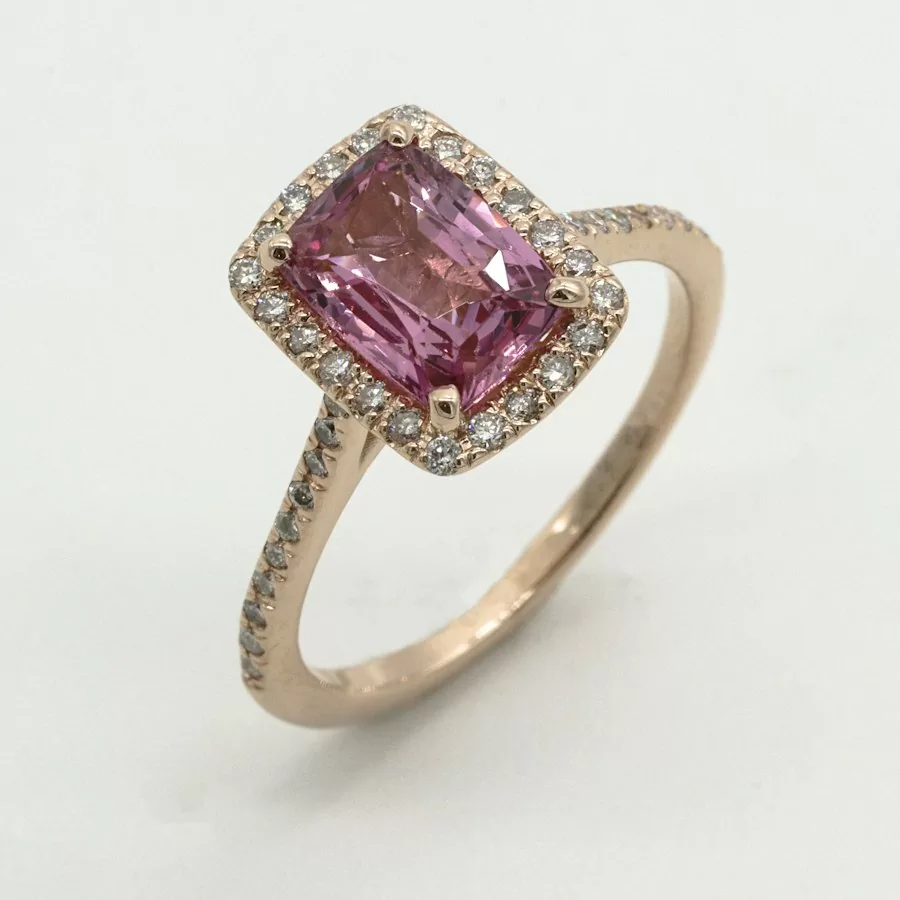
Why brides love the cathedral look
The arch does three jobs at once. It elevates the center stone, which makes the stone appear larger and lets light enter from below and the sides. It adds vertical length to the finger, which flatters shorter fingers. And it gives the ring a sense of movement and architecture that a plain prong head simply cannot match. Brides who want a ring that reads as “classic but special” keep landing here.
Cathedral settings also photograph beautifully. The arched lines lead the eye straight to the center stone, which is exactly what a proposal photo needs. On social media, cathedral solitaires perform well because the silhouette is recognizable even in a small square crop.
Which center stones suit it
Round brilliant stones are the natural partner, because the arch frames a round silhouette symmetrically. Oval and pear stones also work, but orient them carefully — a pear in a cathedral looks best with the point aligned down the finger. Emerald and Asscher cuts sit well too, and they lean into the architectural quality of the setting. For shape guidance, review our shape comparison guide before recommending combinations.
Avoid pairing a very small center stone, under about 5 mm, with a wide cathedral. The arches will overwhelm the stone and make the whole ring feel top-heavy. For slim-finger brides, pair the cathedral with a narrower shank so the proportions stay delicate.
Pairing with a wedding band
The one practical question with cathedral rings is the wedding band. Because the arches rise on both sides of the head, a straight band may not sit flush. The answer is usually a contoured or notched companion band. This is a selling point: position the wedding band as a matched set rather than a problem to solve. Read our guide on curved and notched bands for fancy settings to walk the conversation. For brides who prefer a gap, a plain band worn slightly apart also looks intentional.
Stocking guidance for retailers
Cathedral settings sell across price tiers, so stock at least two entry points. A slim 14K-gold-plated cathedral in a 6.5 mm round appeals to budget brides. A platinum-style cathedral with milgrain along the arches captures vintage lovers. If your supply partner offers hand-rolled beading on the rails, you have a natural bridge to the vintage revival we are seeing in 2026.
Display cathedral rings on an elevated stand, not flat in the case. The whole point is the vertical architecture, and a flat display hides it. Let customers try the ring on with a band to feel how the pair sits. That in-hand comparison closes cathedral sales more reliably than any photograph. The arch is a detail you have to feel as much as see.
Durability and care
The arches are structurally sound, but the prongs on a raised head do catch more than a low bezel setting. Advise brides to remove the ring during heavy lifting or gym sessions. For active lifestyles, some buyers prefer the lower profile of a bezel; our piece on bezel settings for active brides covers that alternative. When a cathedral ring does need cleaning, the arches trap lotion, so a soft brush under the head is part of the routine.
Sizing and resizing considerations
Cathedral rings resize cleanly as long as the cut is made at the bottom of the shank, away from the arched shoulders. Avoid sizing near the head, because heating the arches can loosen the center stone. If a cathedral ring needs a full size up or down, expect to rebuild the shoulder detail after soldering. Mention this when the ring is sold so the customer is not surprised by the labor charge years later. Because the elevated head catches on sheets, recommend a soft jewelry roll for travel; a cathedral in a crowded suitcase will pick up scratches along the arches.
The takeaway
Cathedral settings are the rare silhouette that is both romantic and rational. Brides get the elevated, architectural look they want; retailers get a setting that sells across price tiers and pairs naturally with contoured bands. Stock two or three tiers, display them upright, and prepare to explain the band pairing — that conversation alone will lift your bridal set attachment rate.
For third-party reference, the Wikipedia article on moissanite details moissanite’s discovery, optical properties and use in jewelry.
Frequently Asked Questions
What ring sizes can you supply in bulk?
US sizes 5–12 including half sizes. Send a size breakdown with your order and we cast to that curve; comfort-fit inner bands reduce resize requests.
Can I order a mixed size run instead of one size?
Yes. Mixed runs are standard for wholesale: specify quantity per size and we pack and label by size at no extra labor cost.
What is the MOQ for custom ring designs?
50 pieces per design for existing molds; 100–300 pieces when a new mold or CAD model is required.
How should I price rings for retail margin?
Most partners use a 3–4x markup on FOB cost for sterling and 2.5–3x for moissanite solos, which keeps landed cost under 30% of retail.
Send your spec sheet — stone, cut, size, plating and quantity — and we will return a costed timeline.
Ask the workshop



