Engagement Rings
Twisted Vine Engagement Rings: Meaning, Styling & Wedding Band Pairings
If you have browsed engagement rings lately, you have probably seen them: bands that curl, cross, and wrap around the center stone like ivy on a trellis. Twisted vine engagement rings have moved from a niche bridal look to one of the most requested nature-inspired styles on the market, and it is easy to see why. The design feels organic rather than architectural, romantic rather than formal, and it photographs beautifully from every angle.
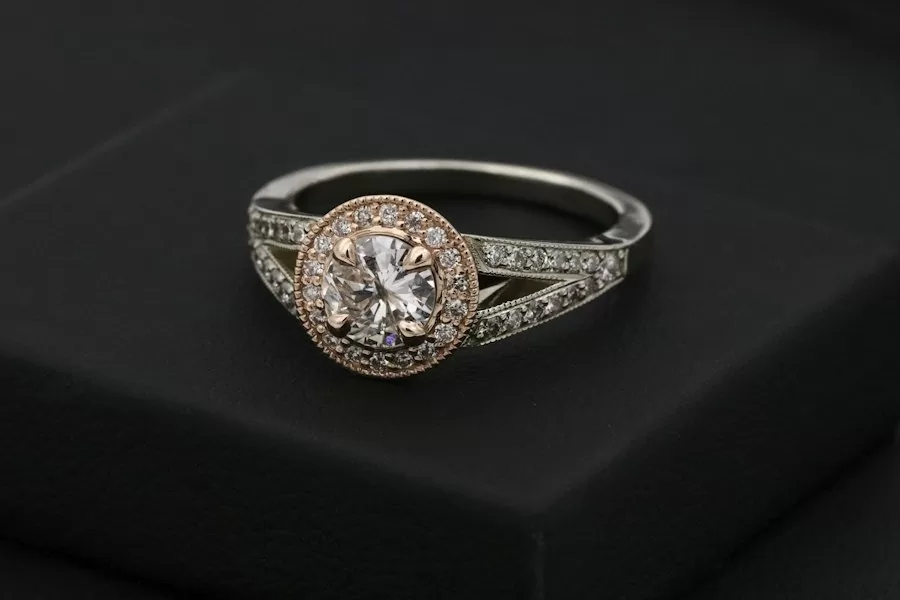
What sets a vine ring apart from a plain twisted band is the way the metal strands interact with the stone. On a true vine design, two or more slender strands twist up from the shank and part to cradle the gem, sometimes curling into the prongs themselves. The result is a setting that looks grown rather than machined, with negative space that lets light pass through from the sides.
The meaning behind the twist
Branching and intertwined bands have always carried quiet symbolism. The vine suggests continuous growth, reaching toward the light, and two stems that cannot be pulled apart without breaking. For couples who want a ring that tells a story without engraving a word inside the shank, the twist does the work. Many brides tell us they chose a vine ring because it felt less like a status symbol and more like a metaphor for a marriage that keeps growing.
This emotional resonance is also why the style skews romantic and slightly bohemian. It pairs naturally with other nature motifs: leaf shoulders, milgrain edges, and vintage-inspired filigree. If you love the look but want something more modern, a tighter, smoother twist in platinum reads contemporary rather than rustic.
Choosing the center stone for a vine setting
Vine settings forgive a lot, but the center stone still anchors the design. Round and cushion cuts are the most forgiving because the twisting strands meet cleanly around their outlines. Pear and marquise shapes can look stunning on a vine setting, but the twist needs to be engineered to follow the taper of the stone so the prongs do not fight the shape.
Because the wrapping strands add visual texture, many brides keep the center stone clean and unadorned rather than layering a halo on top. A plain solitaire on a twisted shank lets the setting be the statement. If you prefer extra sparkle, a slim pav line running along one strand balances the design without overwhelming it.
Picking a metal that suits the twist
The thin, curved strands of a vine design show metal color honestly. Rose gold warms the botanical look and pairs with everything from cream lace to a modern slip dress. Yellow gold reads heirloom and works with vintage-themed weddings. Platinum and white gold keep the twist sleek and cool, which is a favorite for brides who want the organic shape but a minimalist finish.
Keep in mind that thinner strands show wear faster than a heavy band. If you are considering a very fine vine design, ask about the thickness of the shank at the base; a band under 1.6 mm on a daily-wear ring may need more frequent inspection than a comfort-fit solitaire.
Pairing a wedding band that sits flush
The most common question about vine rings is the hardest one: what wedding band fits next to a twisted shank? Because the setting has curves and gaps, a straight flat band will often rock or leave a visible space. You have three realistic options.
First, a contour or curved band shaped to kiss the underside of the vine. This is the most seamless look and is usually ordered as a coordinated bridal set so the two rings are engineered together. Second, a thin, flexible-looking nesting band that tucks into the negative space of the twist. Third, skipping a flush fit entirely and choosing a separate, slightly spaced band worn on the other side of the hand or stacked loosely on special occasions. Many modern brides intentionally embrace the gap rather than fight it.
If you plan to solder the rings together, a vine design makes that decision more important. Soldering locks the contour band into the exact curve it was cut for; if the vine sits unevenly, the solder will magnify the problem rather than hide it. Decide before your wedding day whether you want the rings as one piece or two independent bands.
Who wears a vine ring best
There is no fixed profile, but the style attracts brides who describe themselves as outdoorsy, romantic, or drawn to artisan jewelry. It is a strong choice for a garden, barn, or vineyard wedding, and it translates well to an engagement ring that will be stacked with thin stackable bands on anniversaries. The twist adds a layer of interest that a plain solitaire does not, yet it remains simple enough to wear every day.
If you are undecided between a sleek solitaire and something with more personality, try both on the same hand. A vine ring often photographs smaller than a plain band because the eye follows the curves, so trust the mirror and your daily wear habits rather than a single close-up. The right twist should feel like it belongs on your finger before it ever belongs on a proposal Pinterest board.
The Wikipedia entry on engagement rings gives an independent overview of engagement ring traditions and settings.
Frequently Asked Questions
What ring sizes can you supply in bulk?
US sizes 5–12 including half sizes. Send a size breakdown with your order and we cast to that curve; comfort-fit inner bands reduce resize requests.
Can I order a mixed size run instead of one size?
Yes. Mixed runs are standard for wholesale: specify quantity per size and we pack and label by size at no extra labor cost.
What is the MOQ for custom ring designs?
50 pieces per design for existing molds; 100–300 pieces when a new mold or CAD model is required.
How should I price rings for retail margin?
Most partners use a 3–4x markup on FOB cost for sterling and 2.5–3x for moissanite solos, which keeps landed cost under 30% of retail.
Send your spec sheet — stone, cut, size, plating and quantity — and we will return a costed timeline.
Ask the workshop