Engagement Rings
Twisted Vine Engagement Rings: Meaning, Metals & Styling
When a shopper walks in asking for "something organic" or "a ring that feels like a story," more often than not they are describing a twisted vine engagement ring. Instead of a plain round shank meeting a single solitaire head, the band itself curves and turns, sometimes wrapping up around the stone. The look is soft, romantic, and distinctly handcrafted, which explains why it keeps climbing the most-requested list for brides this year.
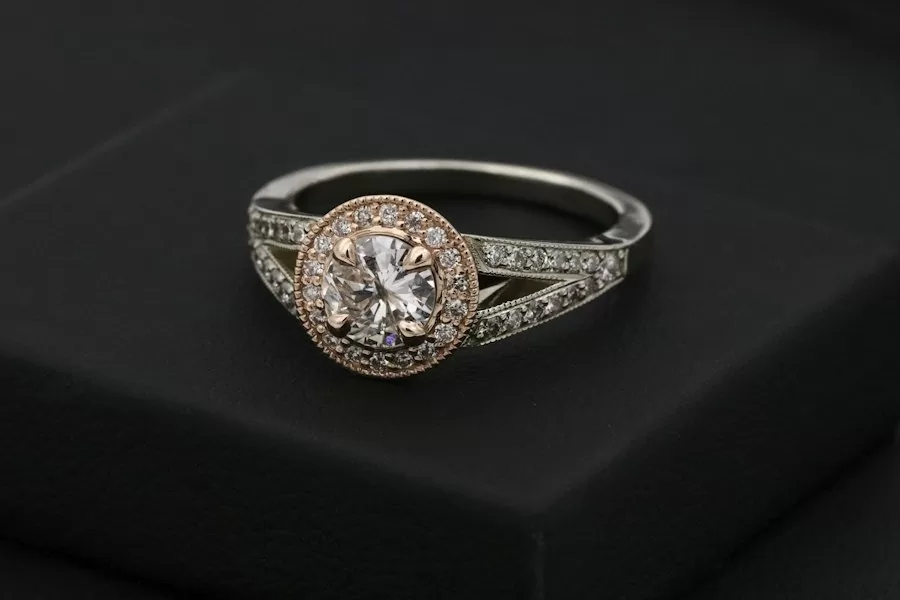
The symbolism is easy to explain and even easier to sell. A twist represents two separate paths that have wound around each other and grown together. Add leaves, tiny diamonds set into the branches, or a split shank that merges halfway up the finger and you have a ring that reads as "your story" rather than a catalog design. Many brides choose it because it feels personal without leaning on engraving or an obvious motif.
What the twist actually does on the finger
Not all twists are equal. A gentle swirl that only crosses once near the base of the stone reads as delicate and modern. A tighter, multi-turn twist that climbs the shank reads as sculptural and vintage. The difference changes everything about how the ring wears. A wider, busier twist will catch on sweaters and gloves, so tell brides who work with their hands to keep the twist low-profile near the setting rather than wrapping the whole band.
Because the shank is not a simple rounded circle, sizing can be slightly trickier than a plain band. Most twisted designs can be sized within about a half size to a full size, but heavy wraps with stones set into the branches should be measured carefully before resizing, or the setting can torque. This is the same reason we always advise checking how to measure ring size at home before ordering a nature-inspired custom piece.
Metal choices that flatter the vine look
Warm metals suit the botanical theme best. Rose gold gives a vine a honeyed, just-grown feel that photographs beautifully in natural light. Yellow gold reads classic and heirloom-like, especially with milgrain edges. Platinum and white gold push the design toward icy, modern minimalism, and they are the right call for a bride who already wears mostly silver jewelry.
For the center stone, a round or oval brilliant lets the twist be the hero. An oval set sideways (east-west) looks especially striking in a flowing wrap. A pear-shaped stone set point-down into a "stem" creates a strong floral-vine hybrid. If you want to compare silhouettes, our moissanite shape comparison walks through how each cut pairs with an organic shank.
Pairing a wedding band with a twist
This is the question that trips couples up. A heavily twisted or raised shank often leaves a gap next to a straight band. The honest answer is that a curved, contour, or notched wedding band will sit flush against the ring, while a straight band may rock or leave space. Some couples actually love the contrast and wear a plain slim band anyway. Know the options so you can advise rather than disappoint them at the wedding-band fitting.
Who a twisted vine ring is for
It suits a bride who wants something romantic but not flashy, who loves gardens, hiking, or natural textures, or who simply dislikes how "generic" a plain solitaire looks on her hand. It pairs beautifully with matching bands in the same metal. Frame it as a wearable metaphor and it stops being just a setting style and starts feeling like the ring that tells her story.
Budgeting a twisted vine design
Because the shank is hand-finished, expect a modest craft premium over a plain solitaire in the same stone size. You can control the budget by keeping the twist in the metal itself rather than adding branch after branch of accent stones. A single center stone on a twisted shank delivers the whole organic look without the climb in cost, and it photographs just as well. If the couple loves the look but needs to rein in price, suggest a clean twist in 14k gold rather than platinum, then upgrade the stone quality instead.
Frequently asked questions
Does a twisted setting make the stone look smaller? Not if the head is set high. A low wrap can crowd the center stone, so confirm the basket sits proud of the shank. Can I add a wedding band flush? Often yes with a contour band, which we cover in our nesting guide. Will the twist catch my hair? A smooth, rounded finish rarely does; avoid sharp, open gaps in the branches if that is a concern.
Independent background on moissanite — how its hardness and refractive index compare with diamond — is documented in the Wikipedia article on moissanite.
Send your spec sheet — stone, cut, size, plating and quantity — and we will return a costed timeline.
Ask the workshop



