Necklaces & Pendants
The Riviera Necklace: Graduated Sparkle for the Bride Who Wants Drama
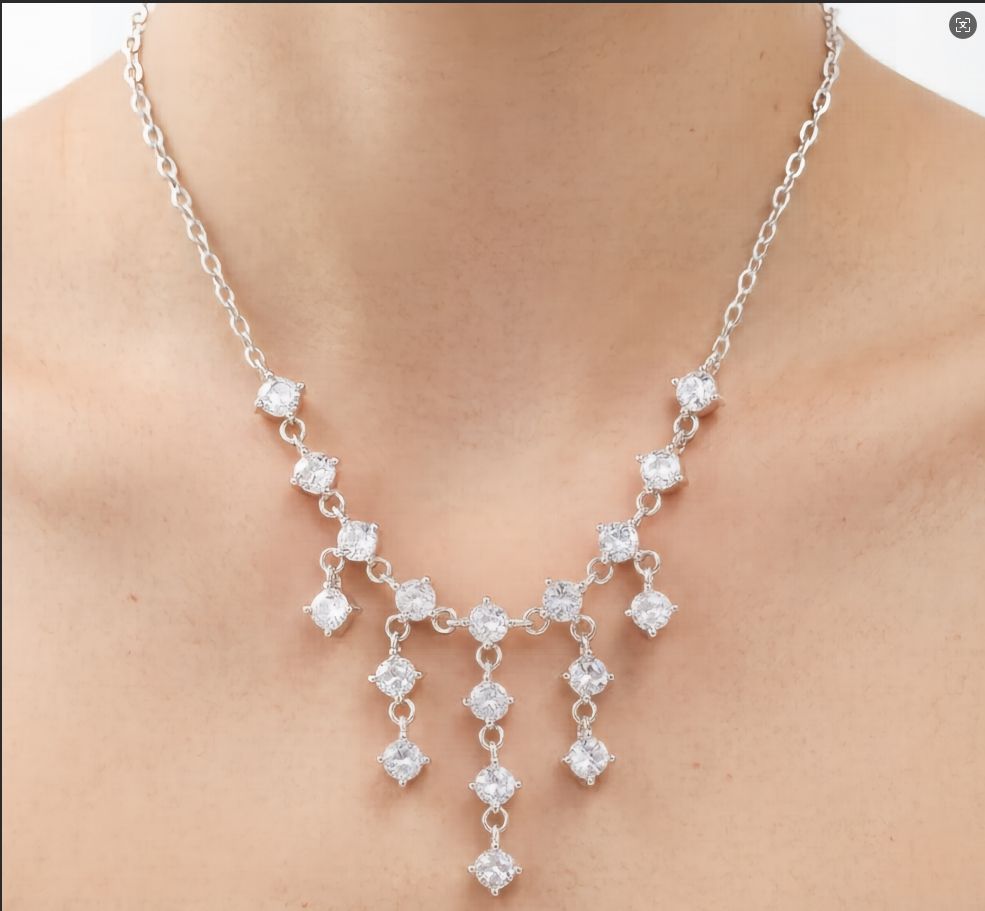
If a tennis necklace is a straight, even row of sparkle, a riviera necklace is its more dramatic cousin. Stones graduate from smaller at the back to larger at the front, creating a line of light that draws the eye to the collarbone. It's the necklace you've seen on red carpets and in black-tie weddings — and it's one of the most flattering bridal necklaces for someone who wants real presence at the neckline.
What makes it different from a tennis necklace
A tennis necklace keeps every stone the same size along the entire line — uniform, sleek, modern. A riviera deliberately changes the sizes, so the necklace is visually heaviest right at the throat and lightest toward the back. That graduation does two things: it focuses attention where you want it (the face and collarbone), and it reads as more ornate and formal than an even line.
If you're choosing between the two, the tennis necklace is the everyday-all-rounder we cover in our tennis necklace buying guide. The riviera, by contrast, is an occasion piece — made to pair with a strapless or sweetheart gown and a pulled-back hairstyle.
Why it flatters the neckline
The riviera's magic is how it follows the body. Graduated stones sit close to the skin and accent the natural curve of the neck, which lengthens the look of the neck and frames the jaw. It's especially lovely with strapless, off-the-shoulder, and sweetheart necklines, where there's open skin for the stones to glow against. High necklines, by contrast, fight a necklace this substantial — the chain disappears into the fabric.
This is the same neckline-matching logic that drives bridal necklace choice generally. Our guide on choosing a necklace by dress neckline maps which silhouettes suit a statement chain versus a delicate pendant.
Length and scale
A riviera necklace is typically worn short, sitting right at the base of the neck (think 14–16 inches), because the graduated look needs to be seen near the collarbone. Going longer dilutes the effect — the larger front stones drop too far and the line loses its structure. Measure against your neckline: the necklace should rest just above the edge of the dress, not under the beading.
Chain length logic is universal across necklaces, and our chain length guide walks through choker, princess, and matinee lengths if you want to layer the riviera with a thinner chain. On its own, though, the riviera is usually enough — one statement, done well.
Clasp and wear care
Because a riviera carries more visual weight at the front, the clasp matters. A secure box clasp with a figure-8 or double safety is non-negotiable; a single lobster clasp on a graduated line can open with the weight. The same clasp-safety principles we outline for protecting a tennis bracelet clasp apply here — a safety latch is what stands between your necklace and the floor.
Care is the usual gentle routine: put the necklace on after perfume and hairspray, wipe it with a soft cloth, and store it flat so the chain doesn't tangle.
Layering a riviera with other pieces
Because the riviera is already a statement, the instinct is to keep everything else minimal — and that's usually right. But if you want a little more, a single very delicate pendant dropped just below the riviera can add a second layer without clutter. The key is contrast: thin chain, small stone, so it reads as an accent rather than a competing necklace. Skip a second chunky chain, or the graduated line loses its focus.
Earrings and bracelets should also stay on the simpler side when a riviera is doing the work. Small pearl studs or tiny diamond studs let the necklace lead, while a slim tennis bracelet on the wrist balances without competing. The goal is one hero piece, and the riviera is wearing that role.
Renting versus buying a riviera
Because a riviera is an occasion piece rather than an everyday one, some brides consider renting for the wedding day. That's a reasonable route for a single event, but if you already picture yourself wearing the necklace at anniversaries, galas, and holiday parties, buying usually wins out. A well-made graduated necklace is the kind of jewelry you pull out for decades, and it layers beautifully over a simple dress long after the honeymoon.
Who should wear it
The riviera is for the bride who wants a red-carpet moment at the neck. It pairs with a simple gown and an updo, and it lets the necklace do the talking. If your dress is already heavily beaded, a riviera may compete; if your gown is clean and elegant, the graduated sparkle becomes the focal point. Wear it once down the aisle and it becomes the jewelry you pull out for every formal event after.
Independent background on moissanite — how its hardness and refractive index compare with diamond — is documented in the Wikipedia article on moissanite.
Frequently Asked Questions
Which chain lengths should I stock first?
16 to 18 inch covers most necklines and gift purchases. Add 20 inch for layering sets and 24 inch for pendant lines.
Are your chains nickel-free and hypoallergenic?
Yes. Sterling silver is 92.5% silver; stainless lines use 316L. Both are nickel-safe for reactive customers when plated correctly.
Can necklaces be personalized?
Laser engraving on pendants and clasps is available from 50 pieces, with 3–5 day turnaround on the engraving step.
What is the bulk lead time?
15–20 days under 500 pieces; 25–30 days for custom pendants or new molds.
Send your spec sheet — stone, cut, size, plating and quantity — and we will return a costed timeline.
Ask the workshop