Necklaces & Pendants
Pendant Layering Sets: What Boutiques Actually Display and Sell
The single pendant is the safe SKU, but the layered set is the sale that surprises boutique owners. A bride who came in for one moissanite solitaire pendant will leave with three chains if the counter shows her how they actually look together. The trick is not carrying more pendants; it is carrying the right chain lengths and pendant sizes so the layers do not fight each other on the neck.
Why layering converts a single into a set
Most women have only a vague idea of how different necklace lengths sit. They know 16 inches feels choker-like and 20 inches feels longer, but they cannot visualize a 14-inch paperclip chain against an 18-inch cable chain with a 20-inch drop. A boutique that pre-layers a display bust removes that guessing. The customer sees the result, likes it, and buys the set rather than the single pendant she planned for.
The margin math favors the retailer. Three thin chains with two small pendants cost the supplier a fraction of a single heavy statement piece, yet retail as a curated bridal set. That is where the counter earns.
The length hierarchy that actually works
Layered necklaces read best when there is roughly a two-inch gap between each length. The reliable combination for bridal and everyday wear is:
- 14 to 16 inches — a close chain, often a paperclip or fine cable, worn alone or with a tiny pendant (a single moissanite stud-sized stone or a small initial).
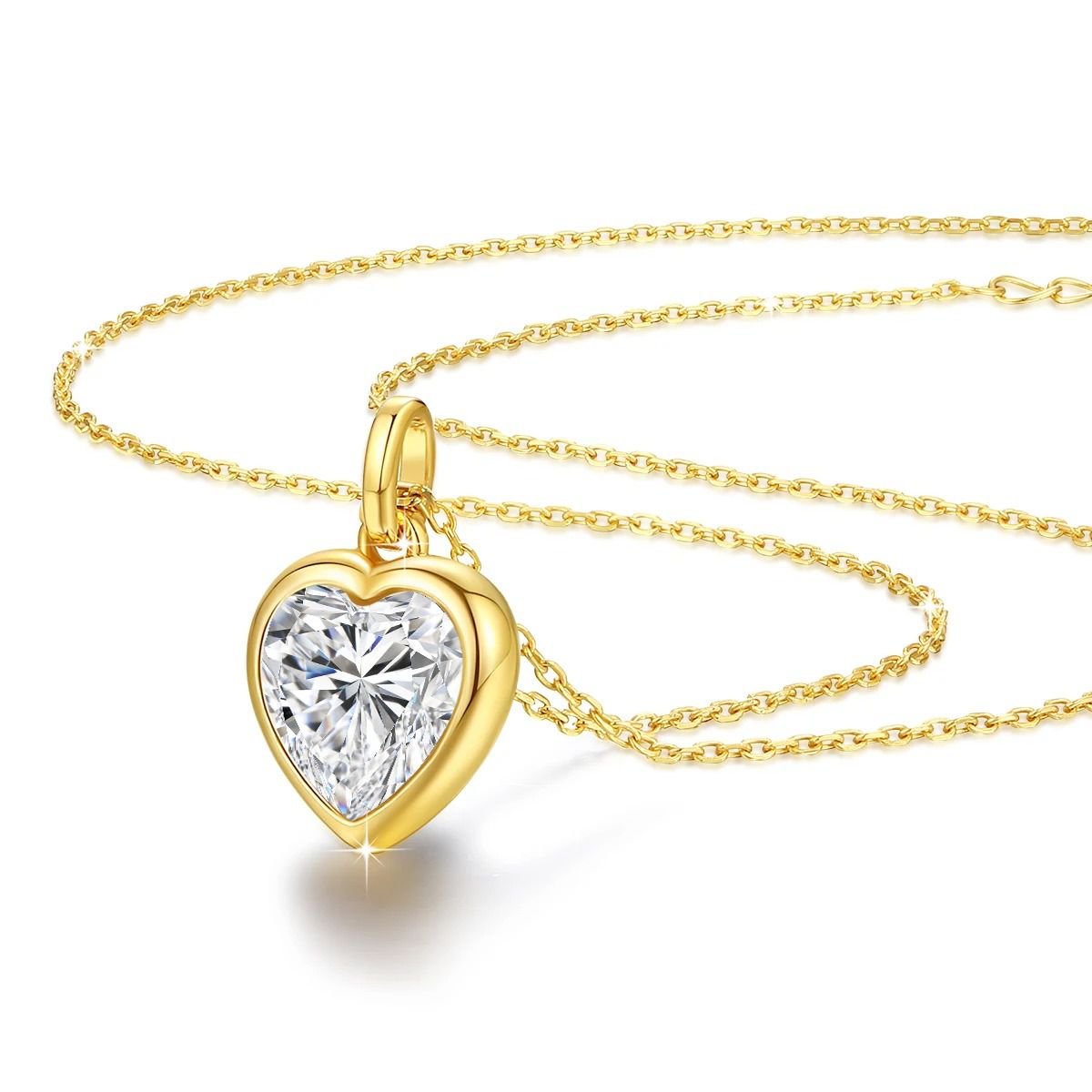
- 18 to 20 inches — the main pendant chain. This is where the bridal solitaire moissanite, the birthstone, or the meaningful charm sits.
- 22 to 24 inches — a longer drop, usually a simpler chain with a small bar, teardrop, or hollow pendant that adds vertical movement.
Skip the chain that sits right at 17 inches. It collides with the 16-inch and the 18-inch layers and looks tangled. The two-inch gap is not a fashion suggestion; it is the minimum so the pendants do not touch.
Pendant size and shape per layer
Mix sizes so the eye has somewhere to land. The close layer should be the smallest — a 5 to 7 mm stone or a single charm. The middle layer is the statement, a 6 to 8 mm solitaire moissanite or a small halo. The long layer should be lighter still, often a bar or an open shape, because a heavy pendant at 22 inches pulls the chain and reads as costume rather than bridal.
Shape contrast helps. A round solitaire in the middle, paired with a rectangular bar on the long layer and a tiny circle up close, reads intentional. Three round pendants of similar size read as a mistake, even if the lengths are correct.
Display and merchandising tips
Do not lay layered sets flat on a tray. Necklaces need a bust or a stand to show the length gaps. Keep one fully layered bust at the front of the case, and keep the individual chains and pendants beneath it so the customer can ask to swap out one element. Boutiques that let a bride swap the middle pendant for a birthstone close the sale and build the custom feel.
Price the set as a set. A bundled price for the three layers should be lower than buying each chain separately, but high enough that the customer perceives she is getting a curated look rather than three random necklaces. The display bust does half the selling; the price tag does the other half.
What to ask your supplier
Chain metal and the layering mistake
The most common layering mistake is mixing metal tones across layers. A white gold close chain against a rose gold middle pendant against a yellow long chain reads as three separate necklaces rather than one deliberate set. Boutiques that sell layering sets should anchor each set in a single metal tone and only add a contrasting layer when the customer explicitly asks for it. If she does ask, mix one contrast at a time — white with rose, or white with yellow — and keep the third layer in the anchor tone. That discipline keeps the layered set looking designed rather than collected.
Chain gauge matters as much as length. A heavy 2mm cable chain at 14 inches will overwhelm a dainty pendant at 18 inches. Match the chain weight to the pendant: thin 0.8mm to 1mm chains for small pendants, 1.2mm to 1.5mm for the statement middle layer, and 1.5mm to 2mm for the long bar or drop. A chain that is too thin for its pendant flips around the neck; a chain that is too thick looks costume. Ask the supplier for the chain gauge along with the length, and build the layered necklaces and pendants display around matched gauge pairs rather than random chains.
Ask whether the supplier pre-packages layering sets with the correct chain lengths matched to specific pendants, or whether you must assemble the layers yourself. Pre-assembled sets save counter time but cost slightly more; self-assembled sets let you swap pendants for birthstone custom orders. For a small boutique, a hybrid approach works best: stock pre-layered sets for the window, and keep loose chains in the three length buckets for custom builds. Confirm that every chain ships with a lobster clasp and an extender between 1 and 2 inches, because brides wearing layered necklaces over different necklines (a wedding gown collar versus a everyday sweater) will need to adjust. That extender is the difference between a layered set that goes home and one that stays in the case.
For third-party reference, the Wikipedia article on moissanite details moissanite’s discovery, optical properties and use in jewelry.
Frequently Asked Questions
What ring sizes can you supply in bulk?
US sizes 5–12 including half sizes. Send a size breakdown with your order and we cast to that curve; comfort-fit inner bands reduce resize requests.
Can I order a mixed size run instead of one size?
Yes. Mixed runs are standard for wholesale: specify quantity per size and we pack and label by size at no extra labor cost.
What is the MOQ for custom ring designs?
50 pieces per design for existing molds; 100–300 pieces when a new mold or CAD model is required.
How should I price rings for retail margin?
Most partners use a 3–4x markup on FOB cost for sterling and 2.5–3x for moissanite solos, which keeps landed cost under 30% of retail.
Send your spec sheet — stone, cut, size, plating and quantity — and we will return a costed timeline.
Ask the workshop