Necklaces & Pendants
Pearl vs Moissanite Pendant: Which Should a Bride Wear?
Few bridal jewelry decisions feel as high-stakes as the pendant, because it sits exactly where the eye lands: at the base of the throat, just above the bodice. Two contenders dominate that space. A pearl pendant offers a soft, lustrous glow that has signaled bridal elegance for a century. A moissanite pendant offers a crisp, sparkling light that reads modern and luminous on camera. The choice is not about which is “better.” It is about which one belongs with the dress, the neckline, and the day.
The look each one delivers
A pearl gives off a soft, diffused glow. It reflects light inward rather than throwing it outward, so it reads as gentle, warm, and timeless. On film it photographs creamy and calm, never flashy. A moissanite pendant behaves almost the opposite way. It refracts light into flashes of rainbow and white, throwing sparkle in every direction. It reads bright, contemporary, and a little glamorous. Where a pearl whispers, a moissanite pendant speaks up.
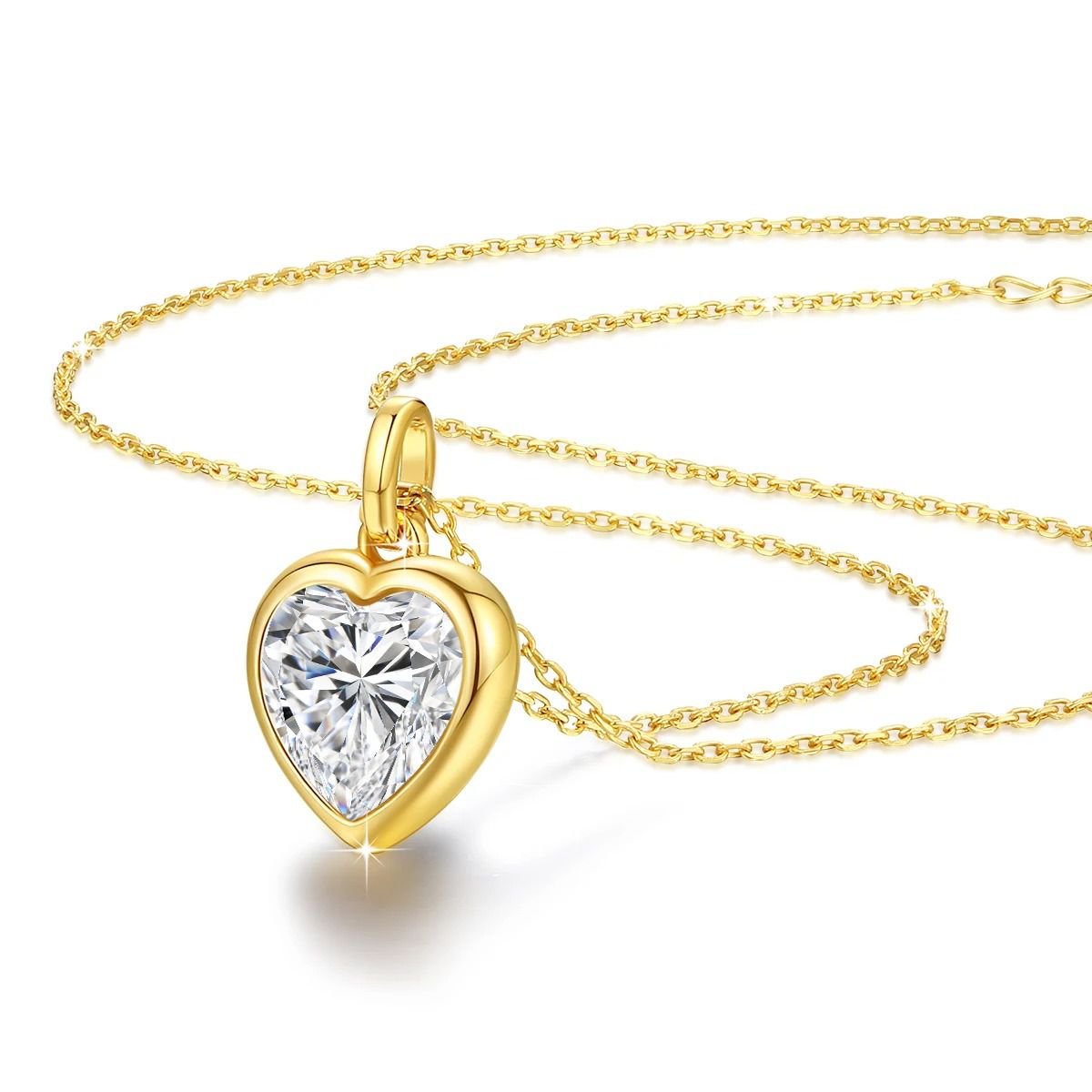
For shoppers already comparing pendant styles, the decision often tracks back to the engagement ring. A bride who wears a moissanite engagement ring often chooses a matching solitaire moissanite pendant so her jewelry tells one consistent story. A bride whose style leans romantic and vintage is more often drawn to a pearl.
Neckline is the deciding factor
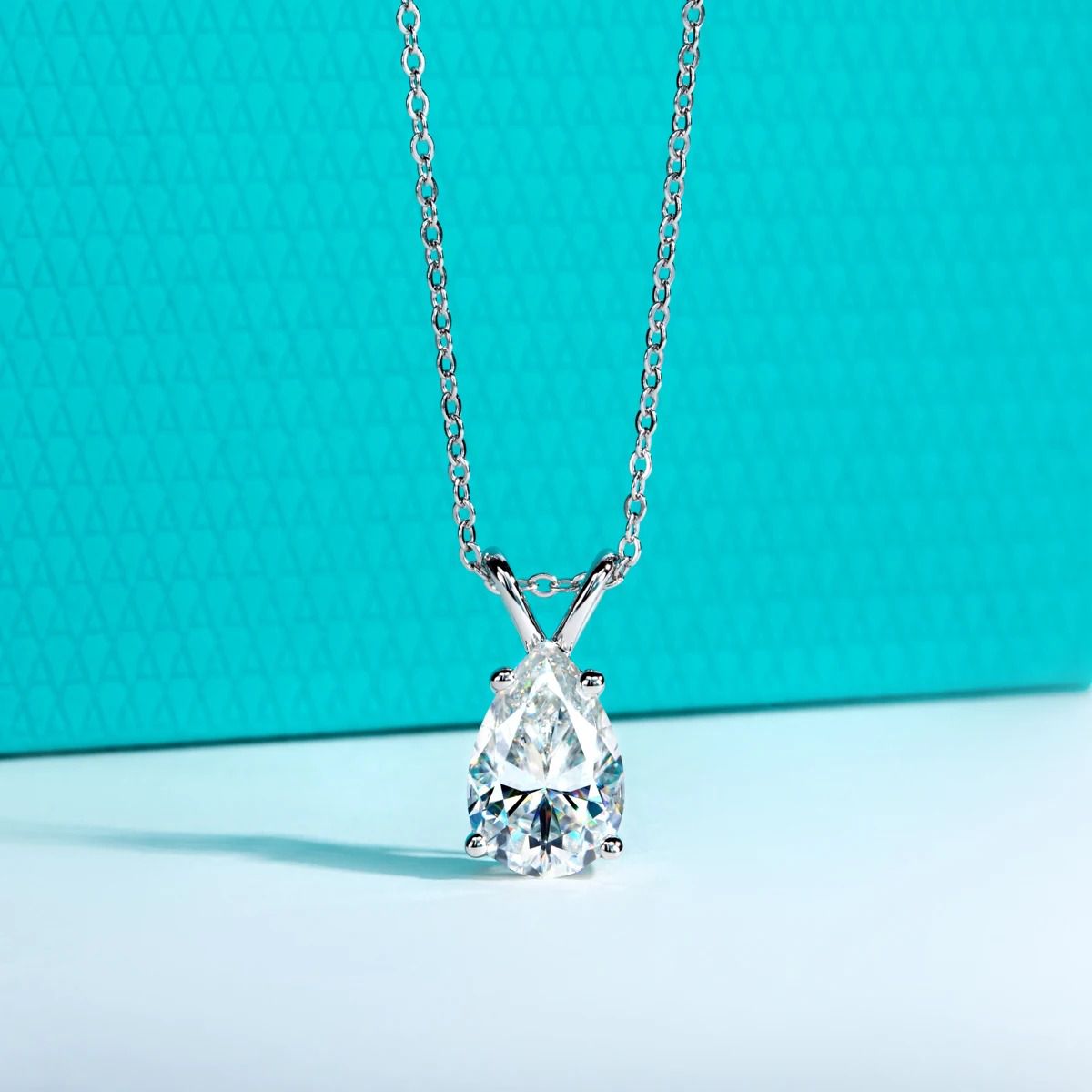
The single most useful rule is to match the pendant to the dress neckline rather than to personal taste in isolation. A high bateau or boat neck calls for a short chain that sits right at the throat, which a single pearl handles beautifully. A plunging V-neck benefits from a longer drop that follows the line of the dress, where a teardrop moissanite pendant echoes the shape of the neckline. This is the same logic behind guidance on choosing a necklace for the wedding dress neckline—the dress geometry sets the length, and the stone type sets the mood.
Care and durability on the day
Pearls are organic and sensitive. They dislike perfume, hairspray, and makeup, all of which brides apply heavily on the morning of a wedding. A pearl pendant should be the very last thing put on and the first thing taken off, and it needs a gentle wipe after the day. Moissanite is far more forgiving; it shrugs off sprays, lotion, and sweat without dulling, and it can be cleaned with the same mild solution used on the ring. For a bride who wants to relax through a long wedding day, the moissanite pendant is the lower-fuss choice. For a bride who enjoys the ritual of heirloom care, a pearl is a pleasure, not a chore.
Price and long-term wear
Pearl pendants vary enormously by quality, from affordable freshwater strands to investment-grade South Sea pearls. A moissanite pendant delivers a large, brilliant look at a predictable, accessible price, and it stays bright for decades without losing its luster. Neither is inherently cheaper. The practical difference is resale and daily wear after the wedding: a moissanite pendant transitions easily to office and evening wear, while pearls, beautiful as they are, tend to read as more formal and special-occasion. Choosing between them often comes down to how often the bride realistically wants to wear the piece again after the reception.
Layering with other wedding jewelry
The pendant rarely travels alone. Most brides also wear earrings, and sometimes a hairpiece or a bracelet, so the pendant has to share visual attention. A pearl pendant pairs beautifully with pearl studs for a soft, monochromatic look that never competes. A moissanite pendant pairs naturally with moissanite studs or small drops, carrying the sparkle through from ear to neck. The mistake to avoid is mixing a very bright pendant with very bright earrings on a detailed dress—the result can read as too much shimmer against a heavily beaded gown. On a simple, clean-lined dress, that same combination reads as glamorous.
Many brides resolve the dilemma by choosing one main sparkler and one soft accent. The pendant is the pendant, and the earrings pull back to a quieter material. This layering logic is the same one behind choosing a necklace for a specific neckline, and it keeps the whole look balanced rather than busy. Whether she lands on pearl or moissanite, the most important thing is that the pendant feels like her, so it catches the light on her wedding day and for every occasion after.
Making the final call
If the dress is simple, the venue is formal, and the bride leans toward a soft classic look, a pearl pendant is the graceful choice. If the dress is modern, the photos matter, and she wants a piece she will reach for on ordinary evenings too, the moissanite pendant will wear better over a lifetime of use. There is no prize for picking the “right” material, only for picking the one she will still love looking down at a decade from now. Trying both against the actual dress under good light is the fastest way to feel the difference.
The International Gem Society moissanite guide explains how moissanite performs in daily wear compared with diamond.
Authoritative References
For buyers who need to verify the technical and regulatory basis of this guide, the following independent institutions publish authoritative reference data:
- GIA Gem Encyclopedia - independent grading and identification reference for natural and lab-grown gems.
- Wikipedia: Moissanite - peer-reviewed background on moissanite chemistry, optics and history.
Frequently Asked Questions
Is moissanite a good diamond alternative for retail buyers?
Yes for price-sensitive customers who want brilliance and hardness. Moissanite ranks 9.25 on the Mohs scale, holds up to daily wear and costs a fraction of a natural diamond of the same size, so it resells fast in bridal and fashion lines.
What is the minimum order for wholesale moissanite?
MOQ starts at 50 pieces per design for stock items. Custom cuts and private-label settings usually start at 100–300 pieces depending on the mold.
Do you provide certificates with moissanite stones?
Yes. Every parcel ships with GRA or IGI documentation listing carat weight, color grade and cut. We recommend passing the certificate to your end customer for trust.
How long does sample and bulk production take?
Samples ship in 3–5 days. Bulk runs take 15–20 days under 500 pieces, and 25–30 days for custom work.
Send your spec sheet — stone, cut, size, plating and quantity — and we will return a costed timeline.
Ask the workshop