Necklaces & Pendants
Pearl and Moissanite Together: A Bridal Pendant Styling Guide
Pearl and moissanite are two materials that should not work as well together as they do. Pearl is soft, organic, and quietly lustrous. Moissanite is bright, faceted, and unmistakably sparkling. Pair them in one pendant, though, and the contrast becomes the point. The pearl grounds the sparkle, and the moissanite lifts the pearl out of vintage costume territory. It is one of the most elegant bridal pendant combinations available, and it is having a moment.
Why the pairing works
Pearl has been a bridal material for centuries, so it carries instant elegance. But on its own, a pearl pendant can read traditional or even old-fashioned to a modern bride. Add a small moissanite accent beside or above the pearl, and the same piece suddenly reads contemporary. The moissanite catches the light during portraits, while the pearl adds a warm, diffused glow that flatters skin. Together they give a pendant two different kinds of shine, which is more interesting than either material alone.
This mix also suits a wide range of gown styles. A pearl-and-moissanite pendant reads romantic against lace, minimal against a slip dress, and heritage-rich against a satin ballgown. It is one of those pieces that feels bridal without being costume-y, so it transitions easily from ceremony to after-party.
Choosing the pearl
Freshwater pearls are the most common and affordable choice, with soft, rounded luster and gentle variations in shape. Akoya pearls are rounder and brighter, with a crisper mirror-like surface. For a bridal pendant, a 7 to 9 mm pearl is the sweet spot, large enough to read on camera without overwhelming a delicate chain. Choose a pearl with a clean, even surface and a strong rose or silver overtone that complements your skin. For chain and bail choices, our pendant bail guide explains how the setting influences the drape.
Where to place the moissanite
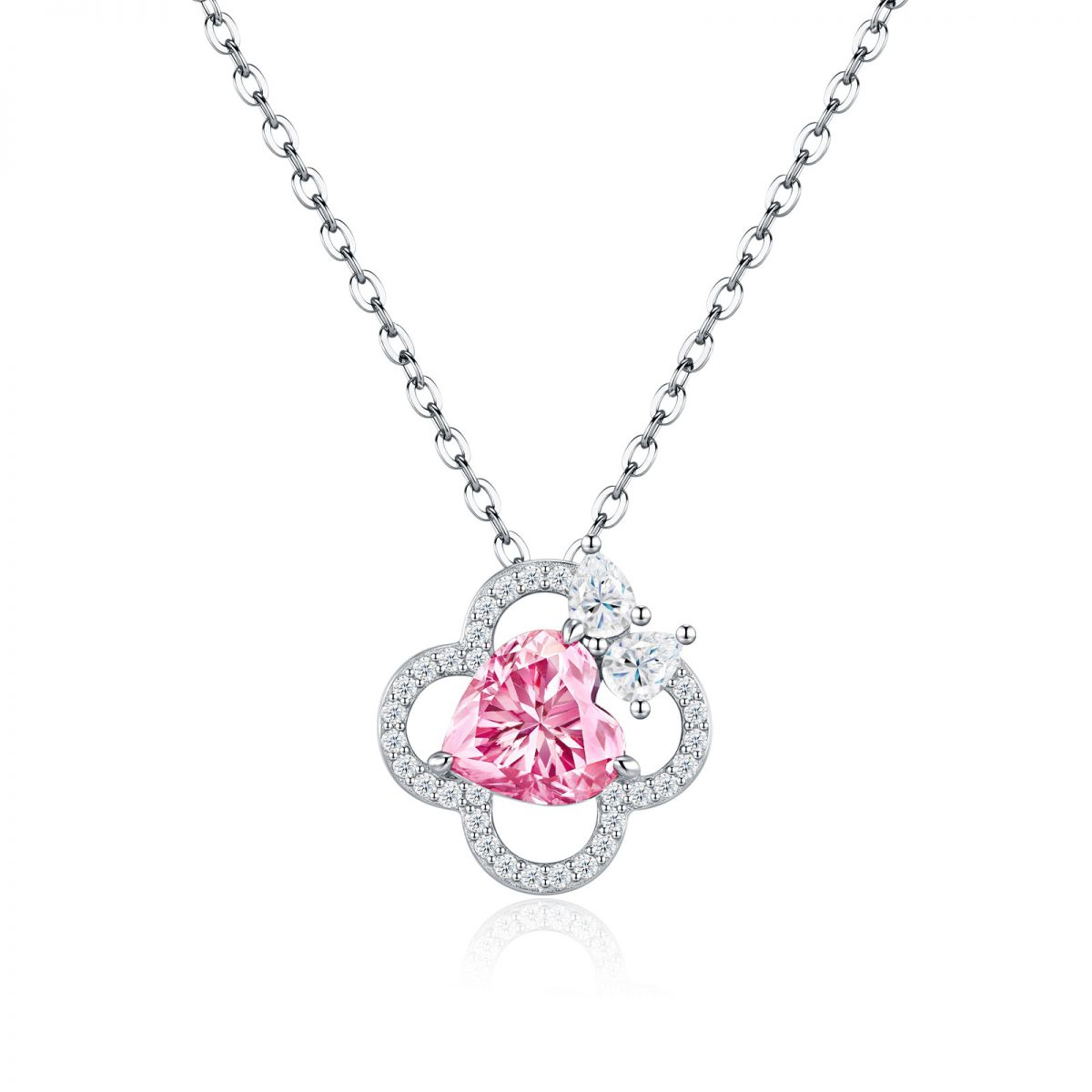
The moissanite accent can sit above the pearl as a small dangling stone, beside it in a cluster, or as a halo that encircles the pearl. A single stone above the pearl is the most timeless and works with a solitaire-style setting. A halo around the pearl adds glamour and pairs naturally with a solitaire-style engagement ring if you want the two pieces to speak to each other. Keep the moissanite modest, under half a carat, so the pearl remains the lead.
Styling the rest of the look
Because the pendant already carries two materials, let earrings echo one of them. Pearl studs or small pearl drops continue the soft tone, while moissanite studs continue the sparkle. Avoid stacking a second necklace on top, since the pendant is doing enough work. A sweetheart or off-the-shoulder neckline shows the pendant to best effect, and a high neckline should be left clear so the piece can sit on bare skin.
Metal tone choice ties it all together. White gold or platinum makes the moissanite look its whitest and pairs with cool ivory gowns. Rose gold warms the pearl's overtone and suits champagne or blush dresses. Yellow gold leans into the heirloom feeling and works with autumn or vintage palettes.
How the pair compares to other bridal pendants
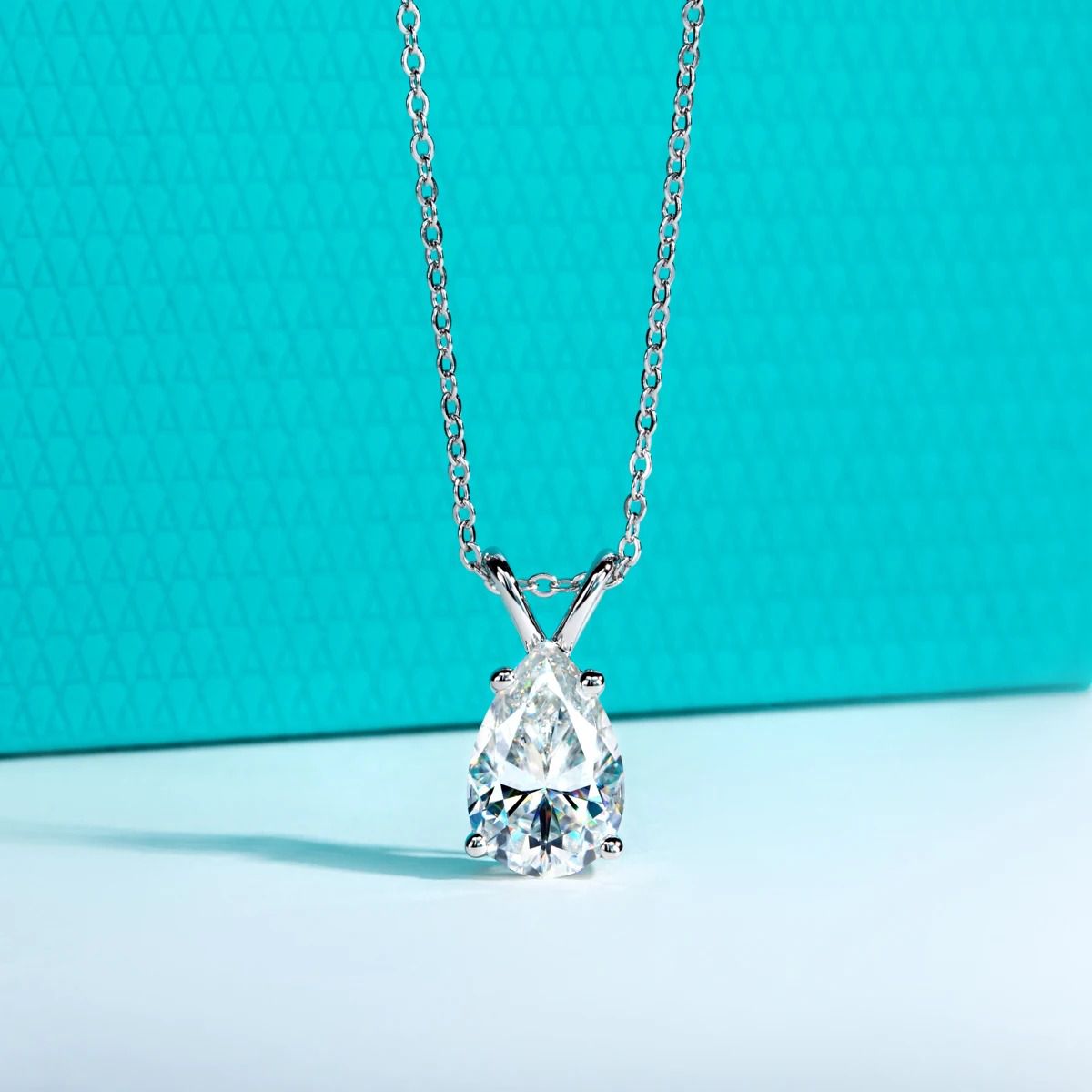
Against a pure moissanite solitaire pendant, the pearl version reads softer and warmer, which suits a bride who wants elegance without a lot of sparkle. Against a pure pearl pendant, the moissanite addition adds the light-catching detail that photographs well. Most pendants lean one way or the other, but the combination gives a bride a piece that works in both formal and casual settings. It also pairs naturally with an engagement ring: if the ring carries a moissanite, the pendant echoes it, and if the ring is plain, the pendant supplies the sparkle.
For brides who wear a veil or a high-neck lace gown, a smaller pearl-and-moissanite drop sits cleanly on the collarbone without competing with the fabric. For a strapless gown, a slightly larger pearl with a halo can become the main jewelry statement, with earrings kept to studs. Our neckline guide helps match the pendant size to the dress.
What this pendant becomes after the day
Unlike a very wedding-specific tiara or a statement collar, a pearl-and-moissanite pendant is a lifetime piece. It suits anniversaries, dinner dates, and office weeks alike. Many brides wear it on their first wedding anniversary and find it means more the second time around than the first. With proper care, a freshwater or Akoya pearl keeps its luster for decades, and the moissanite never clouds. That longevity is part of why the combination has become such a beloved bridal classic.
Caring for pearls
Pearls are softer than moissanite and need a little more care. Put the pendant on after makeup and perfume, because cosmetics dull the nacre. Wipe it with a soft, damp cloth after wearing, and store it separately from harder stones so it does not scratch. Periodic re-stringing, if the pearl is threaded, keeps the strand secure. Treated well, a pearl-and-moissanite pendant becomes the kind of piece you pass down.
The bottom line
Pearl and moissanite together is the bridal pendant that gives you tradition and modernity in one. Choose a clean, well-matched pearl, let the moissanite play a supporting role, and style the rest of the jewelry quietly. The result is a pendant that looks like it belongs on you, not on a mannequin.
Independent background on moissanite — how its hardness and refractive index compare with diamond — is documented in the Wikipedia article on moissanite.
Frequently Asked Questions
Is moissanite a good diamond alternative for retail buyers?
Yes for price-sensitive customers who want brilliance and hardness. Moissanite ranks 9.25 on the Mohs scale, holds up to daily wear and costs a fraction of a natural diamond of the same size, so it resells fast in bridal and fashion lines.
What is the minimum order for wholesale moissanite?
MOQ starts at 50 pieces per design for stock items. Custom cuts and private-label settings usually start at 100–300 pieces depending on the mold.
Do you provide certificates with moissanite stones?
Yes. Every parcel ships with GRA or IGI documentation listing carat weight, color grade and cut. We recommend passing the certificate to your end customer for trust.
How long does sample and bulk production take?
Samples ship in 3–5 days. Bulk runs take 15–20 days under 500 pieces, and 25–30 days for custom work.
Send your spec sheet — stone, cut, size, plating and quantity — and we will return a costed timeline.
Ask the workshop