Engagement Rings
How Moissanite Solitaire Engagement Rings Compare for US Retailers
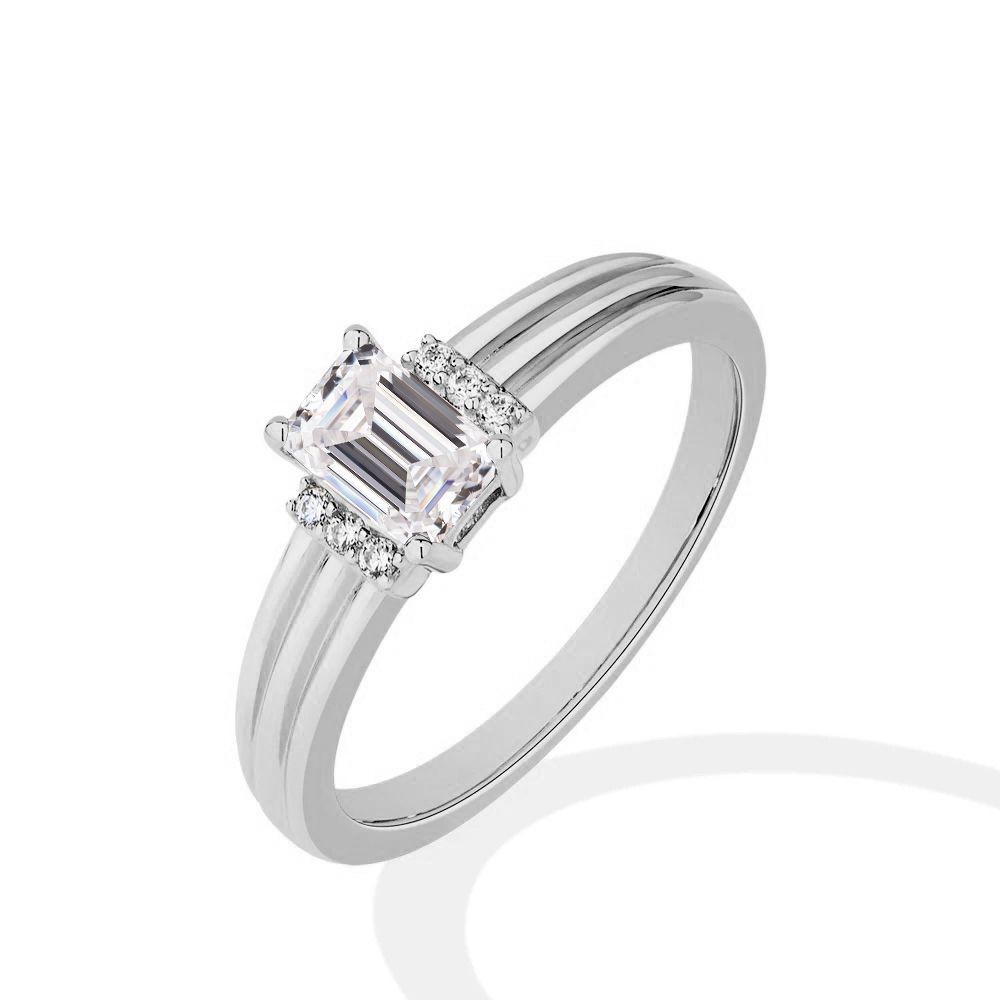
Independent jewelers who added a moissanite solitaire case in the last three years usually report the same pattern: the piece that started as a price-anchor for diamond shoppers quietly becomes the best-turning item in the engagement wall. The stone reads white, it rings on a diamond tester if you use the older thermal units, and the wholesale cost per finished ring leaves room for the 2.5x to 3x markup most US bridal shops run. This guide walks through what matters when you stock solitaires for resale rather than for yourself.
Read the mm size, not the carat weight
Moissanite is less dense than diamond, so a stone that looks like one carat weighs far less than one carat. A round brilliant that measures 6.5mm across will visually read as roughly a 1-carat diamond, but its actual weight is around 0.88 to 0.92 carats. If you quote a customer a '1-carat equivalent' solitaire, you are selling the visual diameter, not the metric weight. Get your sales team used to saying it that way; it prevents returns when someone puts the stone on a scale at home.
The sizes US customers ask for most often cluster in three bands. The entry point is 5mm, the everyday step-up is 6.5mm, and the statement size is 8mm. Below is the visual equivalent your staff should memorize.
| Round mm | Diamond look-alike | Typical wholesale stone cost | Finished solitaire (925 silver) wholesale |
|---|---|---|---|
| 4.0 mm | 0.25 ct | $6 - $10 | $22 - $30 |
| 5.0 mm | 0.50 ct | $10 - $16 | $26 - $36 |
| 6.5 mm | 1.0 ct | $18 - $30 | $32 - $48 |
| 8.0 mm | 2.0 ct | $32 - $55 | $48 - $72 |
| 9.0 mm | 3.0 ct | $55 - $95 | $70 - $110 |
These are FOB reference tiers for D-color VVS1 round stones with a GRA card. Sterling silver settings plated in rhodium or platinum finish sit at the low end of the finished range; switching to solid 10k or 14k white gold moves the wholesale number up by roughly the gold weight of the shank, which for a 2mm band is usually $18 to $35 extra.
Color and clarity: what D VVS1 actually means on the bench
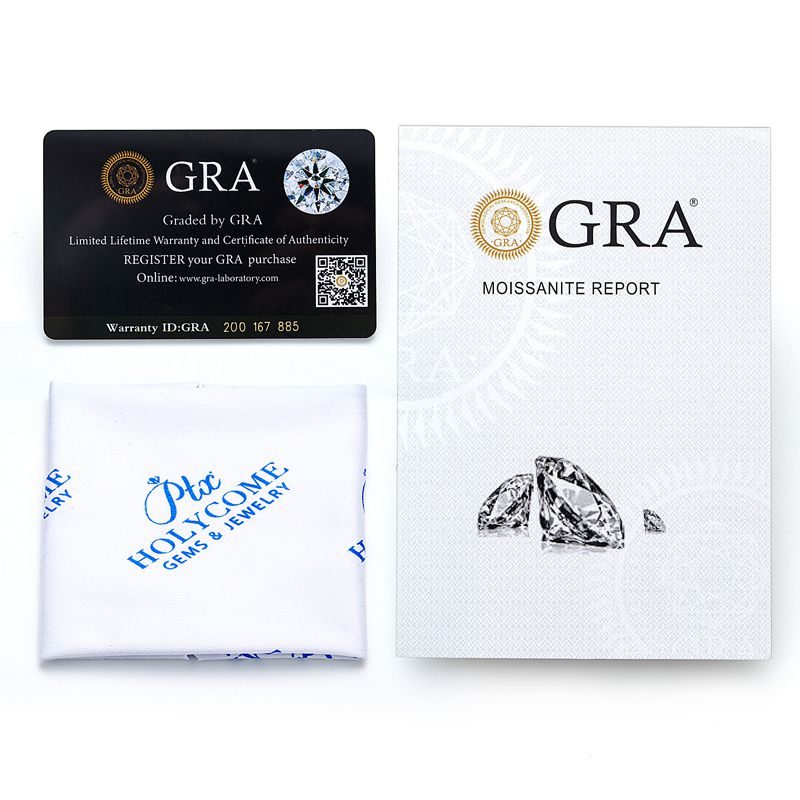
The stones we source for our wholesale bridal collection are graded D color and VVS1 clarity on the GRA scale. In plain terms: the stone looks white-face up against white gold or platinum, and under 10x loupe you have to hunt for inclusions rather than spot them in three seconds. That grade is the ceiling of what commercial moissanite runs; you will see stones marketed as 'DEF' or 'VVS' at lower price points, and the difference is usually visible in the face-up color the moment you set the stone next to a known-good sample. Buy a comparison set once, keep it in your safe, and reject any batch that sits noticeably warmer than it.
Settings that reduce returns
A solitaire is only as quiet as its setting. The two failure points retailers call us about most are a wobbling stone and a band that bends on resize. We stock solitaires built around:
- Six-prong heads in 1.5mm gauge for 6.5mm and up, which catch light from more angles than four prongs and hold the stone under daily knocks.
- Comfort-fit rounded shanks at 2.0mm to 2.2mm width, which resize cleanly without thinning the wall.
- Rhodium or platinum plating over nickel-free 925 silver, stamped .925, for shops that want a stamped metal story on the card.
- Solid 14k white gold options for customers who will never accept plated silver at retail price.
MOQ, lead time and reorder cadence
Stock solitaires move fast in the middle sizes. Our MOQ per solitaire SKU is five pieces, and in-stock sizes ship within three to seven business days from our US-aligned warehouse workflow. Custom head work or solid-gold settings run 15 to 25 days. We suggest opening with one six-prong 6.5mm and one four-prong 5mm in sizes 5 through 7, then reordering the size that walks out the door in the first month. You will learn your local size distribution in a single quarter, and after that the shelf stocks itself.
Talking to customers about the diamond tester
Some shoppers will ask, half-joking, whether the ring passes a diamond tester. The honest answer is that most thermal testers read moissanite as diamond because it conducts heat the same way; newer dual-function testers that add electrical-conductivity reading will flag it. Do not coach your staff to dodge the question. The customer who asks about the tester is the one who already knows what moissanite is, and she will respect a straight answer more than a sales line. Explain that the stone is a lab-grown silicon carbide, that it is harder than sapphire and ruby, and that it will hold its fire for decades with the same care you would give any fine jewelry. That framing converts the skeptical shopper faster than pretending the stone is something it is not.
The other question that comes up is everyday wear. Moissanite rates 9.25 on the Mohs scale, which is below diamond's 10 but well above quartz and topaz. A woman who wears her solitaire while gardening or washing dishes will dull the plating long before she scratches the stone. Teach that to the customer at the sale, and you reduce the warranty emails that otherwise land in your inbox two winters later.
The current in-stock solitaires, head styles and size runs are listed inside our wholesale engagement ring collection. Open with one six-prong 6.5mm and one four-prong 5mm in sizes 5 through 7, then let the first month tell you what your local customer wants.
Gemstone grading terminology used here follows the Gemological Institute of America’s gem encyclopedia.
Frequently Asked Questions
Is moissanite a good diamond alternative for retail buyers?
Yes for price-sensitive customers who want brilliance and hardness. Moissanite ranks 9.25 on the Mohs scale, holds up to daily wear and costs a fraction of a natural diamond of the same size, so it resells fast in bridal and fashion lines.
What is the minimum order for wholesale moissanite?
MOQ starts at 50 pieces per design for stock items. Custom cuts and private-label settings usually start at 100–300 pieces depending on the mold.
Do you provide certificates with moissanite stones?
Yes. Every parcel ships with GRA or IGI documentation listing carat weight, color grade and cut. We recommend passing the certificate to your end customer for trust.
How long does sample and bulk production take?
Samples ship in 3–5 days. Bulk runs take 15–20 days under 500 pieces, and 25–30 days for custom work.
Send your spec sheet — stone, cut, size, plating and quantity — and we will return a costed timeline.
Ask the workshop