Engagement Rings
Milgrain Edging in Bridal Rings: A Retail Buyer's Guide to the Revival
If you have walked a bridal jewelry trade show in the last year, you have probably noticed a delicate detail creeping back onto solitaire and halo rings: a fine, beaded border running along the edges of the shank, the halo, and sometimes the gallery rails. That detail is milgrain, and after a decade dominated by clean, modern knife-edge bands, it is back in demand.
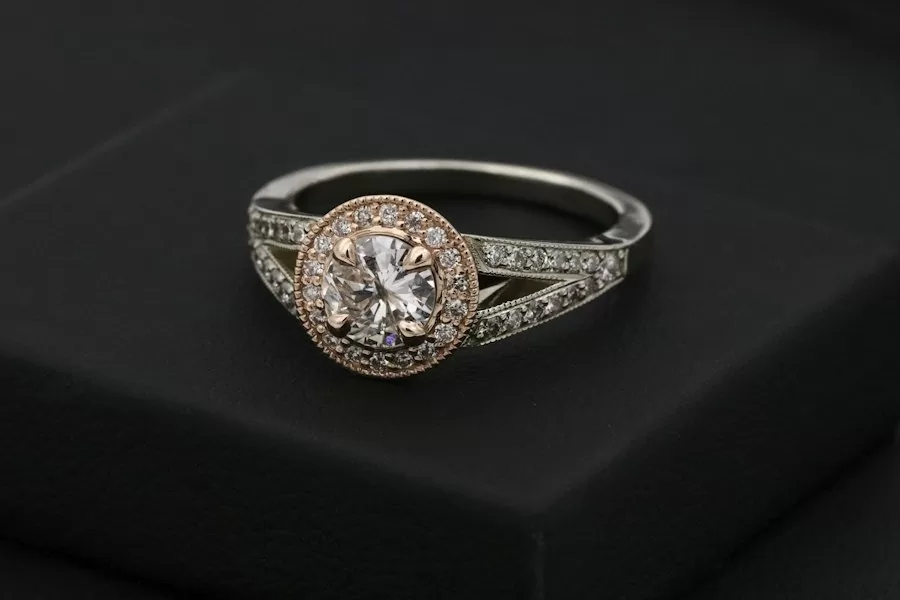
Milgrain comes from the French word for “thousand grains.” Artisans roll a hardened steel tool along the metal edge, pressing a row of tiny, uniform beads into the surface. The result is a texture that reads as antique even when the ring itself is brand new. Edwardian jewelers used it heavily on lace-like platinum work, and Victorian pieces relied on it to define borders around gemstones. Today’s brides are discovering that heritage through period dramas, estate auctions, and Pinterest boards crowded with heirloom-style rings.
Why milgrain is trending now
The pendulum of bridal fashion has swung away from the stark, minimalist designs that defined the 2010s. Brides born after 1995 grew up seeing “grandmother’s ring” framed as romantic rather than dated. They want a ring that feels personal and collected, not cloned. Milgrain delivers that instantly. A plain solitaire looks contemporary; the same solitaire with a beaded rail looks like it could have been passed down three generations.
It also photographs beautifully. The micro-texture catches light differently from a polished band, giving product shots depth and a handcrafted feel that flat studio lighting cannot replicate on a plain shank. For retailers selling online, that texture improves conversion because it signals craftsmanship.
Which settings suit milgrain best
Milgrain pairs most naturally with settings that already carry a vintage vocabulary. Bezel and halo rings, especially those inspired by Art Deco or Edwardian design, benefit enormously from a beaded edge along the outer halo. The detail frames the center stone without competing with it. Cathedral and euro-shank designs also read beautifully with milgrain along the shoulder rails.
Conversely, ultra-modern flat-profile bands and sleek tension settings usually clash with milgrain, because the whole point of those designs is uninterrupted metal. If a customer loves a modern solitaire, reserve the detail for the wedding band rather than forcing it onto the engagement ring.
For context on the shape of the center stone, our comparison of round, oval, pear, emerald, and princess cuts can help buyers pair the right stone with a beaded setting. Emerald and Asscher cuts, in particular, look at home inside a milgrain frame because their step-cut planes already evoke the 1920s.
Stocking guidance for retailers
You do not need to overhaul your case. Start with two or three milgrain SKUs across price tiers: a slim platinum-style bezel solitaire, a rose-gold halo, and a two-tone vintage band. Display them next to your plain equivalents so customers can compare the texture in person. Milgrain is one of those details that does not photograph its best on small screens; letting a client run a finger along the beads closes sales.
Because milgrain is a hand-applied finish, expect slightly higher pricing and longer lead times than machine-polished bands. That is a selling point, not a defect. Frame it as heirloom-level workmanship. If your store builds to order, the vintage-style moissanite program pairs naturally with these details, letting customers choose a center stone and add milgrain rails as an upgrade.
Care and repair considerations
Beaded edges collect slightly more lotion and skin oils than a flat polished surface, so advise clients to clean under the beads with a soft brush. Our guide on cleaning an engagement ring at home covers the technique. On the repair side, resizing a band with milgrain on the shank means the jeweler must restore the beads by hand after cutting and soldering. Make this clear up front so customers do not expect a quick resize turnaround.
How to describe milgrain to shoppers
Most customers will not recognize the word, but they will recognize the feeling. Show them the ring, run your fingertip along the beads, and describe it as hand-rolled texture that catches light a polished band cannot. Mention that the same detail appears in family heirlooms, which primes the emotional association. If a bride compares a plain band to a milgrain band side by side, the textured one almost always wins on perceived value, even at a slightly higher price. That perception gap is where the margin lives.
The bottom line
Milgrain is not a fad that will vanish next season. It is a finish that has recurred across a century of jewelry, and it is re-emerging because brides want rings with soul. Retailers who add a small, well-chosen milgrain assortment now will be positioned for the heirloom-and-vintage direction this decade is taking. Keep the SKU count tight, display the texture in person, and price the handwork honestly.
Independent background on moissanite — how its hardness and refractive index compare with diamond — is documented in the Wikipedia article on moissanite.
Frequently Asked Questions
What ring sizes can you supply in bulk?
US sizes 5–12 including half sizes. Send a size breakdown with your order and we cast to that curve; comfort-fit inner bands reduce resize requests.
Can I order a mixed size run instead of one size?
Yes. Mixed runs are standard for wholesale: specify quantity per size and we pack and label by size at no extra labor cost.
What is the MOQ for custom ring designs?
50 pieces per design for existing molds; 100–300 pieces when a new mold or CAD model is required.
How should I price rings for retail margin?
Most partners use a 3–4x markup on FOB cost for sterling and 2.5–3x for moissanite solos, which keeps landed cost under 30% of retail.
Send your spec sheet — stone, cut, size, plating and quantity — and we will return a costed timeline.
Ask the workshop



