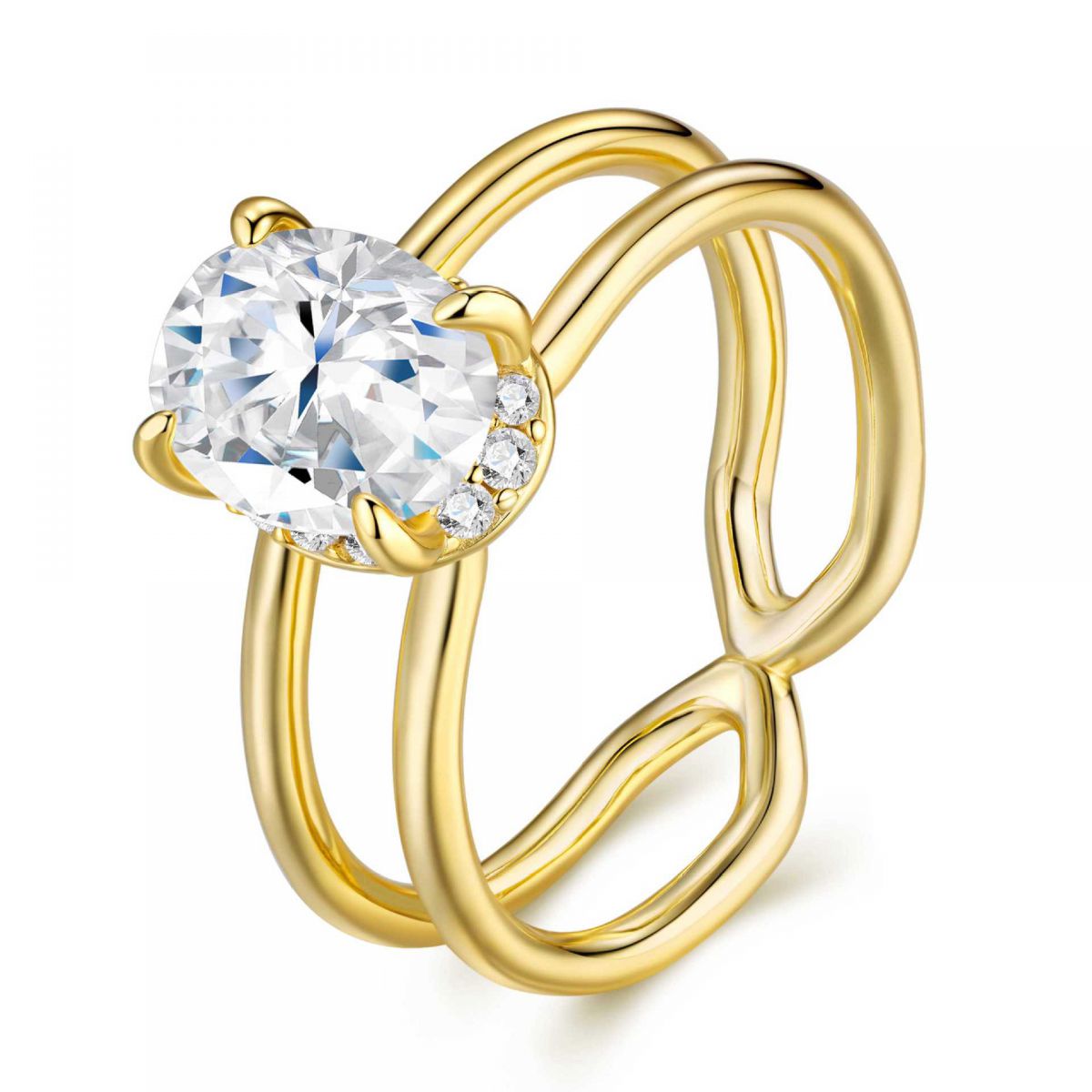
How to Price Jewelry for Retail Wholesale Keystone Pricing Guide
How to Price Jewelry for Retail Wholesale Keystone Pricing Guide - HOLYCOME
New jewelers consistently ask the same question: how to price jewelry so that it sells, covers all costs, and leaves real profit. Guesswork is the fastest way to either price yourself out of the market or leave money on the table. A clear pricing formula, applied consistently across every SKU, is what separates profitable jewelry brands from hobbyists.
This guide walks through keystone pricing, wholesale-to-retail markup, labor and overhead allocation, channel-specific pricing for Etsy, Amazon, boutique, and wholesale, and common mistakes that sink new brands. HOLYCOME works with hundreds of jewelry retailers and knows what works across price tiers.
https://gips3.baidu.com/it/u=3278487415,3048881240&fm=3086&app=3086&f=JPEG&wm=1,baiduai3,0,0,13,9&wmo=5,5?w=1024&h=1024
Start with True Cost of Goods Sold
Before you apply any markup, calculate COGS correctly. Most new makers under-count costs and think they are making money when they are actually losing it.
The COGS Formula
COGS per piece = Materials + Labor + Overhead allocation + Packaging + Shipping inbound
- Materials: metal (gold, silver, platinum by gram), stones (diamond, moissanite, CZ, gems per carat or per piece), findings (clasps, ear wires, jump rings, posts, chain), solder, and finishing consumables.
- Labor: time to make the piece at a fair hourly rate. Even if you make every piece yourself, assign $20-$40/hour; if you pay bench jewelers, use their fully-loaded wage including benefits.
- Overhead: rent, utilities, tools, equipment depreciation, website fees, software, insurance, marketing budget allocation. For small studios, allocate 15-30% of (materials + labor). For larger operations with full marketing teams, 30-50%.
- Packaging: boxes, pouches, cards, anti-tarnish strips, poly bags, polishing cloths. Usually $0.50-$5 per piece.
- Inbound shipping: shipping from supplier to you (stones, metal, findings). Allocate per piece.
Example: A silver pendant with $3 metal, $1 CZ, $2 labor at $30/hour × 4 min, $1.20 overhead (20% of mat+labor), $1 packaging, $0.30 inbound shipping = $8.50 COGS.
Keystone Pricing: The Foundation
Keystone is the traditional jewelry retail markup: wholesale price = COGS × 2; retail price = wholesale × 2 = COGS × 4. That is where "keystone" comes from: doubling at each level.
Keystone is not a rule you must follow blindly, but it is a starting baseline that accounts for the realities of retail: returns, markdowns, dead stock, sales commissions, rent, credit card fees (2-3%), and customer acquisition cost.
Why Keystone Works
If you wholesale at 2× COGS, your wholesale margin is 50%. That covers your overhead and gives you profit. If a retailer doubles that for their retail price, they land at 4× COGS. That gives them the 50% gross margin they need to cover rent, staff, and marketing.
When Keystone Is Not Enough
- Branded and designer pieces often run 2.5×–4× wholesale (6–10× COGS retail) to cover branding, storytelling, and design IP.
- Low-cost materials/high labor pieces (like hand-fabricated silverwork) can support higher multiples because the value is in the craft.
- High-fashion/editorial can run 5–8× wholesale for pieces sold through luxury boutiques.
When Keystone Is Too High
- Commodity jewelry (basic silver studs, plain bands) sold on Amazon/eBay cannot support full keystone because price comparison is instant. Markup here is often 1.5–2× wholesale (3–4× COGS retail).
- High-carat gold and diamond pieces above $5,000 retail often run thinner markups (1.5–2× wholesale, 3–4× COGS) because the absolute dollar margin is large even at lower multiples.
Channel-Specific Pricing
The same piece needs different prices depending on where you sell it. Build one master price list and apply channel rules to it.
| Channel | Typical markup over COGS | Notes |
|---|---|---|
| Direct to consumer (your website) | 4–8× | Highest margin; you keep the retail profit. Best channel long-term. |
| Etsy/Shopify small shop | 3–6× | Account for fees (~10%), returns, and ad spend. |
| Amazon | 3–4× | Price-sensitive, referral fees 15%, FBA fees. Stick to commodity/simple designs. |
| Boutique consignment | 2.5–4× retail (retail price); you receive 50-60% of retail when sold | Consignment split usually 50/50 or 60/40 (you/shop); low risk for boutique. |
| Wholesale to retail stores | 2× COGS (wholesale price); they mark up 2–2.5× to retail | Volume channel; lower margin per unit but larger orders. |
| Trunk shows/popups | 3–5× | Direct customer connection, venue costs 10-20% of sales. |
| Trade shows (selling wholesale) | 2–2.5× COGS wholesale | Booth costs $3,000-$20,000; price to cover that over volume. |
Psychological Price Points
Round numbers feel premium. Prices ending in 9 feel like a deal. Use both intentionally.
- Under $25 tier: $12, $15, $18, $22, $24. Gift and impulse buys.
- $25-$75 tier: $28, $35, $42, $48, $55, $65, $72. Everyday self-purchase.
- $75-$250 tier: $85, $95, $120, $145, $175, $195, $225. Gifting, special occasion.
- $250-$1,000 tier: $285, $325, $385, $450, $525, $650, $750, $895. Bridal party, milestone gifts.
- $1,000-$5,000 tier: Round numbers or .00 endings work better; $1,200, $1,800, $2,500, $3,200, $4,500 feel considered.
- Above $5,000: $6,500, $8,000, $9,500, $12,000, $15,000.
Adjust your calculated price to the nearest appealing number in the right band. A piece that calculates to $186 can sit at $185 (value feel) or $195 (premium feel) depending on positioning.
Common Pricing Mistakes
Forgetting Overhead
The #1 mistake. If your COGS only counts metal and stones, you are losing money on every sale. Studio rent, tools, electricity, photography, website, packaging, credit card fees, and taxes are real costs. Allocate them.
Undervaluing Labor
Makers who pay themselves $5/hour or nothing cannot scale. The moment you hire help, your "I do it for free" model collapses. Price as if you are paying a bench jeweler from day one.
Ignoring Customer Acquisition Cost
If you spend $500 on Instagram ads to make $1,500 in sales, CAC is 33% of revenue. Your margins must absorb that. Track CAC per channel and set prices that leave margin after marketing.
Pricing to Competitors Without Understanding Their Costs
Copying another maker's prices is dangerous if you do not know their overhead. They may be running a hobby from a spare bedroom with no employees, or they may be sourcing from a low-cost factory that cuts corners on metal purity.
Underpricing Premium Products
Customers expect higher prices to signal quality. A hand-fabricated ring priced too low triggers suspicion. If your work is genuinely differentiated (design, materials, craftsmanship, brand story), price it appropriately.
Overpricing Commodity Items
Basic silver studs and CZ tennis bracelets are commodity products; price them at market parity and differentiate on presentation, shipping speed, or bundle value instead.
Wholesale Pricing for Makers Who Supply Stores
If you sell wholesale to boutiques or retail chains, the standard formula is:
Wholesale price = (Materials + Labor + Overhead) × 2
MSRP / Retail price = Wholesale × 2 to 2.5
This gives retailers a 50-60% gross margin, which they need to cover their costs. If you want boutiques to carry your line, you must give them this margin. Lines priced too close to retail never get picked up.
Line Sheet Pricing Tips
- Offer quantity breaks: 10-25 pieces = full wholesale, 26-50 = 5% off, 51-100 = 10% off.
- Set opening order minimums ($500-$1,500) and reorder minimums ($200-$300).
- Include MSRP on every line sheet; boutiques need it to set their prices.
- State payment terms clearly: Net 30 for approved accounts, credit card for first orders.
- Offer free freight at order thresholds (e.g., free shipping over $1,000).
Pricing Lab Grown Diamond and Moissanite Jewelry
The new generation of diamond alternatives needs its own pricing logic because material cost is far below mined. Retailers who apply traditional diamond markup (2-3× cost on stone alone) end up pricing customers out of the category's biggest advantage.
Lab grown and moissanite jewelry sells best when priced at 2-4× COGS wholesale and 4-6× COGS retail. The absolute price point matters more than strict markup: a 2ct lab grown solitaire that costs you $400 should retail at $1,800-$2,500 (4.5-6×) to feel like "affordable luxury" vs. $8,000-$12,000 for mined. That is the magic of the category. HOLYCOME provides recommended MSRPs with every wholesale stone or finished piece quote.
FAQs About Jewelry Pricing
What is a good profit margin for a jewelry business?
Gross margin of 50-70% at wholesale and 60-80% at direct-to-consumer retail is healthy. Net profit (after all overhead and marketing) of 15-30% is excellent. Below 10% net means you are underpriced or overspending on overhead.
Should I offer discounts or sales?
Limited, strategic discounts work (Black Friday 15-20%, email sign-up 10%, first order 10%). Never discount more than 25% routinely or you train customers to wait for sales and erode perceived value.
How often should I revisit prices?
Review every 6 months or when material costs move more than 10% (gold and silver spot prices fluctuate). Reprice immediately if your overhead increases (rent, labor, ad costs).
How do I price custom and bespoke work?
Custom work uses time-and-materials plus a 30-50% design fee. Quote a firm price up front with a 30-50% non-refundable deposit, and include 1-2 revision rounds in the quote.
Should I include free shipping in my prices?
For DTC online sales, free shipping thresholds (e.g., free shipping over $75) work better than building shipping into every price. For wholesale, include shipping in the price only above a minimum order.
How do I stay profitable when ad costs rise?
Build a 20-30% marketing allowance into your COGS/margin structure. Focus on email list retention and repeat customers; repeat buyers have near-zero CAC and higher average order value.
Need help building a price list for HOLYCOME-sourced jewelry? Send us your target SKUs and selling channel, and our team will share recommended wholesale and retail price points based on what is selling across our partner network in 2026. With sound pricing, solid sourcing, and consistent quality, a jewelry business can deliver dependable margins for years.
For third-party reference, the Wikipedia article on moissanite details moissanite’s discovery, optical properties and use in jewelry.
Related Reading
- Start a Jewelry Business Wholesale Guide - HOLYCOME
- 925 Sterling Silver Jewelry Wholesale Buying Guide - HOLYCOME
- Lab Grown Diamonds Wholesale Bulk Buying Guide - HOLYCOME
Related reading: Bridal Set Pricing: How to Price Wholesale Sets for Retail Margin, Bridal Jewelry Wholesale Pricing: How Boutiques Should Read a Supplier, How to Price Bridal Jewelry: From Wholesale Cost to Retail Ticket.
Frequently Asked Questions
How do I verify a factory before a bulk order?
Request a production video, business licence, export records and a paid sample run.
What payment terms do you offer?
30% T/T deposit with the balance against the bill of lading.
What is your normal reject rate?
3 to 5% under 10x loupe inspection; defective units are replaced free in the next shipment.
Where is the factory?
Wuzhou, Guangxi, China, with shipments via Guangzhou or Shenzhen.
Send your spec sheet — stone, cut, size, plating and quantity — and we will return a costed timeline.
Ask the workshop