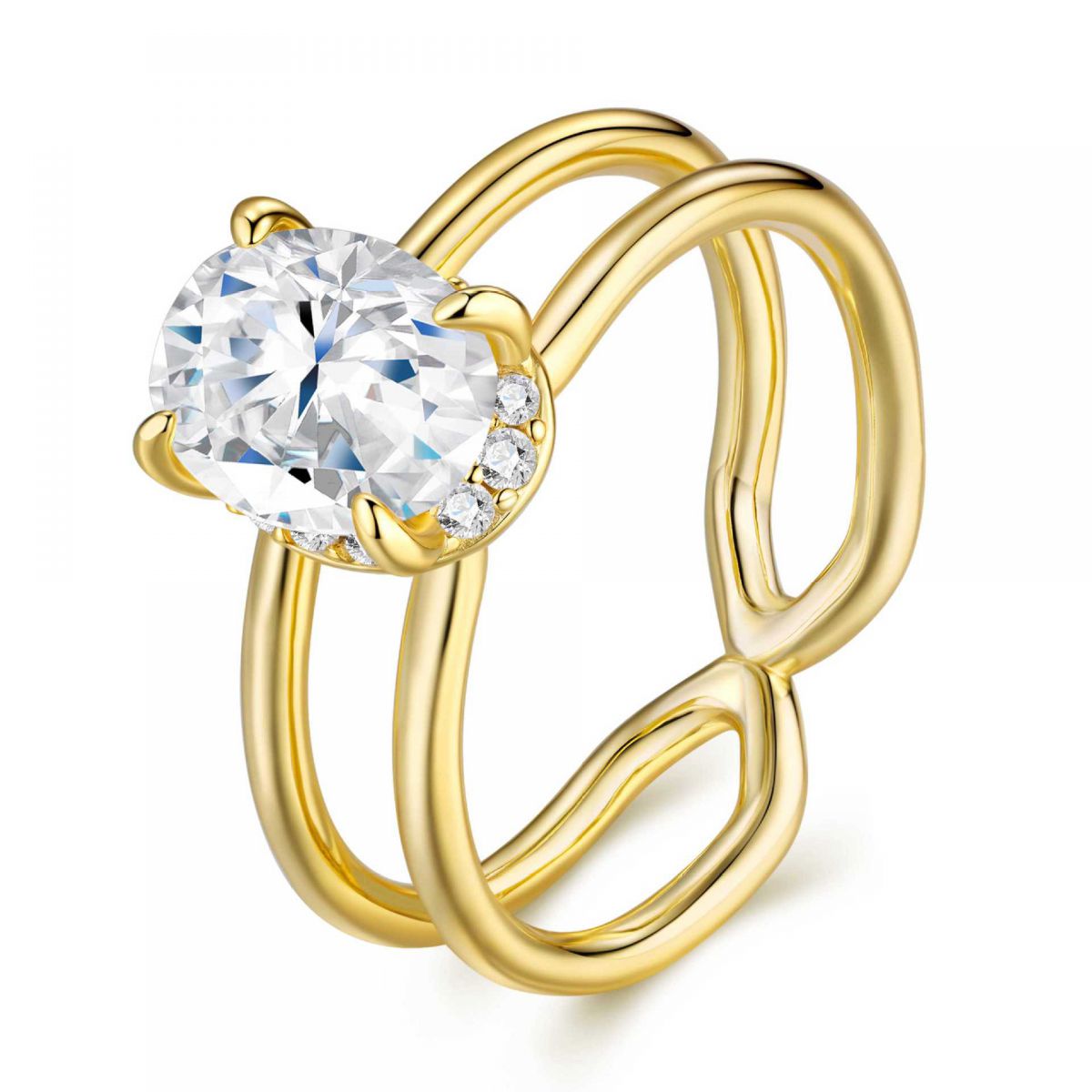
The single wedding band is quietly becoming the stacked wedding band. Modern couples buy a thin band for the wedding, then add a second, third or fourth band over the years — for anniversaries, the birth of a child, or simply because they like the look. For retailers, this changes the band business from one sale to a series of sales, and it rewards whoever stocks the right thin, stackable designs.
This guide explains the trend, which bands stack well, and how to merchandise them. See our wedding bands range for the styles.
Why couples are stacking
Three reasons. First, the aesthetic: a stack of thin bands looks modern and personal, like a collection rather than a single ring. Second, the budgeting: buying one thin band at a time spreads the cost, which suits younger couples. Third, the meaning: each band marks a life event, which is a story customers love to tell. The retailers who understand this sell the stack over years, not the ring once.
Which bands stack well
Thin bands — 2mm to 3mm — stack cleanly. Wide bands (5mm plus) do not stack because they take up too much finger. Mix plain bands, half-eternity bands and textured bands (like the double-layer stackable band) so the stack has variety. The key is that each band sits flush against the next, which is why contoured and flat-profile bands stack better than domed ones.
How to merchandise a stack
Show a stack built up on a display finger: a plain band, a thin pavé band, a textured band. Customers who would never buy four rings at once will often start with one and return for the others. Price the bands individually so the stack builds naturally. Train staff to mention that bands can be added later — that keeps the relationship going after the wedding. Our bridal sets range pairs naturally with stackable bands for the engagement-ring customer.
The anniversary repeat sale
This is the commercial prize. A couple who bought a stackable band at the wedding is a couple who comes back for a second band on the first anniversary, a third on the fifth, and so on. Retailers who remember this — by noting the customer's stack and reaching out — build a decade of repeat sales from one wedding. Plain and eternity bands like the clip-set eternity band are the natural additions.
What to stock
- A plain 2mm band in three metal colours — the base of every stack.
- A thin pavé or half-eternity band — the sparkle layer.
- A textured band (wheat, twistsian) — the contrast layer.
- A contoured band for customers with an existing engagement ring.
Pricing and margin
Thin bands are cheap to buy wholesale and retail at a healthy margin, especially when sold as part of a stack rather than as a single ring. A customer who buys four bands over four years spends more than the one-ring customer, and each band is a high-margin repeat purchase. Our tiered pricing on the wholesale info page makes stocking a wide range affordable.
The bottom line
Stackable bands turn a one-time wedding sale into a decade of anniversaries. Stock thin 2mm to 3mm bands in plain, pavé and textured styles, display them as a built-up stack, and train staff to mention future additions. The retailers who do this now will own the anniversary trade in their market. When you are ready to stock the range, request a wholesale quote.
The anniversary revenue, explained
The real prize in stackable bands is not the wedding sale — it is the decade of anniversaries after it. A couple who starts with one thin band will add another on the first anniversary, a third on the fifth, and often a full eternity band on a milestone. Each of those is a high-margin repeat sale, and it goes to the retailer who originally sold the stack. That is why training staff to mention "you can always add another band later" is worth so much: it plants the seed for a relationship, not a transaction. The wedding bands range includes the plain, pavé and textured styles that build a stack.
Frequently asked questions
What widths stack best? 2mm to 3mm bands stack cleanly; wide bands take up too much finger.
Do stacked bands wear each other? Slightly, over years. A polish every few years keeps them looking new, and it is a reason to check in with the customer.
Can any band be part of a stack? Plain and half-eternity bands stack best; ornate or domed bands do not sit flush.
How to build a stack on the customer's finger
Selling a stack starts with the engagement ring. When a customer buys a solitaire, show her two or three thin bands stacked next to it on her own hand — not on a display hand, on hers. Seeing how the stack sits on her finger, with her skin tone and her ring, is what makes her want the second and third band. Train staff to do this at the moment of purchase, because the customer who buys the solitaire in February will be back for the wedding band in the summer, and you want her to have seen the whole picture now.
The stack works because it is flexible. A customer can start with one plain band and add a pavé band for the first anniversary, then a textured band for the fifth. Each addition is a new sale, and each one is easy because she already knows your store and trusts your sizing. This is why keeping a small wall of 2mm to 3mm bands — plain, half-eternity, hammered, braided — is worth the space. The bands in our wedding bands range are designed to sit flush together, so your customers can mix and match without gaps.
Mixing metals inside a stack
A modern stack is rarely one metal. Customers increasingly layer a white-gold band next to a rose-gold band and a plain silver band, and the mixed look is deliberate rather than accidental. This is good news for you: it means a customer who buys one band is open to buying two more in different colours, widening the sale. When you display a stack, show the three metals together so customers see that mixing is the intended style, not a mismatch.
To price a stack, present each band as its own line and offer a small bundle saving when the customer takes two or three. This protects margin while still feeling like a deal. Train staff to mention, at the moment of the wedding-band purchase, that "many of our customers add another band on their first anniversary" — that single sentence plants the seed for the next sale. The bands in our wedding bands range sit flush across all three metal colours, so mixed stacks look intentional.