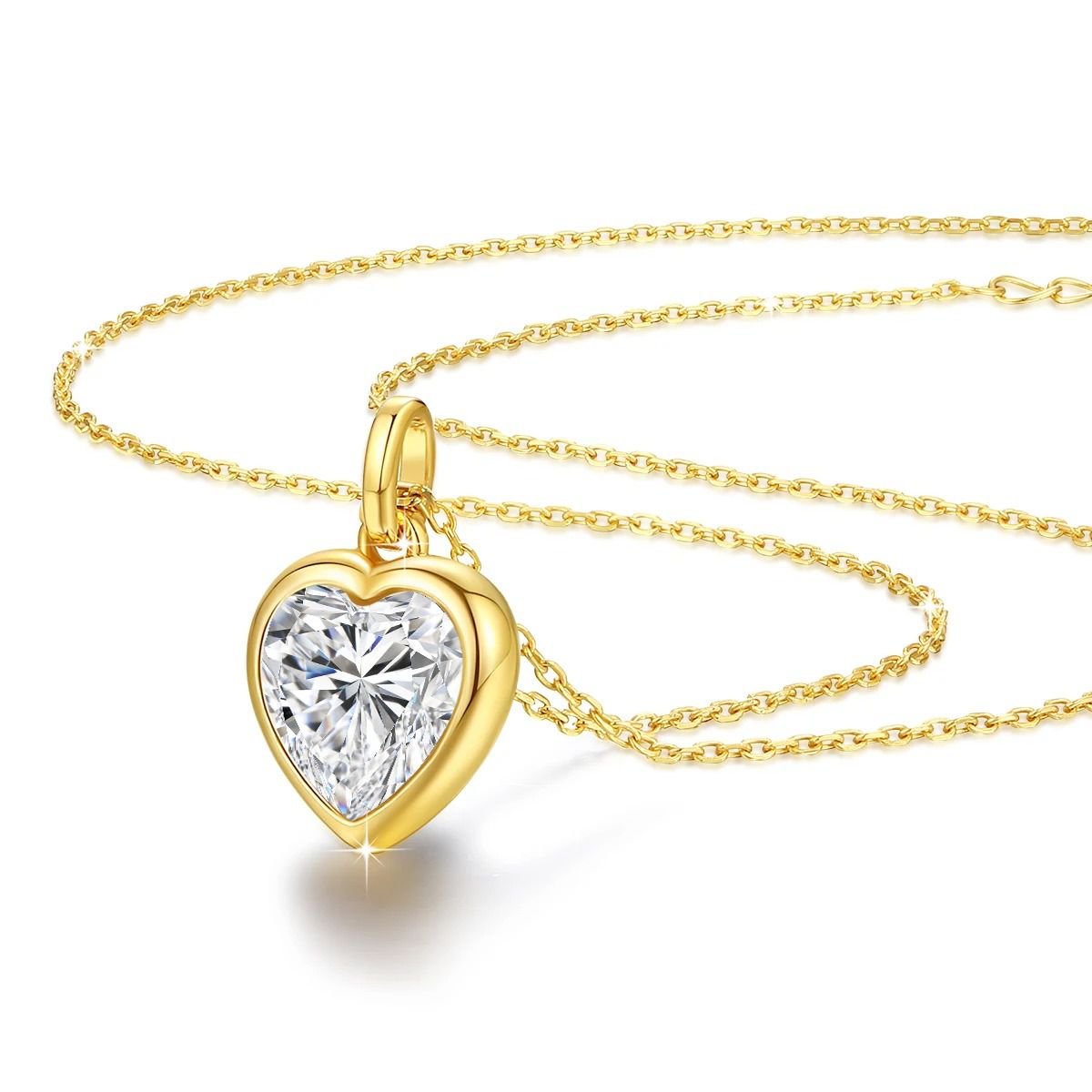
Necklaces & Pendants
Gold Chain Types Explained: Cable, Curb, Rope, and Box Chain for Bridal Pendants
A pendant is only as good as the chain it hangs from. A delicate stone on a chain that twists, kinks, or breaks turns a sentimental gift into a repair trip. Yet when customers shop for a bridal pendant, they fixate on the stone and treat the chain as an afterthought. The chain choices below explain what each link style feels like on the neck and which pendants it actually supports.
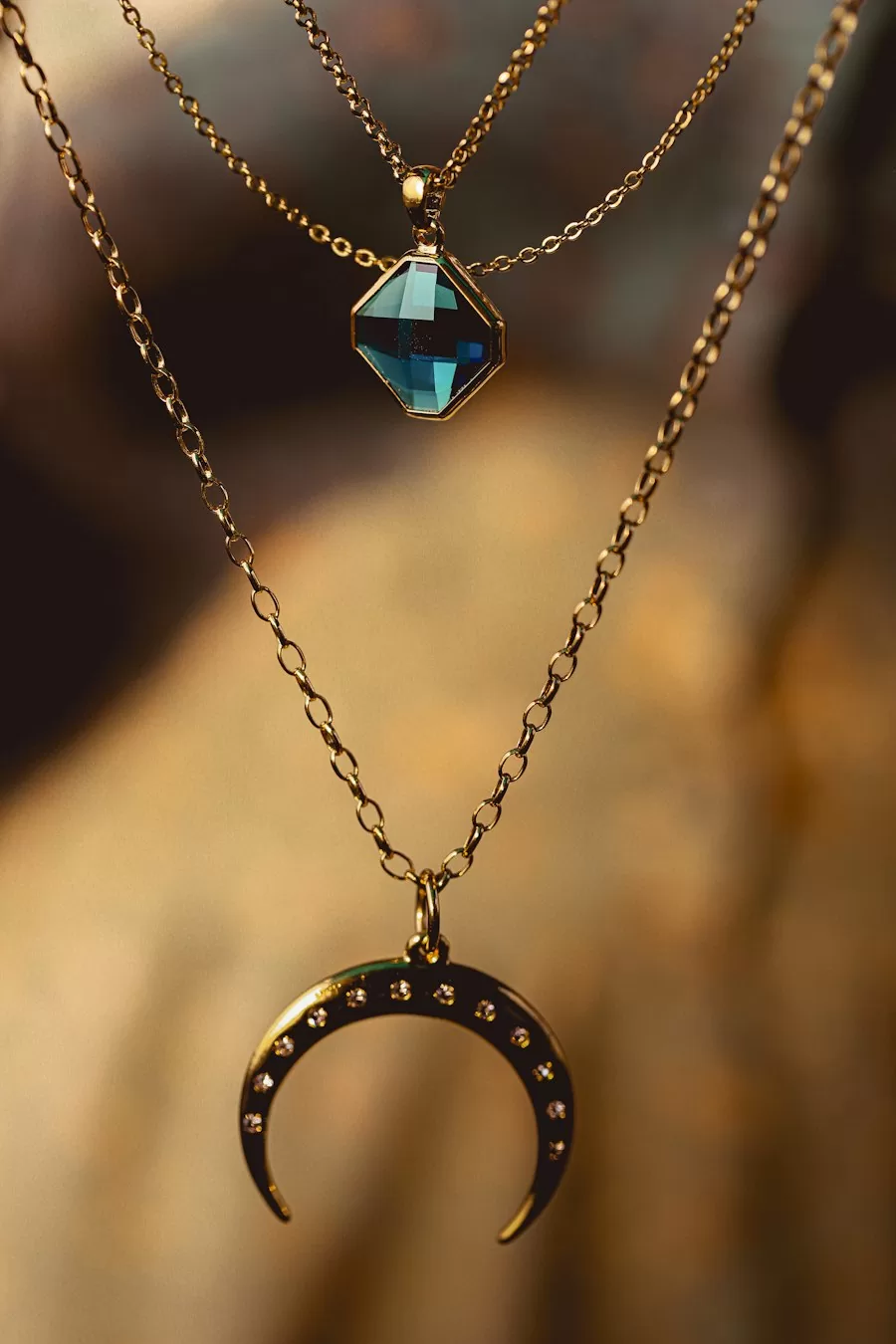
Cable chain: the everyday workhorse
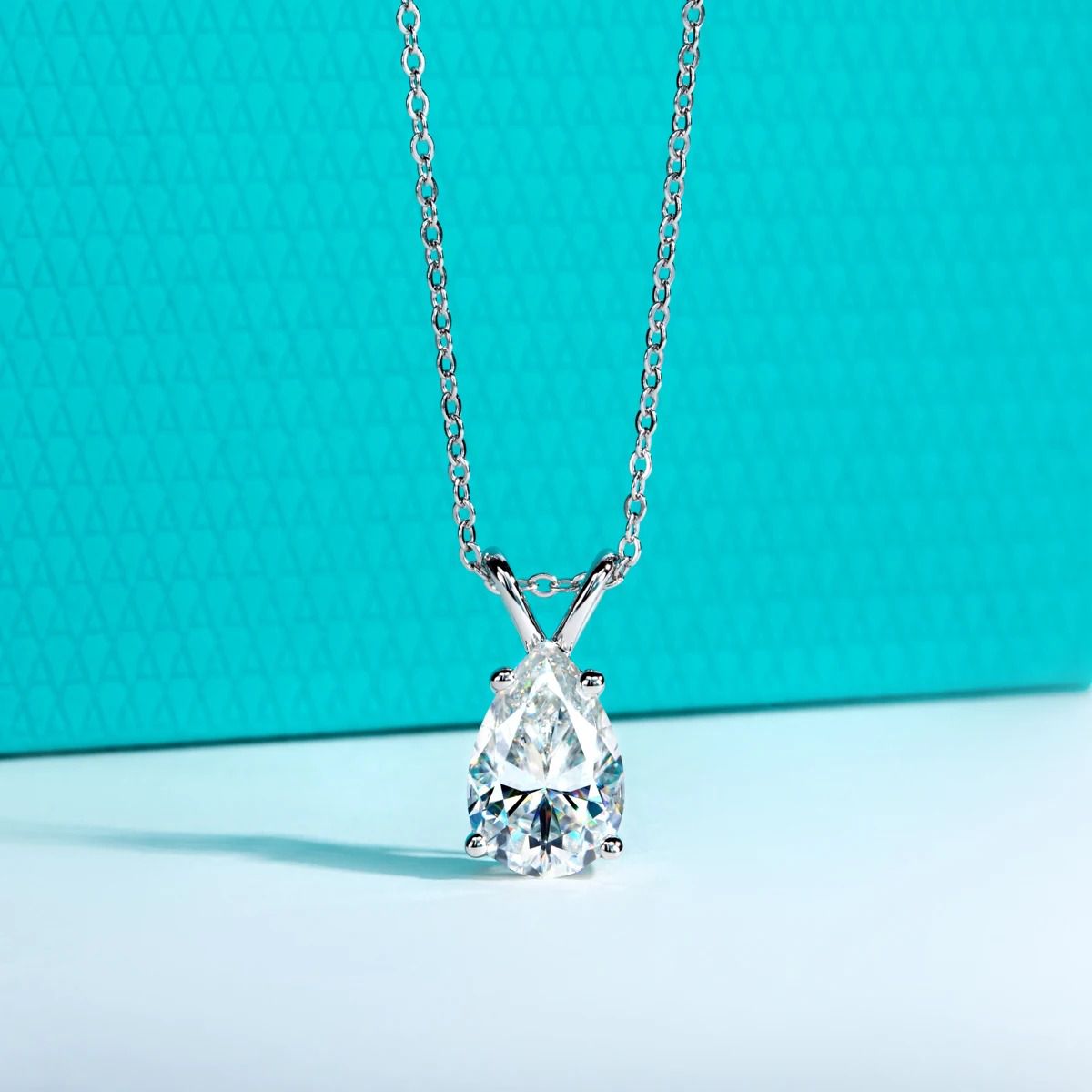
The cable chain is the classic you already know: small, uniform oval or round links joined end to end. It is light, affordable, and reads as delicate rather than structural. Cable chains are the default for solitaire pendants because the simple links let the stone be the focal point. A 0.8 to 1 millimeter cable chain suits a pendant under one carat equivalent. Above that weight, the chain can look undersized and the clasp takes a beating.
Cable chains are easy to repair because each link can be soldered individually. The trade-off is that very thin cable chains kink if twisted, and they can pull hair. For a bride wearing a pendant every day, a 1mm solid cable chain in 14k gold is the most forgiving starting point, and it layers cleanly with finer chains.
Curb chain: flattened links for a bolder look
A curb chain uses links like a cable chain but flattened and rotated so they lie flat against the skin. It sits smoother than a cable chain and has a slightly structured feel that reads equally well on grooms and on brides who want a necklace that stands on its own, without a pendant.
For pendants, a curb chain works best when the pendant is on the larger side or has a bold setting. A tiny solitaire on a 4mm curb chain will look overwhelmed. Our guide on solitaire moissanite pendant settings pairs well with a finer chain rather than a heavy curb, so match the scale before you sell.
Rope chain: twisted links for sparkle
Rope chains are made of links twisted into a helix, which catches light from every angle. They read as dressy and slightly formal, which makes them a natural match for wedding-day pendants. A rope chain has texture; it does not lie completely flat, but that same texture gives it movement under lights and in photographs.
Rope chains are strong for their weight, but they are harder to repair when a link breaks because the twist must be reconstructed. They work beautifully with medium-sized pendants and are a favorite for layering, where the textured helix adds depth between smoother cable and box chains worn at different lengths.
Box chain: square links for a modern line
Box chains are made of square, box-shaped links that form a crisp, geometric line. They are stiffer than cable or curb chains and hold a pendant centered rather than letting it drift. The visual result is clean and modern, which suits a contemporary solitaire or geometric pendant and pairs well with a tailored neckline.
The known weakness of a box chain is the point where links meet; a sharp pull can pop a joint. A well-made box chain with rounded inside corners wears well, but shoppers should handle the clasp and joints before purchase. For chain length pairing, refer to our necklace chain length guide.
Matching chain to pendant weight
The rule of thumb is simple: the chain should feel proportional to the pendant. A pendant under 1 carat equivalent pairs with a 0.8 to 1mm cable or fine box chain. A 1 to 2 carat equivalent pendant wants a 1 to 1.5mm chain. Anything larger should use a curb or rope chain of at least 2mm, because a delicate chain under a heavy stone accelerates clasp wear. Always check the bail size of the pendant against the chain thickness; a bail too small for a thick chain will not thread, and a bail too large lets the pendant slide around.
Metal and plating notes
Solid gold chains in 14k or 18k wear the longest for daily pendants. Gold-filled and gold-vermeil chains are budget-friendly options that hold plating better than simple gold-plated wire. White gold chains should be rhodium-plated on purchase and inspected every year, because the bright white look fades as plating wears. Whatever the metal, a well-matched chain turns a pendant from a nice gift into something she reaches for every morning, and it prevents the most common pendant repair: a broken chain under a stone that never should have been paired with it.
The clasp is part of the chain
Once the link style is chosen, check the clasp. A lobster clasp is the most secure and easiest to fasten one-handed, while a spring ring is smaller and more delicate but slower to operate. For a chain she puts on daily, the extra few seconds with a spring ring add up, and a stiff spring ring is one of the first things people notice when they stop wearing a necklace. Pair a finer chain with a lobster clasp wherever the scale allows, and the whole piece stays in rotation longer.
Independent background on moissanite — how its hardness and refractive index compare with diamond — is documented in the Wikipedia article on moissanite.
Frequently Asked Questions
Which chain lengths should I stock first?
16 to 18 inch covers most necklines and gift purchases. Add 20 inch for layering sets and 24 inch for pendant lines.
Are your chains nickel-free and hypoallergenic?
Yes. Sterling silver is 92.5% silver; stainless lines use 316L. Both are nickel-safe for reactive customers when plated correctly.
Can necklaces be personalized?
Laser engraving on pendants and clasps is available from 50 pieces, with 3–5 day turnaround on the engraving step.
What is the bulk lead time?
15–20 days under 500 pieces; 25–30 days for custom pendants or new molds.
Send your spec sheet — stone, cut, size, plating and quantity — and we will return a costed timeline.
Ask the workshop