Loose Stones
Ethical Lab-Created Moissanite: What Conflict-Free Really Means
Couples today want a ring that looks beautiful and sits well with their values. The phrase conflict-free has become a common marketing line on every side of the jewelry case, but it means different things for mined stones and lab-grown ones. For moissanite, the ethical story starts with a simpler fact: it is created in a controlled laboratory, not pulled from the ground.
Where moissanite actually comes from
Natural moissanite is extraordinarily rare. The original crystals were discovered in a meteorite crater, and gem-quality natural moissanite is essentially unavailable as a commercial jewelry stone. The moissanite used in engagement rings is produced in a laboratory through a controlled growth process that builds the crystal atom by atom. There is no mining pit, no river dredging, and no supply chain passing through jurisdictions with documented mining abuses.
That origin is the root of the ethical claim. A lab-grown stone does not need a Kimberley Process certificate to prove it is conflict-free, because the conditions that produced it are documented at the growth facility from day one. The supply chain is short, predictable, and auditable in a way that mined supply chains rarely are.
How that differs from mined diamonds
Mined diamonds are certified through systems designed to prevent stones from war zones reaching market. The certification reduces the trade in conflict diamonds, but it does not address every environmental or labor question around mining. Lab-grown diamonds and moissanite sidestep those questions entirely because the stone is manufactured, not extracted.
Moissanite takes that a step further. A mined diamond is still a diamond, priced by carat, color, and clarity. Moissanite is a distinct material with its own optical character, which means it is priced independently of diamond mining economics. Buyers comparing the two usually find the full comparison in our moissanite vs. diamond guide, and the ethical distinction is only one of several reasons the two stones end up on different price points.
What to actually ask a supplier
Ethical is a soft word. Harder questions sharpen the answer:
- Where is the crystal grown, and can the supplier document the growth facility?
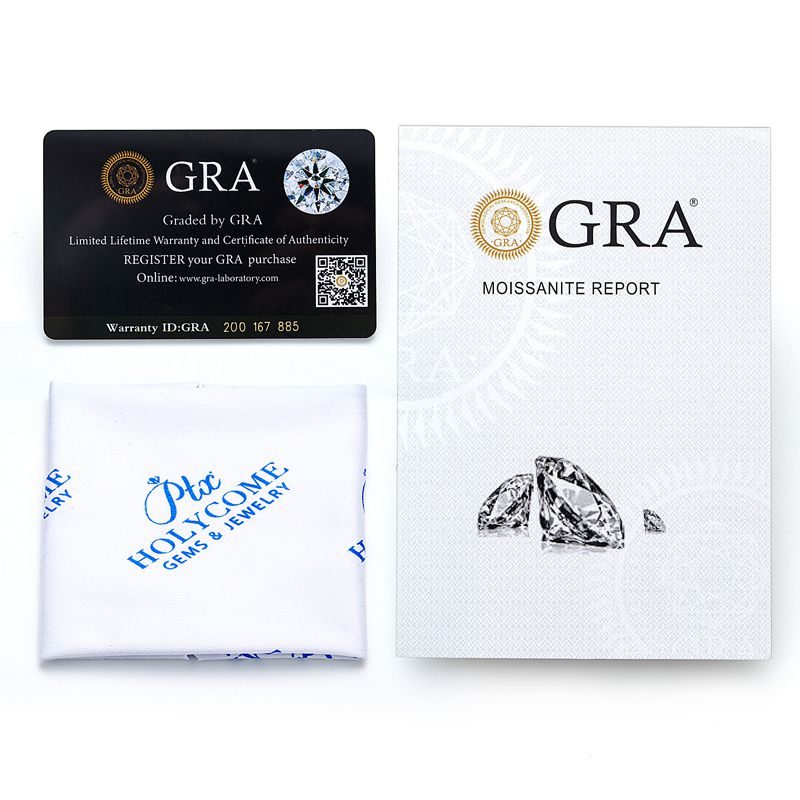
- Does the stone ship with a GRA or equivalent lab report that matches the stone's laser inscription?
- Are the cutting and polishing facilities disclosed, and what are their labor standards?
- What is the stone's color and clarity grade, and how does that affect long-term appearance?
A reputable supplier answers each directly. If a supplier deflects on origin, the ethical claim is doing more work than the facts support. Transparent sellers are usually happy to show the growth documentation, because it is their strongest selling point.
The environmental side of the story
Lab-grown stones use energy in their growth, and the environmental profile depends on how that energy is generated. The honest framing is not that lab growth is free of impact. It is that the impact is concentrated, measurable, and improving as growth facilities shift to cleaner power. Compared to open-pit mining, land disturbance is essentially zero, and water use is a small fraction of mining operations.
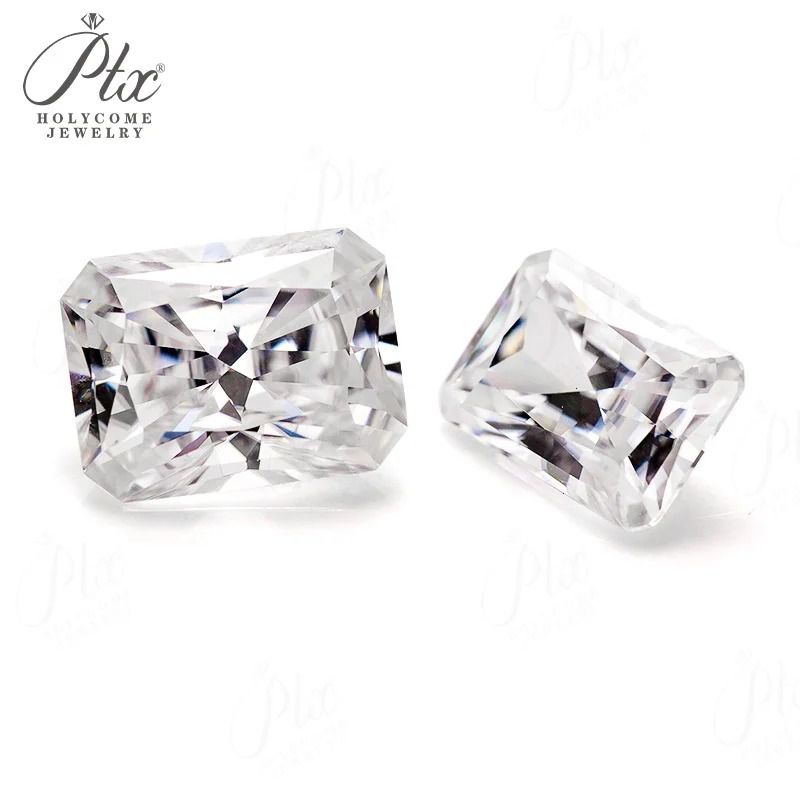
For a bride who wants a larger stone without the footprint of a large mined diamond, that trade is the whole point. A loose moissanite stone bought at wholesale lets a couple design a custom piece around the stone size and budget that fit them, without the ecological and human questions that come with a large mined center.
Transparency as the real ethical standard
The most meaningful ethical choice is not a label on a website. It is a supply chain you can see end to end: where the crystal grew, who cut it, who set it, and what the paperwork says. Lab-grown moissanite makes that transparency practical because the supply chain is short and well-documented. That transparency is what allows a bride to wear her ring knowing exactly what it is, where it came from, and that it was not bought at someone else's expense.
Ethical buying over the long run
Ethical jewelry is not a one-time decision. A ring will be cleaned, resized, and possibly reset over decades, and each of those steps is a chance to keep the story intact. Choose a jeweler who repairs the piece in-house or through a transparent partner rather than a generic turnaround service. Keep the original certificate and receipt, so that if the ring is ever passed down, the next generation inherits the same documented story. That long view is what turns a single ethical purchase into an ethical heirloom, and it is the reason many couples choose lab-grown stones in the first place.
The bottom line
Moissanite is conflict-free by origin because it is lab-grown, not mined. The ethical advantage is real, but it is strengthened by choosing a supplier who documents growth, provides matching lab reports, and is willing to answer hard questions. That combination turns a marketing phrase into a story a couple can actually stand behind on the wedding day and for every anniversary after.
Gemstone grading terminology used here follows the Gemological Institute of America’s gem encyclopedia.
Frequently Asked Questions
Is moissanite a good diamond alternative for retail buyers?
Yes for price-sensitive customers who want brilliance and hardness. Moissanite ranks 9.25 on the Mohs scale, holds up to daily wear and costs a fraction of a natural diamond of the same size, so it resells fast in bridal and fashion lines.
What is the minimum order for wholesale moissanite?
MOQ starts at 50 pieces per design for stock items. Custom cuts and private-label settings usually start at 100–300 pieces depending on the mold.
Do you provide certificates with moissanite stones?
Yes. Every parcel ships with GRA or IGI documentation listing carat weight, color grade and cut. We recommend passing the certificate to your end customer for trust.
How long does sample and bulk production take?
Samples ship in 3–5 days. Bulk runs take 15–20 days under 500 pieces, and 25–30 days for custom work.
Send your spec sheet — stone, cut, size, plating and quantity — and we will return a costed timeline.
Ask the workshop