Engagement Rings
How Much Should You Actually Spend on an Engagement Ring?
Ask ten people how much an engagement ring should cost and you will get ten different numbers, most of them rooted in folklore rather than math. The famous rule about spending three months of salary comes from a mid-twentieth-century diamond advertising campaign. It is not a financial principle. Your ring budget should be built around your real life, not a slogan.
Start with what you can actually afford
A ring is a symbol, not an emergency. The most romantic choice is one you do not spend years paying off in interest. Before you look at a single stone, decide on a total number that feels comfortable alongside rent, student loans, a wedding, and everyday life. There is no prize for overspending on the first piece of jewelry you buy together.
Many couples are relieved to learn that a beautiful ring can be had at almost any budget. The trick is knowing where the money goes and which details change the look the most.
What actually drives the price
The center stone is the biggest cost by a wide margin, and within that stone, four factors move the price: shape, carat weight, color, and clarity. Cut quality is the one that most affects how bright the ring looks, so it earns priority over chasing the perfect color grade. A well-cut slightly smaller stone often out-sparkles a larger, poorly cut one.
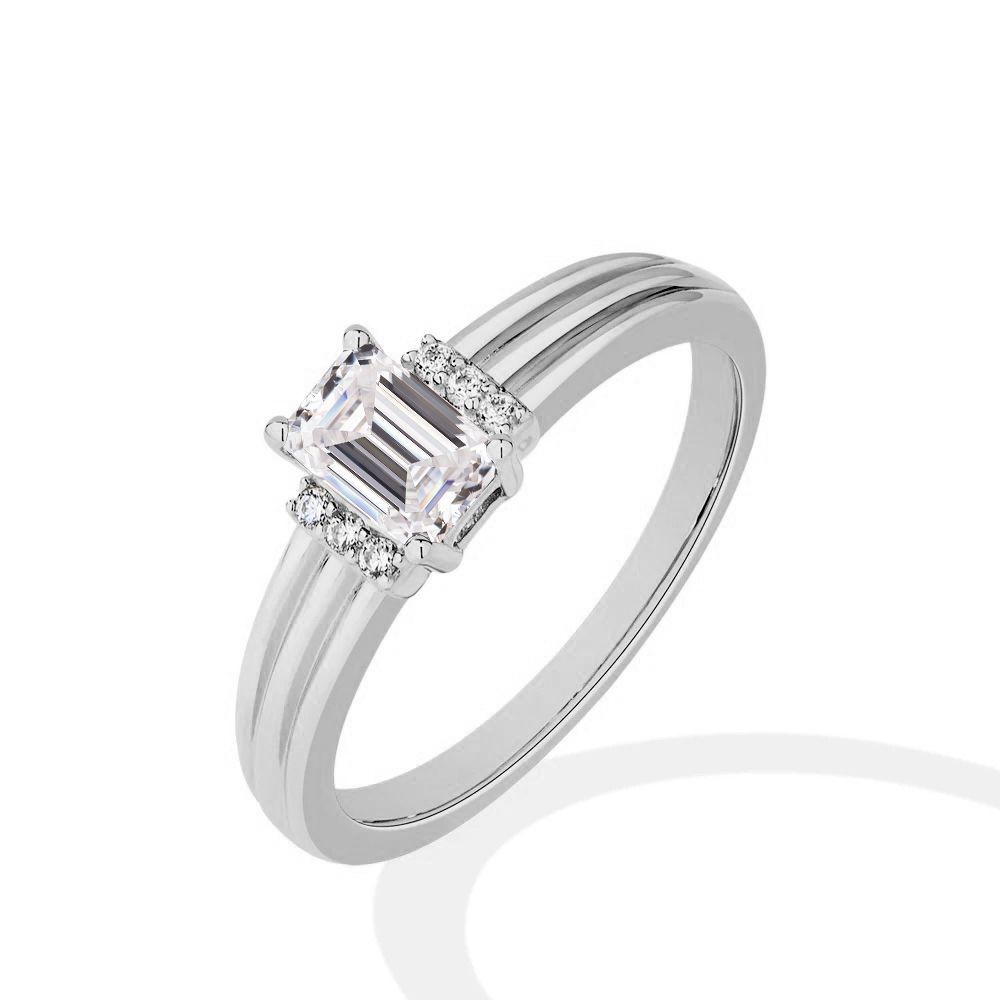
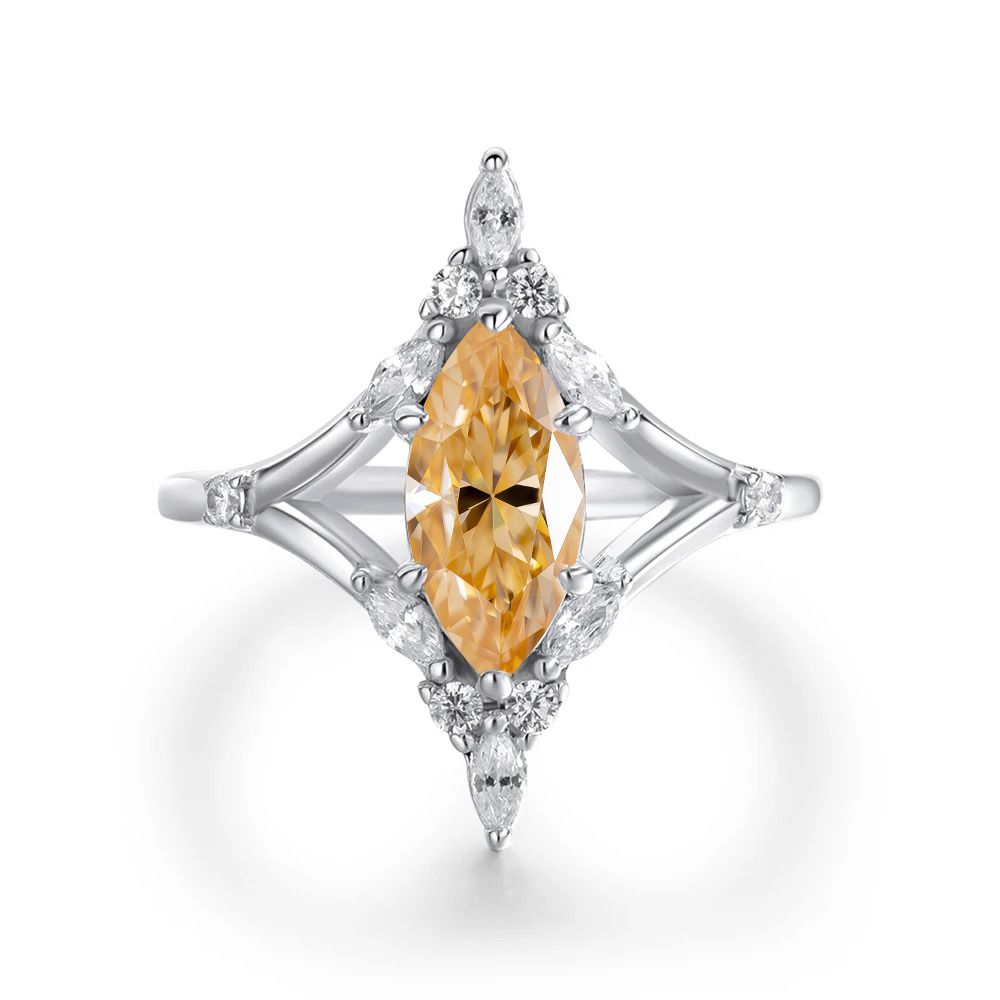
Shape has a big price effect. Round brilliants command a premium for their popularity and light performance. Oval, pear, emerald, and cushion shapes frequently give you more spread for the money. Choosing a less conventional shape is one of the easiest ways to get a larger-looking ring at a lower cost.
Stone type changes everything
This is where budgets open up. Natural mined diamonds sit at the top of the price range. Lab-grown diamonds offer the same optical and chemical properties at a fraction of the cost, allowing a bigger or cleaner stone for the budget. Moissanite goes even further, delivering strong brilliance and everyday durability at a substantially lower price, with the added appeal of being conflict-free and sustainably made. Brides who care more about how the ring looks on the hand than about a mine-origin story often find they get far more ring for their money.
Where to spend and where to save
Spend on the things you see and feel every day: the center stone's cut, the security of the prongs, and the comfort of the band. Save on details that are barely visible, like chasing a flawless clarity grade when an eye-clean stone looks identical at arm's length, or overpaying for a color grade that makes no difference once the ring is set.
A simple solitaire setting lets more of the budget go to the stone. If you love a halo or pavé, know that those accents add cost; weigh whether that extra sparkle is worth it to you.
Remember the costs after the ring
The ring itself is not the whole expense. Budget for a matching wedding band, because the two are worn together. Add an appraisal and insurance, which protect your investment. Plan for occasional cleaning and prong checks. Factoring these in now prevents a sting later.
A sensible way to think about it
Choose a number you would not feel stressed about, then get the best-cut stone you can within it, in a shape and metal you both love. A ring chosen with care and within your means will look far better on her finger than an oversized one that hangs over your budget for years.
Financing the ring the safe way
If the ring you want is beyond cash savings, financing exists, but read the terms carefully. A zero-percent promotional plan that you pay off inside the promotional window is reasonable. A high-interest balance you carry for years quietly multiplies the true cost of the ring. A practical middle step is to set aside the monthly payment in advance for a few months; if the budget already works in practice, financing is less risky. Remember that the ring should be a gift you can afford, not a monthly bill that strains your first year of marriage.
The hidden budget win: stone choice
Almost every couple we speak to lands on the same realization: once you see the ring on the hand, the origin of the stone matters less than they expected. A well-cut lab-grown or moissanite center stone gives you more size, more clarity, and a setting you love for the same cash. Compare the options in our loose moissanite guide, and see how the center and setting break down across our engagement ring collection before you lock a number.
The goal is a ring that makes you both smile every time you look at it, not one that proves a marketing rule. When you shop with a clear budget and prioritize cut and comfort, the result is a ring that fits your life as well as it fits her hand.
The Gemological Institute of America’s gem encyclopedia is an authoritative, widely cited reference on moissanite and diamond quality factors.
Frequently Asked Questions
What ring sizes can you supply in bulk?
US sizes 5–12 including half sizes. Send a size breakdown with your order and we cast to that curve; comfort-fit inner bands reduce resize requests.
Can I order a mixed size run instead of one size?
Yes. Mixed runs are standard for wholesale: specify quantity per size and we pack and label by size at no extra labor cost.
What is the MOQ for custom ring designs?
50 pieces per design for existing molds; 100–300 pieces when a new mold or CAD model is required.
How should I price rings for retail margin?
Most partners use a 3–4x markup on FOB cost for sterling and 2.5–3x for moissanite solos, which keeps landed cost under 30% of retail.
Send your spec sheet — stone, cut, size, plating and quantity — and we will return a costed timeline.
Ask the workshop