Engagement Rings
Cushion vs Emerald Cut Moissanite: Bridal Looks That Sell
A retail buyer from Zurich laid a 2-carat cushion and a 2-carat emerald cut moissanite side by side on our metal tray last spring, then asked the question every bridal counter hears twice a week: "Which one photographs like a $12,000 solitaire, and which one reads as a fashion stone?" The answer depends less on the stone and more on the bride's gown, hands and lighting. Cushion and emerald cuts share a square outline but behave nothing alike on a bridal finger, and wholesalers who stock both need to know which customer walks out happy.
How Light Behaves in Each Cut
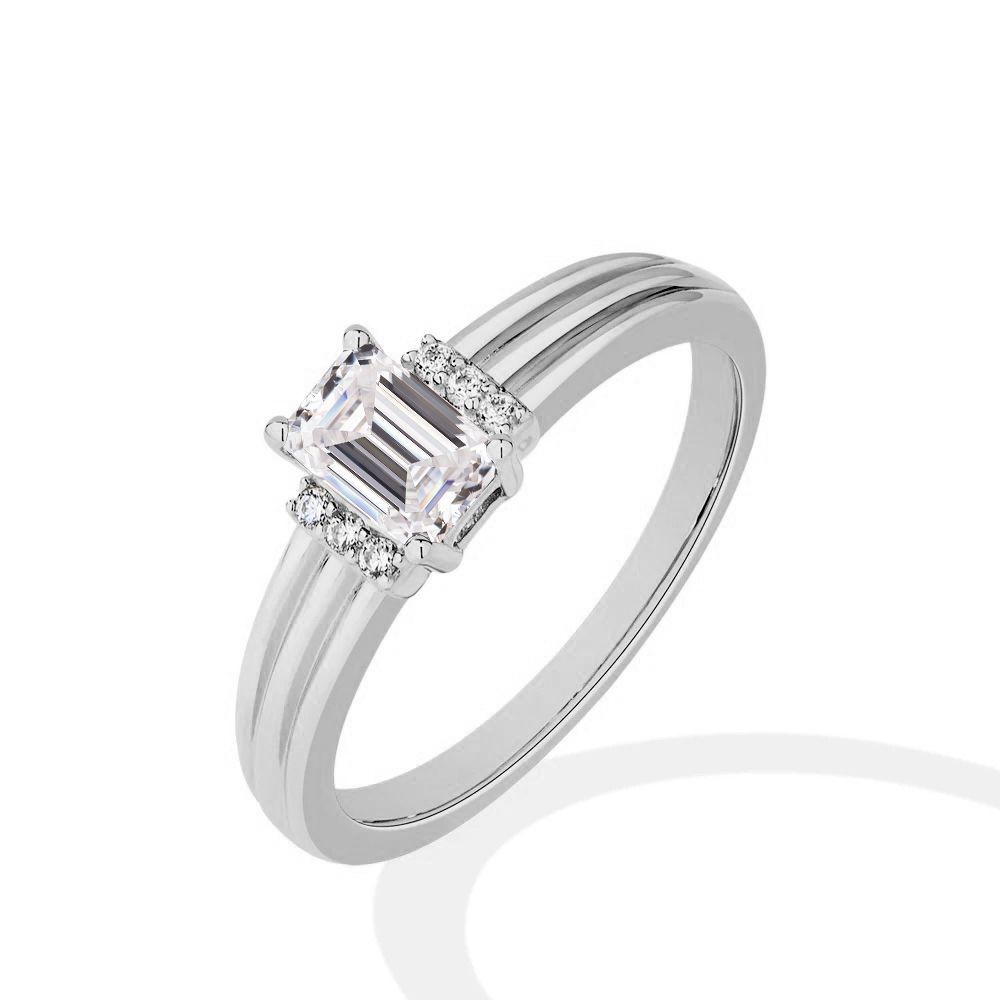
The cushion cut is a rounded-square shape with a generous 1.0 to 1.25 length-to-width ratio and a deep pavilion. Its large, soft facets bounce light back in broad bursts, which is why it looks chunky and fiery under chandelier light. The emerald cut is step-cut: parallel facets and an open, glazed table that reads more like a hall of mirrors. Moissanite's 2.65 refractive index, measured by gemological labs and described on the GIA education page on moissanite, is higher than diamond's 2.42, and that dispersion advantage shows up most dramatically in a cushion cut, where light is trapped and released as rainbow flash. In an emerald cut the same dispersion is tamed into subtle flashes along the step facets, giving a calmer, more architectural look that brides call "quiet" or "editorial."
Bridal Looks Each Cut Serves Best
Cushion-cut moissanite flatters the romantic bride: ballgown sleeves, lace, vintage-inspired settings, yellow or rose gold. It pairs naturally with a pave halo or a cushion setting with hidden milgrain because the rounded corners echo the curved metal. Emerald cut flatters the modern, minimal bride: slip dress, crepe column, clean lines, platinum or white gold. It looks deliberate on a long, slender hand and reads as quiet luxury in editorial photography. If your client tries on an oval and complains it feels too ordinary, step-cut emerald is the next escalation; if she wants warmth and sparkle, cushion is the safer upsell. The face shape of the bride also matters: cushion softens angular jawlines, while emerald adds structure to round or soft faces.
Proportions That Sell (and the Ones That Return)
Stockers should carry cushion in 8x8mm to 9x9mm (roughly 2 to 2.5 carat equivalent) and emerald in 7x9mm to 8x10mm. Emerald cuts that look too shallow in the tray window appear washed out in daylight; cushion cuts that run too deep show a dark window through the table. Grade for eye-clean rather than loupe-clean on moissanite, since most buyers will never look through a loupe at their own hand on the wedding day. Cross-reference dispersion and color grading with the International Gemological Institute reference before assigning replacement stock. We also explain how the same stone reads differently on different hand shapes in oval versus round on the hand.
Pairing Bands and Stacking Logic
A cushion setting almost always wants a band that curves or echoes the rounded corners; a straight knife-edge band will sit proud and leave a gap. Emerald cuts stack cleanly with straight, plain or micro-pave bands because the right angle matches the stone's corners. Retailers who stock both should pre-pair the cushion with a curved band and the emerald with a straight band to reduce showroom friction. For the bride who wants to add later, anniversary bands over time sit flush more easily on step-cut stacks. A three-stone emerald with cushion side stones is a known combination, but the reverse reads unbalanced because the soft corners of a center cushion fight the angular side stones.
What the Wedding Photos Reveal
Photographers tell us emerald cut disappears in soft indoor window light and needs a direct flash to show its hall-of-mirrors effect. Cushion survives almost any lighting and pops in golden-hour portraits. If the bride's photographer shoots on-film with available light, lean cushion. If she is doing editorial bridal shots with studio strobes, emerald will out-resolve it. We also explain this contrast in moissanite-versus-diamond bridal hand photos.
FAQ: Common Bridal Questions
Which cut looks bigger on the finger?
Emerald cut, because its open table and longer dimensions occupy more visible skin. Cushion reads denser and smaller at the same carat equivalent, but its fiery face draws the eye faster in motion.
Which is more durable on a daily-wear bride?
Both are 9.25 on the Mohs scale. The cushion's rounded corners resist chipping slightly better than the emerald's sharp corners, which can catch a hard knock at the tip. For brides who work with their hands, cushion is the safer daily choice.
Can I mix cushion and emerald in one bridal set?
Yes, but keep one as the anchor. A cushion solitaire with emerald-cut side stones is a known three-stone pattern; the reverse looks unbalanced. For stackers, mix only one shape per finger to avoid visual clutter.
Does moissanite's fire look too strong in cushion cut?
Under 5,000K neutral lighting it is comparable to a near-colorless diamond. Under warm restaurant light it can read slightly rainbow; emerald cut tames this naturally, which is why it is the quiet-luxury choice.
Source this conversation for your bridal counter. HOLYCOME wholesales cushion and emerald cut moissanite in matched color grades, with paired bands ready for stack merchandising. Request the bridal lookbook and sample tray for your boutique.
Frequently Asked Questions
Is moissanite a viable diamond alternative for retail?
Yes for price-sensitive buyers who want brilliance and hardness. It ranks 9.25 on the Mohs scale and costs a fraction of a natural diamond of the same size, so it turns fast in bridal and fashion lines.
What is the minimum order?
MOQ starts at 50 pieces per design for stock items; custom cuts and private-label settings start at 100 to 300 pieces.
Are certificates included?
Yes. Every parcel ships with GRA or IGI documentation listing carat weight, color grade and cut.
What are the lead times?
Samples 3 to 5 days. Bulk 15 to 20 days under 500 pieces, 25 to 30 days for custom work.
Send your spec sheet — stone, cut, size, plating and quantity — and we will return a costed timeline.
Ask the workshop