Wedding Rings & Bands
Anniversary Bands: Adding Stones Over the Years
A repeat customer came back to a wholesaler in Seoul after five years of marriage and asked for "another ring, same as the wedding band but with a stone for each year." She did not know the word for it. That request is the anniversary-band business: a slow, recurring revenue stream that most jewelers under-serve. The customer already owns the engagement and wedding rings. What she wants next is a band that marks time, and she will buy one again at year ten. Here is how to stock that stream so each addition matches the last.
Three band architectures for marking years
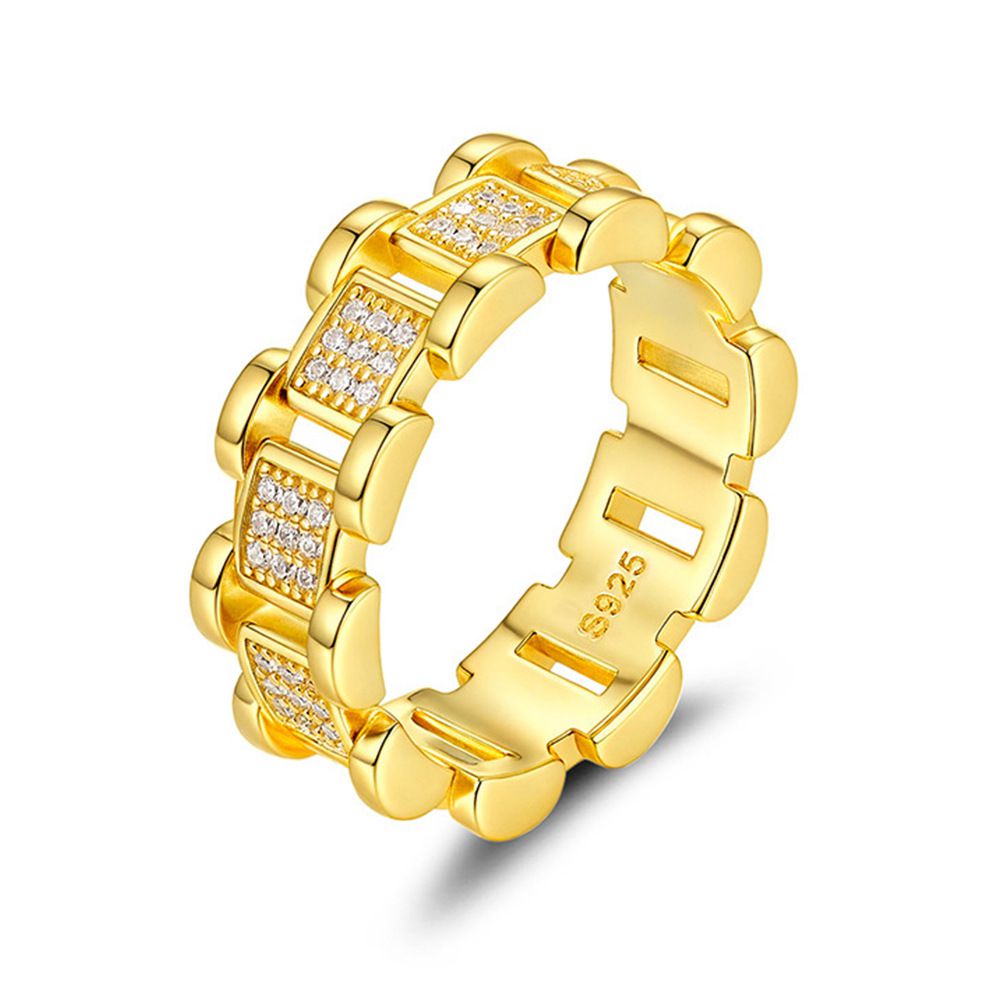
Plain stepping band: a slim, unadorned band added in early years, cheap to gift, easy to stack. Half-eternity band: stones set across the top half (the visible face), leaving the bottom plain so the band can be resized. Full eternity band: stones all the way around, the milestone piece for a big anniversary, but not resizable because the stones cover the whole shank. A healthy program stocks all three and introduces them by year.
The optical and durability trade-offs are real: a full eternity looks uninterrupted but cannot be sized, and a side stone takes knocks. The lab-grown stone references note that moissanite's hardness makes it a practical choice for an everyday eternity band that will actually be worn, not stored.
Width matching: the secret of a coherent stack
An anniversary band only looks intentional if it matches the existing shank width. If the wedding band is 2.2mm, the half-eternity should also be 2.2mm, or a deliberate 1.8mm thinner accent. A 3mm wide eternity next to a 1.5mm wedding band looks like a mistake. When a customer returns years later, pull the original band's width from the order record and match it. This is why stocking a consistent width family pays off over a decade. See the width logic in comfort-fit width guidance.
Stone size progression that reads as a story
A coherent anniversary program uses small, uniform stones: 1.5-2mm rounds, shared across every band in the stack. A half-eternity with 2mm stones, then a full eternity with 1.3mm stones, then a milestone band with 3mm stones reads as three random rings. Keep the stone size in one family (say, 1.8mm rounds) and vary only how many stones there are. The customer reads the growth as "more stones," not "different stones."
Metal continuity and the resale hook
An anniversary band in the same metal as the wedding band makes a set. A customer who married in white gold but wants a "warmer" year-ten gift can step into rose gold as a deliberate contrast. Either way, document the metal on the original order. The repeat-purchase chain connects to the engagement ring: see how the stack builds on one finger.
Pricing the anniversary program by tier
Price the three tiers so a customer can start small and return. The plain stepping band should sit near your lowest price point, the half-eternity in the mid tier, and the full eternity as the premium milestone piece. Because the customer is buying a second or third ring from you, margin can be healthy without surprising her. Offer a reminder at the eleven-month mark, and keep the original metal and width on file. Documenting the stack matters: when a customer returns for year five, pull the order record, confirm the shank width and metal, and match the new band. A band that matches on the record matches on the finger; a band chosen by eye rarely does.
What is the difference between eternity and half-eternity?
Eternity = stones all around the shank, uninterrupted look, not resizable. Half-eternity = stones on the visible top only, resizable, lower cost and lower side-knock risk. Half-eternity is the better first anniversary gift.
Which anniversary year is the eternity band tradition?
The one-year mark is a common first band, the tenth is the classic "full eternity" milestone. Stock your strongest half-eternity SKU for the year-one and year-five gifting window.
Can a moissanite eternity band be worn daily?
Yes. Moissanite's 9.25 Mohs hardness means pavé stones stay secure and brilliant through everyday wear, more so than softer colored stones. Just use secure shared prongs, not delicate micro-pave on a daily piece (see pave vs micro-pave durability).
How thick should an anniversary band be?
Match the wedding band. For stacking comfort, keep the total of two or three shanks under about 5mm combined on a size 6-7 finger.
Wholesale note: HOLYCOME supplies half-eternity and full-eternity moissanite bands in matched 1.8mm stone families and consistent 1.8-2.4mm shank widths, in white, yellow and rose tones, with nickel-safe plating per REACH nickel limits. If your store wants a recurring anniversary program that matches order records year after year, request a width-matched sample set. Pair with tennis bracelet anniversary gifts and the engagement range from our moissanite guide.
Frequently Asked Questions
How do I verify a factory before placing a bulk order?
Request a production video, business license, export records and a paid sample run. A factory that accepts a 50-piece test order is usually a real manufacturer.
What payment terms do you offer?
30% T/T deposit with the balance against the bill of lading. This protects both sides on first orders and can move to net terms after a track record.
What is your normal reject rate?
3–5% under 10x loupe inspection for cast and set pieces. Defective units are replaced free in the next shipment.
Where is the factory located?
Wuzhou, Guangxi, China—the core lab-grown and moissanite manufacturing cluster. Shipments go via Guangzhou or Shenzhen ports.
Send your spec sheet — stone, cut, size, plating and quantity — and we will return a costed timeline.
Ask the workshop