Loose Stones
Cushion-Cut Loose Moissanite: Buying the Soft, Romantic Shape
Among loose moissanite shapes, the cushion cut has a devoted following — and for good reason. With its rounded corners and soft, pillow-like outline, it reads romantic and slightly vintage, while still throwing plenty of sparkle. It's the shape you see in halo rings and antique-style settings, and for jewelers building custom pieces, it's one of the most forgiving and flattering stones to work with.
What a cushion cut actually is
The cushion cut is essentially a square or rectangle with rounded corners — hence the "pillow" look. It comes in two broad facet styles. The "brilliant" cushion uses a diamond-like faceting pattern for maximum sparkle, while the "Chinese shadow" or older-style cushion has larger, broader facets that show a softer, more mirror-like flash. Both share the rounded-corner silhouette, but they read differently on the hand.
Choosing a loose cushion means thinking about which look you want before you buy. If you're comparing the shape against others, our shape comparison covers the full lineup, but the cushion sits between a round's sparkle and an emerald's elegance.
Why it's so popular for custom work
The cushion cut is a custom-jeweler favorite for two reasons. First, the rounded corners make it easier to protect in a setting — there are no sharp corners to chip the way a princess cut can. That means prongs sit more securely and the stone wears well. Second, it looks gorgeous in both a simple solitaire and a halo: the halo follows the soft outline and makes the center look larger.
For shoppers building a one-of-a-kind piece, that flexibility is worth a lot. Our guide on working with loose stones for custom orders walks through the workflow, and the cushion is one of the first shapes we'd recommend for a first custom project.
Proportions that matter in a loose stone
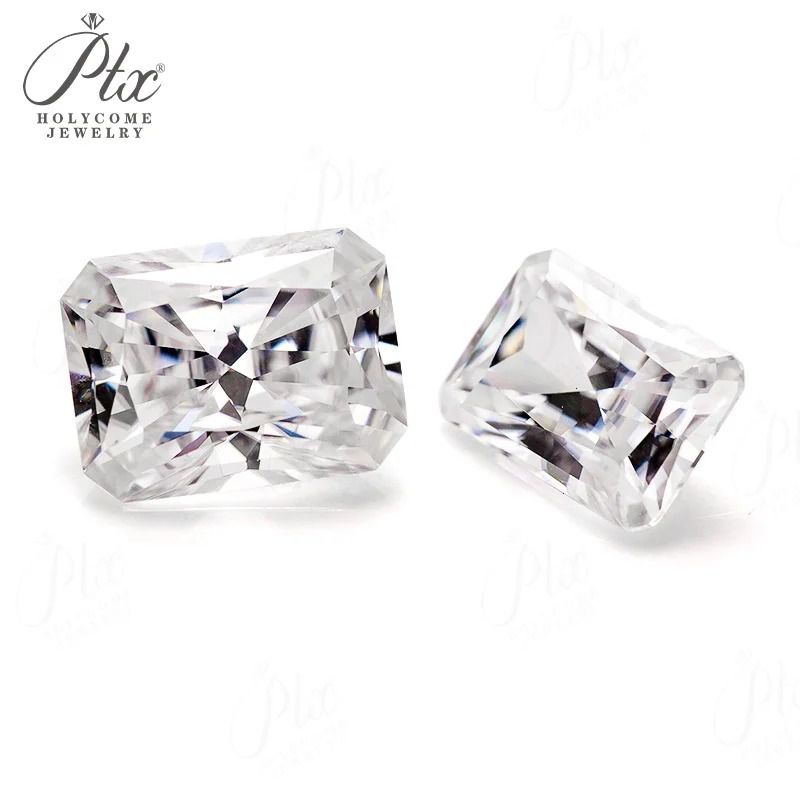
When you're inspecting a loose cushion, look past the logo-perfect photos. Check the length-to-width ratio. A "square cushion" is close to 1:1; an "elongated cushion" runs more like 1.2:1 and reads longer and slimmer on the finger. Which you prefer is a taste call, but elongated cushions are having a moment because they flatter longer fingers.
Also check that the stone isn't "bow-tied" — a dark shadow across the center that can appear in elongated fancy shapes. Moissanite generally avoids this more than some other gems, but a quick look face-up under a lamp reveals any darkness. And confirm the grade you're paying for: our moissanite color and clarity guide explains how to read the grade so you're not overpaying or under-delivering.
Setting a cushion-cut stone
Because cushion corners are soft, prong placement matters. Four or six prongs on the corners (or just inside them) hold the stone securely without blocking the table. A halo of smaller stones is a classic cushion setting, and a bezel also works because the rounded shape flows neatly into the metal. Whatever the setting, allow for a little protection around the corners — that's where the stone takes the most knocks over years of wear.
Turnaround is another practical consideration. If you're ordering loose stones for a custom order, plan the lead time: our loose moissanite turnaround guide covers how long custom pieces realistically take.
Pricing and buying smart
Because the cushion cut is so popular for custom work, prices vary a lot by cut quality and grade. A well-cut elongated cushion with strong light return commands a premium over a stocky, dull one, and the difference is visible once you see the two side by side. Buy from a supplier who shows you the stone face-up under controlled light rather than a heavily edited product photo, and confirm the grade in writing. That's the same diligence we recommend in our guide to reading a GRA moissanite certificate, and it protects both you and your customer.
It's also worth buying a cushion slightly larger than your target finished size, if the supplier allows it, because the rounded corners mean a small amount of the edge sits under prongs. A 7mm cushion set in six prongs looks a touch smaller on the finger than a 7mm round, so a hair more size reads right once it's mounted.
Pairing it with wedding bands
A cushion's soft outline pairs beautifully with curved or contoured bands, which tuck around the rounded corners for a clean, set look. A straight band also works, especially on a square cushion, because the straight sides leave little gap. If you're building a bridal set around the cushion, planning the band at the same time you order the loose stone keeps the proportions consistent. It's a small detail that saves a return trip to the jeweler later.
The bottom line
A cushion-cut loose moissanite is the sweet spot for a romantic, vintage-leaning piece that still sparkles. It's forgiving to set, flattering on the hand, and flexible enough to live in a solitaire or a halo. Check the ratio, look for even light return, confirm the grade, and you'll have a stone that sets beautifully — and a customer who recognizes the cushion's soft appeal the moment they see it on their hand.
Independent background on moissanite — how its hardness and refractive index compare with diamond — is documented in the Wikipedia article on moissanite.
Frequently Asked Questions
Is moissanite a good diamond alternative for retail buyers?
Yes for price-sensitive customers who want brilliance and hardness. Moissanite ranks 9.25 on the Mohs scale, holds up to daily wear and costs a fraction of a natural diamond of the same size, so it resells fast in bridal and fashion lines.
What is the minimum order for wholesale moissanite?
MOQ starts at 50 pieces per design for stock items. Custom cuts and private-label settings usually start at 100–300 pieces depending on the mold.
Do you provide certificates with moissanite stones?
Yes. Every parcel ships with GRA or IGI documentation listing carat weight, color grade and cut. We recommend passing the certificate to your end customer for trust.
How long does sample and bulk production take?
Samples ship in 3–5 days. Bulk runs take 15–20 days under 500 pieces, and 25–30 days for custom work.
Send your spec sheet — stone, cut, size, plating and quantity — and we will return a costed timeline.
Ask the workshop