Engagement Rings
Bulk Moissanite Engagement Rings: What Boutiques Should Source
A bridal boutique outside Columbus ordered sixty moissanite engagement rings from a supplier priced 30% under market. Within twelve months, nineteen of them came back—loose center stones, faded rhodium, or stones that looked flat under store lighting. The wholesale price was cheap, but the returns and repair labor ate the margin twice over. Buying bulk engagement rings is not a price exercise; it is a spec exercise. Below is the spec sheet we ship to boutiques, and the five checks we expect buyers to run on any parcel.
The real cost of a low-priced bulk ring
Bulk pricing that is 25–30% below market usually hides three compromises: thinner prong gauge, lighter rhodium plating, and stones cut for weight rather than for light return. Each shows up later as a return or a repair.
| Spec point | Low-ball bulk lot | Our shipped standard |
|---|---|---|
| Rhodium plating | 0.2–0.3 µm | 0.5 µm, double-flashed |
| Prong gauge | 0.8mm tip, visual check | 1.1mm tip, 1.5kg prong-pull test |
| Moissanite cut grade | "Excellent" claimed, ungraded | Round brilliant, lab-graded light return |
| Center stone security | Glued or burnished | Four to six prongs, hand-tightened |
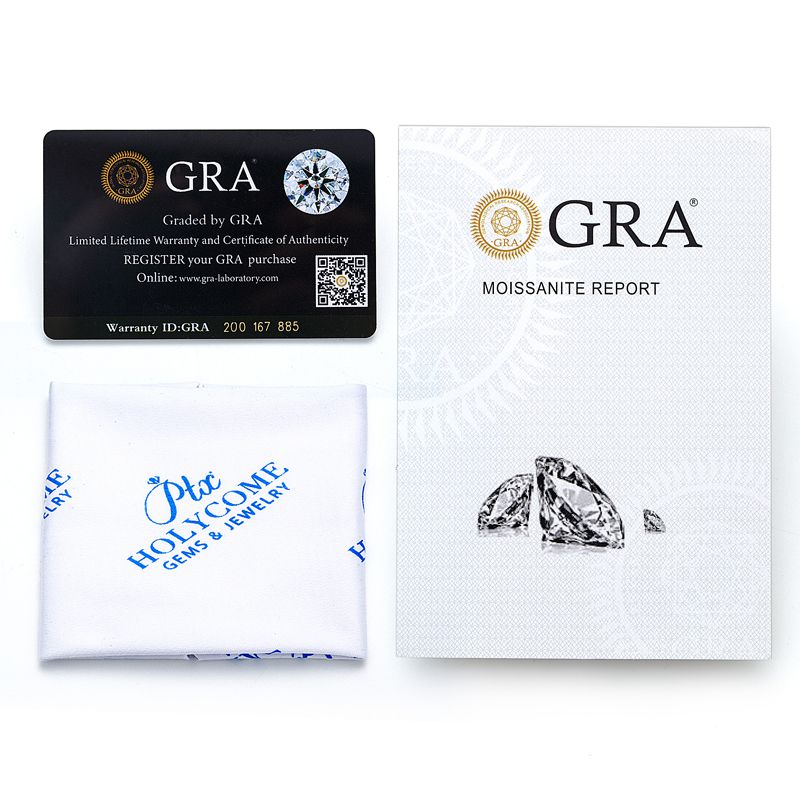
| Certificate | None or photocopy | GRA certificate matching stone LASER-inscribed |
The 0.5µm rhodium matters because bridal clients expect the white-gold look to survive at least a year of daily wear. A 0.3µm flash can wear through in three to six months, turning a white ring yellow on the shank and triggering a return you cannot win.
Five checks to run on any bulk parcel
- Light return: Under a 6,500K store lamp, a well-cut moissanite should flash evenly across the table. Flat, lifeless stones are cut for carat weight and will not read on a client's hand.
- Prong pull: Gently tug the center stone. Any movement beyond a faint settles-in feel means a prong was not closed. We test every ring at 1.5kg before it leaves the bench.
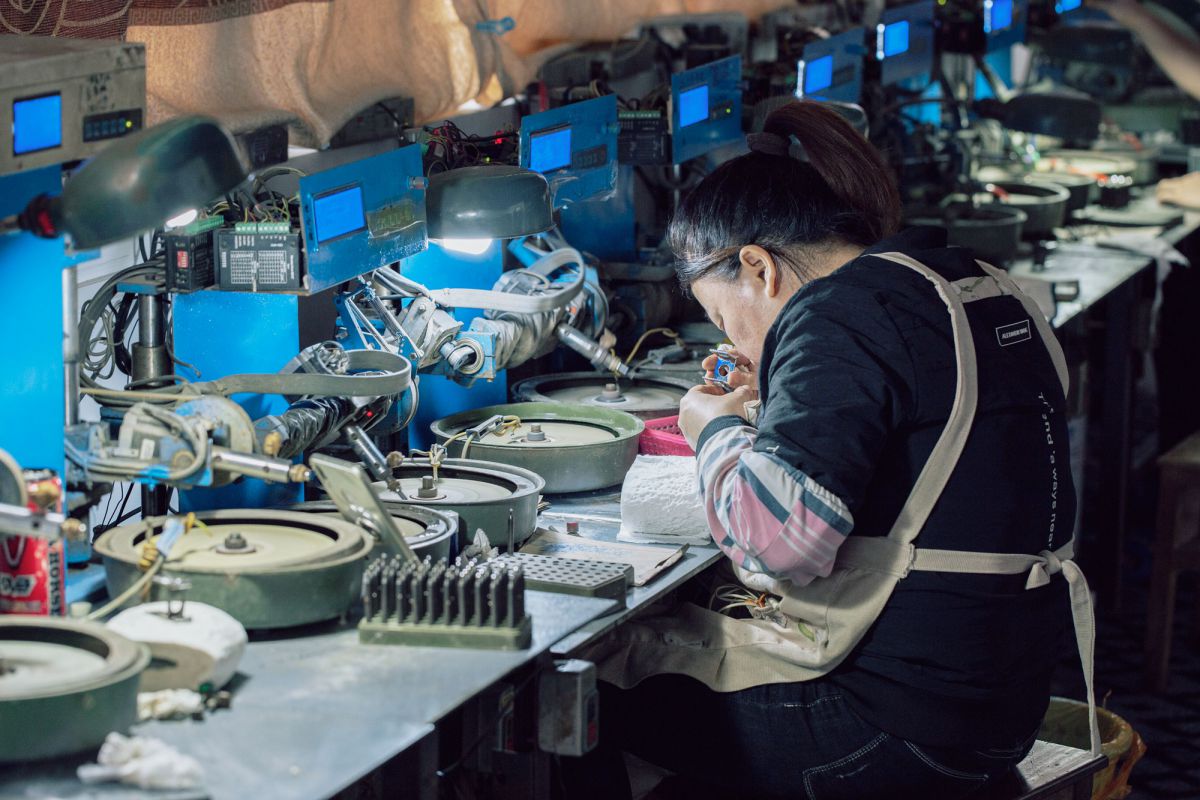
- Finish consistency: Run a cotton cloth around the gallery and inner shank. Rough cast marks or leftover grit are a polishing skip—a hallmark of rushed bulk production.
- Certificate match: The GRA number laser-inscribed on the stone's girdle must match the paper certificate. A mismatched number means the stone was swapped at the factory.
- Marking and stamp: Look for the metal stamp (S925 or 14K) and maker's mark inside the shank. Missing stamps are a compliance problem for US and EU resale.
Sourcing by boutique profile
Entry-level boutique opening a moissanite case
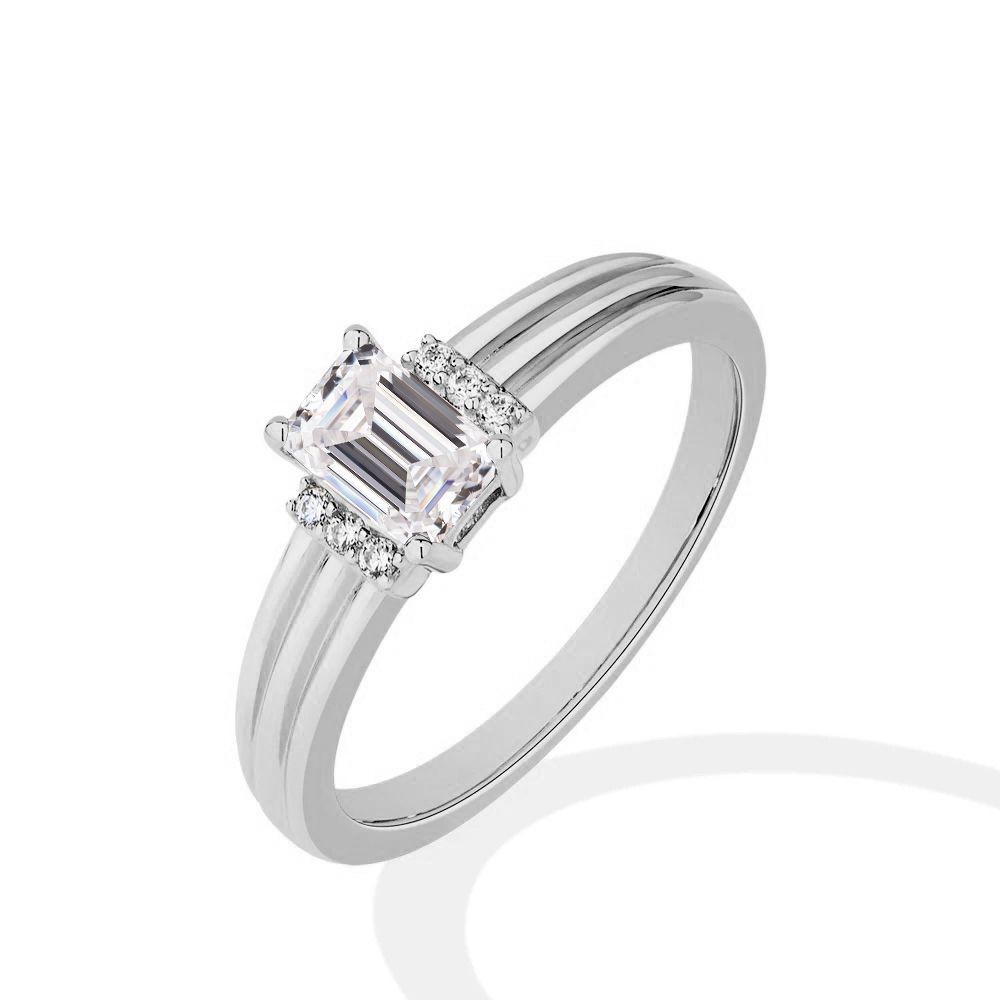
Start with 30–40 pcs weighted to round and oval solitaires in white 925 sterling silver with rhodium flash. These two shapes cover roughly 70% of proposal requests and let you test taste without overcommitting to gold. Keep price points between USD 89 and 249 retail to capture the value bride.
Mid-range boutique upgrading to gold
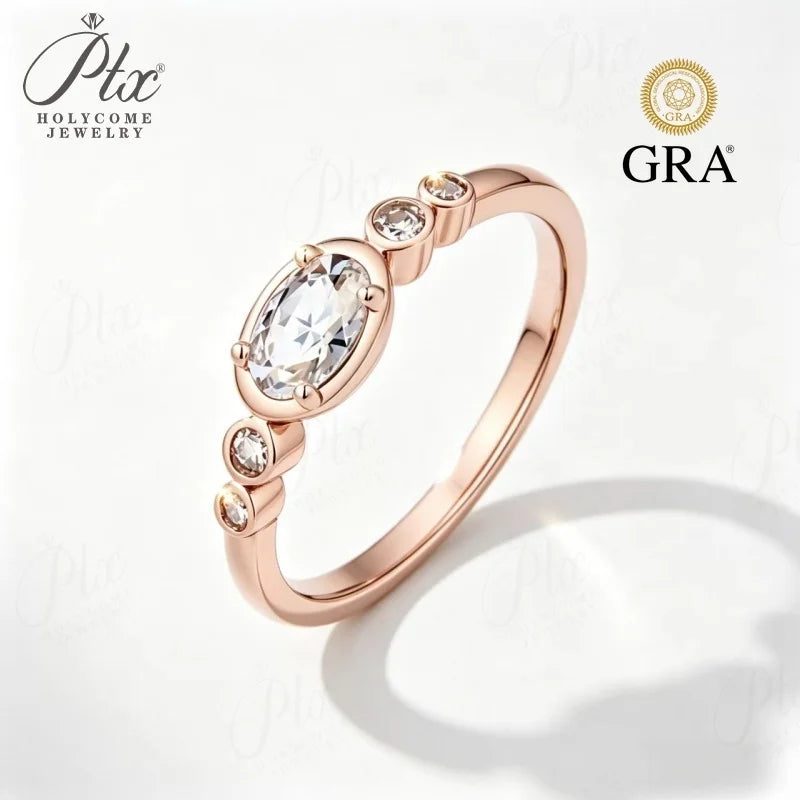
Move into 10k and 14K yellow or rose gold for halo and three-stone settings. At this tier, clients ask about certification by name, so every ring must ship with its GRA certificate in a sealed envelope. Plan 40–60 pcs and reserve two halo sizes for repeat proposals.
High-end bespoke studio
At this level, buyers rarely stock finished rings—they stock loose stones and mountings. Pair our loose round and oval moissanite (1.0–2.0ct equivalent) with a blank solitaire mounting, and offer the client a six-day custom set. The margin lives in the setting labor, not the stone.
Frequently Asked Questions
Is bulk moissanite the same quality as single retail pieces?
It should be. Every ring in a bulk parcel passes the same 1.5kg prong-pull, rhodium-thickness, and certificate-match checks as a single retail piece. Bulk pricing comes from volume production, not lower specs.
Do bulk rings ship with GRA certificates?
Yes. Each center stone carries a GRA certificate matching a laser inscription on the girdle. We do not ship bulk lots with photocopied or missing certificates.
What center sizes move fastest in boutiques?
The 1.0ct-equivalent round and 1.5ct-equivalent oval are the top two sellers. Together they cover roughly 70% of engagement requests, with cushion close behind for modern brides.
Can I order mixed shapes in one bulk order?
Yes. We mix round, oval, cushion, and princess within a single PO at the same bulk rate. There is no shape penalty for a balanced assortment.
What is the defect rate we should expect?
We hold a sub-1.5% shipped defect rate. If your incoming inspection finds more, we cover replacement and freight under the RMA window. Ask any supplier to put a number on this—vague answers are a red flag.
Key takeaways
- Price 30% below market almost always means thinner plating and weaker prongs—specs, not savings.
- Inspect light return, prong pull, finish, certificate match, and stamps on every incoming parcel.
- Weight opening buys to round and oval solitaires; let halo and gold tiers grow with proven demand.
- Require a written defect rate and RMA policy before you sign.
Request a 20-piece sample parcel with mixed shapes and sizes. See our bulk engagement rings, review loose stones for mounting, or start with wholesale terms. For custom mounting work, reach our sourcing desk.
The 92.5% silver composition and properties of sterling silver are described in the Wikipedia entry on sterling silver.
Send your spec sheet — stone, cut, size, plating and quantity — and we will return a costed timeline.
Ask the workshop