Necklaces & Pendants
Assorting Pendant Chain Lengths for a Bridal Jewelry Line
A beautiful pendant on the wrong chain length is a returned pendant. Wholesale buyers who treat chain length as an afterthought — shipping every pendant on a default 18-inch chain and moving on — leave money on the table and create returns that should not exist. The chain is not packaging. It is the piece that decides where the pendant sits on the body, and that position is what the customer is actually buying.
The lengths that actually move in bridal
Four lengths cover most of the bridal market. The 16-inch chain sits high on the collarbone and suits high necklines, boat necks, and structured bodices where a longer chain would disappear against the fabric. The 18-inch chain is the workhorse — it lands at the base of the throat and sits cleanly against most sweetheart and V necklines, and it is the length most brides default to. The 20 to 22-inch chain drops to the upper chest and is the right call for lower V necks, slip dresses, and gowns with a deep plunge. The 24-inch chain is the layering length, used when a bride stacks a short pendant over a longer chain.
Start with an 18-inch core across the assortment, then add 16-inch as the second most common length. Stock 20-inch only for pendants designed to sit lower, and reserve 24-inch for a small layering program rather than the main line.
Neckline is the real sizing question
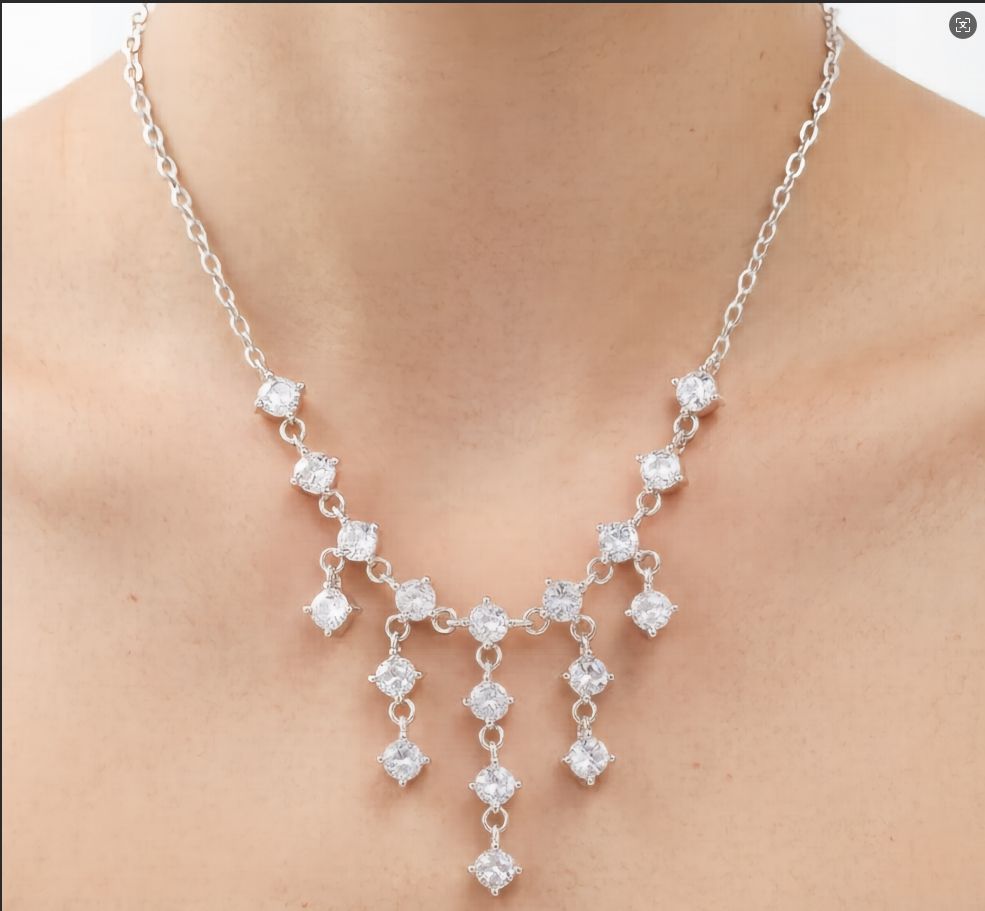
A bride in a bateau neckline needs a pendant that sits above the collar line or it will vanish under the fabric. A bride in a plunging gown needs the pendant to drop into the V or it will look stranded at the throat. Retail staff who ask "what length do you want" get a guess from customers who have never thought about it; staff who ask "what is your neckline" and pull the matching chain sell the pendant correctly the first time.
Buyers can support that by supplying their accounts with a short neckline-to-length reference card. It is a low-cost inclusion that measurably cuts necklace returns.
Chain gauge, bail and extender planning
The chain must match the pendant's weight. A heavy pendant on a fine 0.8mm cable chain will flip and twist; a delicate solitaire on a heavy rolo chain will look clunky. Ask suppliers for chain gauge matched to pendant weight, and confirm the bail is large enough to pass through the chosen chain style — a small jump bail on a thick curb chain is a common fit problem.
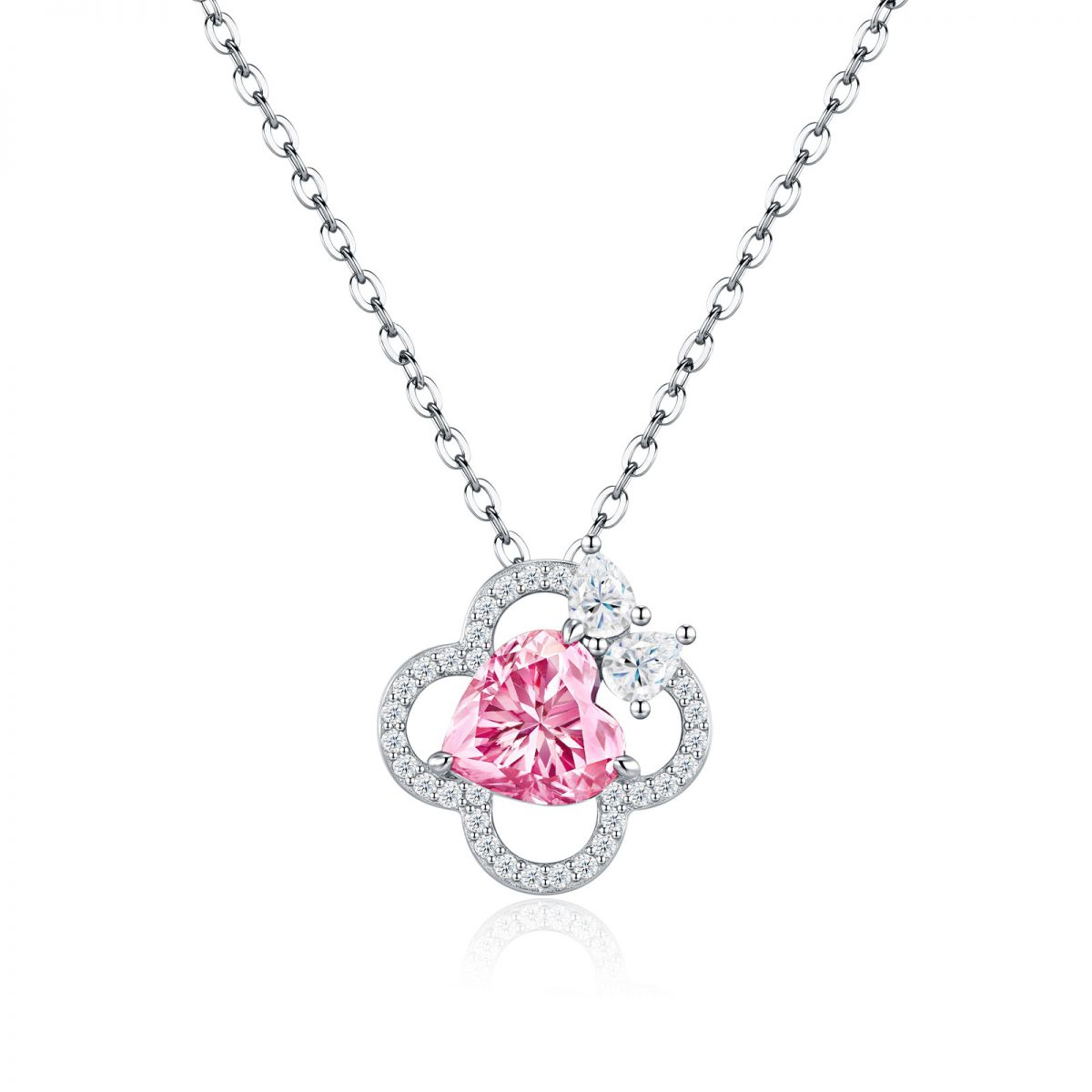
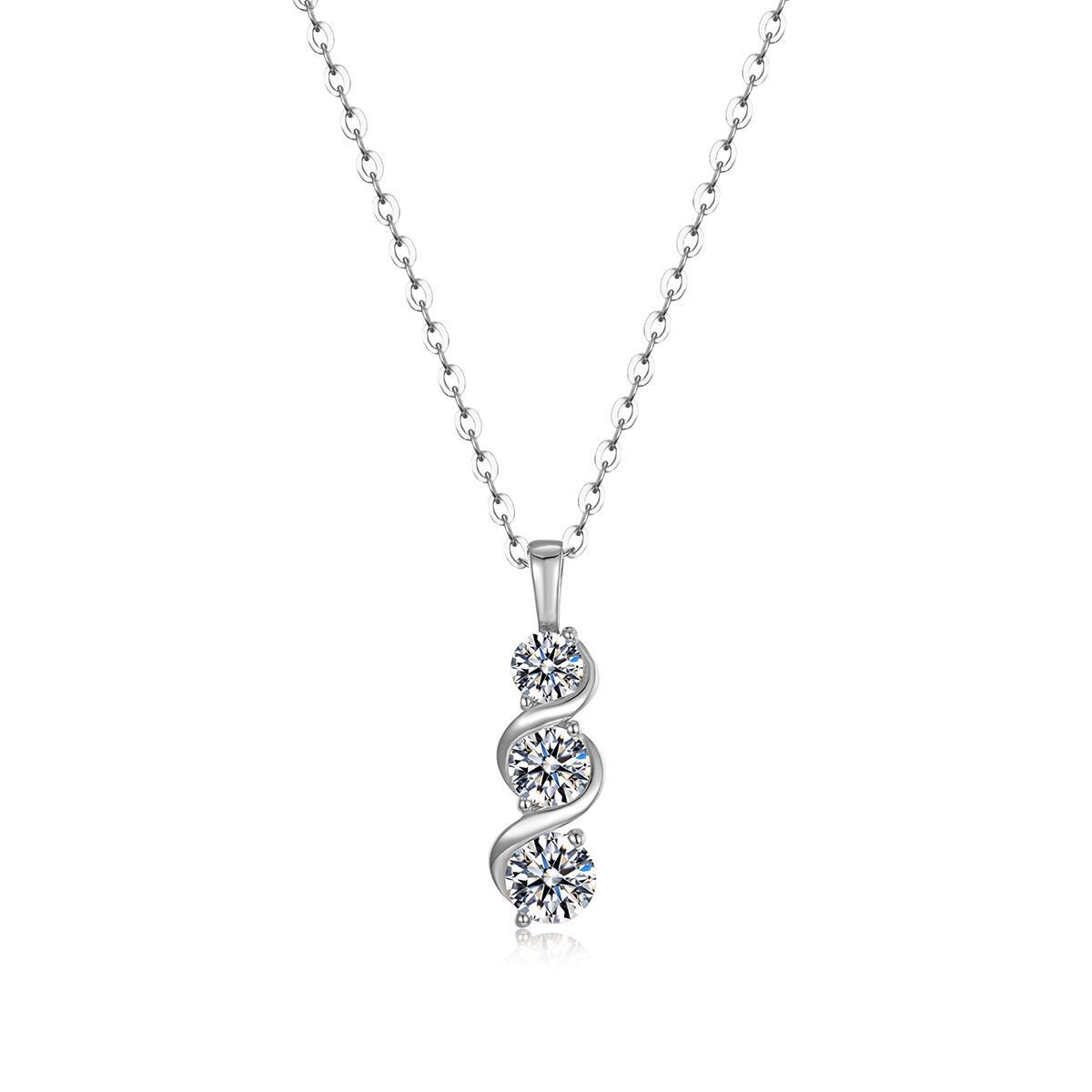
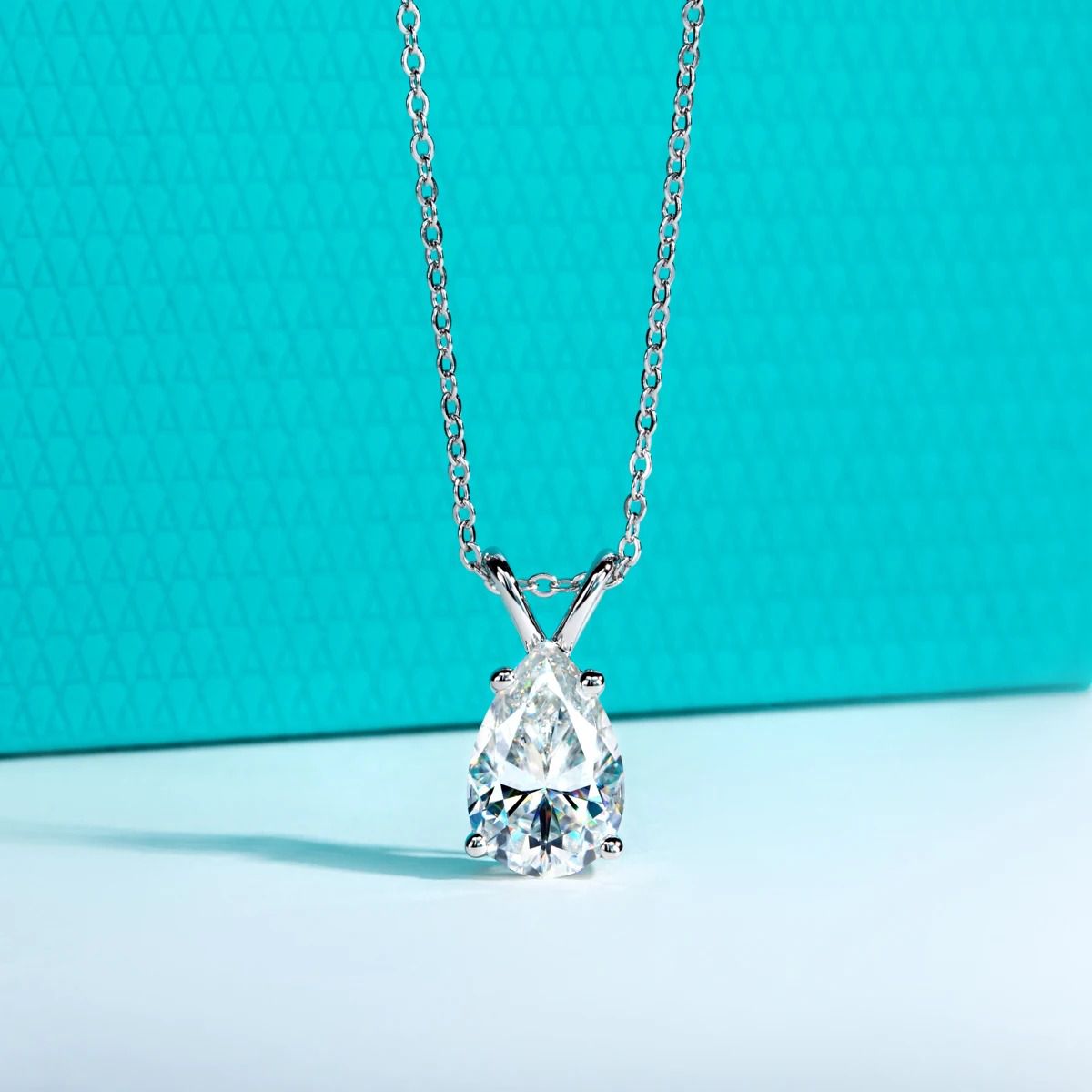
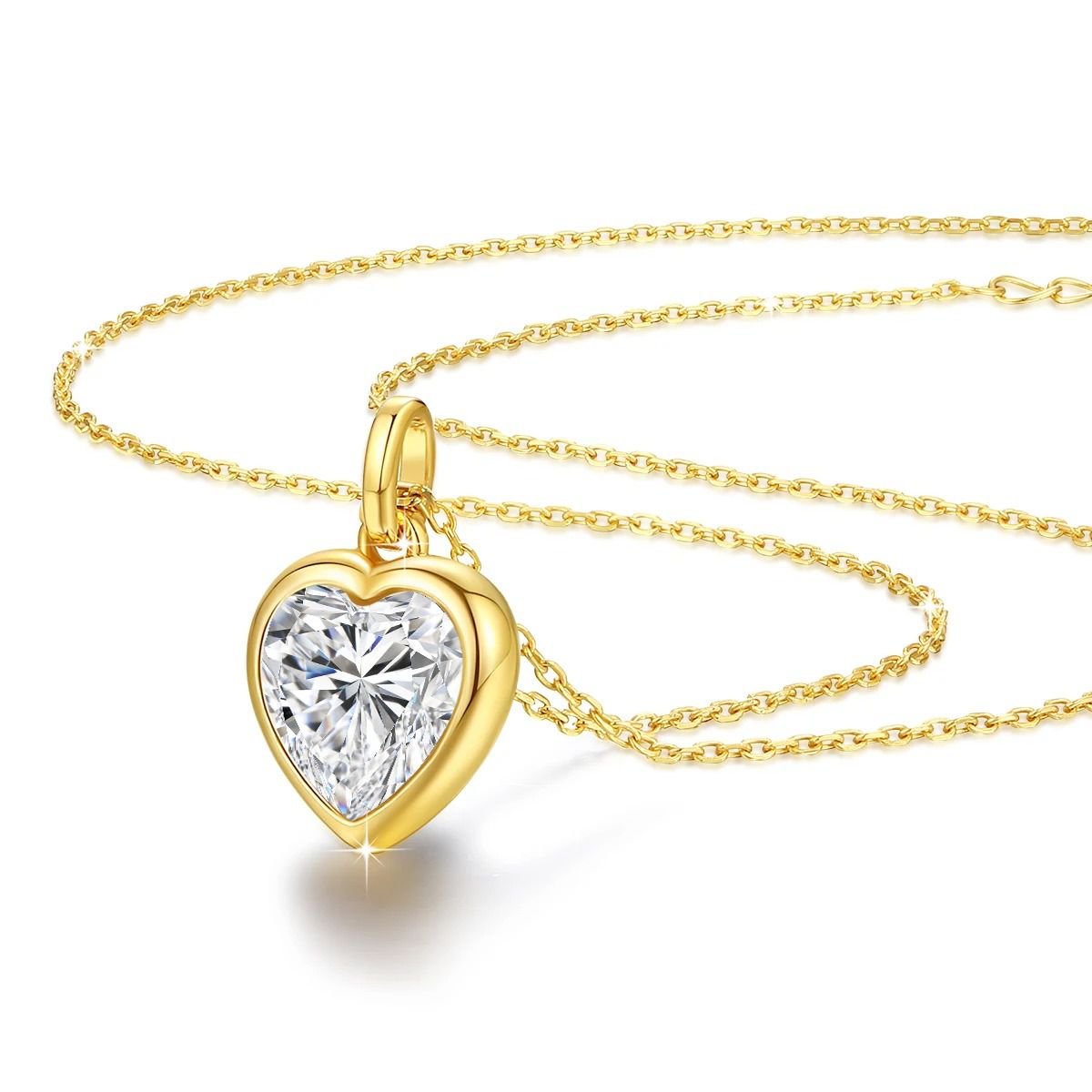
Extender chains are the cheapest insurance a buyer can add. A 2-inch extender turns one stocked length into a range, covering customers who prefer a looser fit or who are layering. Build extender options into the assortment rather than as a separate add-on. Moissanite pendants sell on light return, so keep chains slim and polished; a heavy chain competes with the stone. See how pendants are staged by length in our necklaces collection when you plan the next buy.
Chain style is a merchandising choice too
The chain pattern changes the look as much as the length. A cable chain is the neutral, everyday workhorse and suits a simple solitaire pendant. A box chain reads slightly more structured and holds its shape under heavier pendants. A snake chain sits close to the skin and is the right call for a sleek modern pendant, but it kinks more easily and is less repair-friendly. Buyers should not mix all three patterns into one tray — that confuses the customer. Pick a dominant chain style for the core pendant line, and offer one alternate for the fashion pendants.
Layering as a separate small program
Some brides now wear a short pendant over a longer one rather than a single statement. That is a chance to upsell: stage a 16-inch solitaire pendant beside a 24-inch bar or initial pendant so the customer sees the layered look on the display bust. Layering pendants are higher-margin because the customer buys two chains and two pendants in one visit, and they are largely immune to the single-pendant sizing problem because the two lengths balance each other.
Remember that neck size varies, not just neckline. A customer with a longer neck can carry an 18-inch chain where a shorter-necked customer finds it choking. The extender chain is what makes the same stocked length work across both body types, which is why it deserves to be built into the assortment rather than sold as an afterthought.
Do not default every pendant to 18 inches
The default-18 approach looks tidy on a purchase order and fails in the real world. Brides with fuller necks, brides wearing high necklines, and brides layering all need a different drop. A small assortment of lengths — even just 16 and 18 as the primary two — converts more pendants and returns fewer. Treat chain length as a merchandising decision, and the pendant category stops being a one-size-fits-all compromise.
Independent background on moissanite — how its hardness and refractive index compare with diamond — is documented in the Wikipedia article on moissanite.
Frequently Asked Questions
Which chain lengths should I stock first?
16 to 18 inch covers most necklines and gift purchases. Add 20 inch for layering sets and 24 inch for pendant lines.
Are your chains nickel-free and hypoallergenic?
Yes. Sterling silver is 92.5% silver; stainless lines use 316L. Both are nickel-safe for reactive customers when plated correctly.
Can necklaces be personalized?
Laser engraving on pendants and clasps is available from 50 pieces, with 3–5 day turnaround on the engraving step.
What is the bulk lead time?
15–20 days under 500 pieces; 25–30 days for custom pendants or new molds.
Send your spec sheet — stone, cut, size, plating and quantity — and we will return a costed timeline.
Ask the workshop