Wholesale Moissanite Buying Guide for Retailers
Jewelry retailers and boutique brands looking to add moissanite to their assortment often ask where to start: what sizes to stock, how to verify quality, how to price, and how to avoid the common supplier mistakes that turn a moissanite program into a customer service headache. A boutique in Dallas launched a moissanite bridal line in 2024 carrying three different suppliers' stones. Within three months, returns spiked on one supplier's line because the stones had noticeable brown tint in their "colorless" grade, inconsistent faceting, and certificates that did not match the stones (same report number printed on multiple different stones across the lot). The retailer lost roughly $12,000 in returns and rework before switching to a single certified source. Moissanite can be a high-margin, fast-moving category for retailers—but only if you understand the grades, the certification, and the supplier factors that matter at wholesale.
Why Stock Moissanite in 2026
Moissanite has moved from a niche diamond alternative to a mainstream bridal category in the US. Several factors drive this:
- Price point: wholesale costs are 80-90% below comparable natural diamond prices and 30-60% below comparable lab grown diamond prices, supporting strong retail margins.
- Durability: 9.25 Mohs hardness, suitable for daily wear engagement rings (second only to diamond and moissanite among white gems).
- Ethical positioning: lab-created with no mining impact, a strong selling point for younger buyers.
- Optical performance: higher refractive index (2.65) and dispersion (0.104) than diamond—noticeably more sparkle and fire, which moissanite buyers specifically want.
- Branded categories: the leading moissanite brands (Forever One, Charles & Colvard, and numerous independent Chinese-made brands) have built consumer recognition over the last decade.
For retailers, moissanite typically delivers 55-70% gross margin (vs. 40-50% on natural diamond bridal) and appeals to a younger demographic (25-38) shopping in the $299-$1,999 bridal retail range.
Moissanite Grades to Understand at Wholesale
Unlike diamonds, moissanite does not have a universal GIA 4C grading system; each brand/supplier uses its own grades. Key grading dimensions to compare across suppliers:
Color
Color grading on moissanite uses a D-to-K range borrowed from diamond grading, but the mapping is not identical across brands:
| Grade | Wholesale Price Index (1ct round) | Recommended Use |
|---|---|---|
| D-E-F (colorless) | $45-85/stone | Premium bridal, center stones 0.5ct+ |
| G-H-I (near colorless) | $22-45/stone | Mainstream bridal, best seller for engagement rings |
| J-K (faint warm tint) | $12-25/stone | Fashion jewelry, pendants, earrings where price matters most |
| Branded (Forever One DEF, Super Premium) | $90-180/stone | Branded retail with brand story support |
Important note: many unbranded Chinese moissanite suppliers sell "DEF" and "VVS1" grades that visually grade G-H or I. Buy samples first and compare stones in natural daylight before committing to bulk DEF orders—color matching across a lot is one of the most common quality complaints at retail. For more on moissanite properties, see the moissanite entry on Wikipedia.
Clarity
Most moissanite today is VVS or eye-clean by production—moissanite is grown in controlled lab conditions and naturally produces high clarity. Clarity grades below VS are rare in modern production and usually indicate low-quality manufacturing or secondhand material.
Cut
Cut quality is the biggest real differentiator between low-price and premium moissanite:
- Standard round brilliant cut (57 facets) is the workhorse for bridal.
- Ideal/excellent cut (hearts-and-arrows pattern) commands a 30-50% premium but produces noticeably more sparkle and symmetrical light return.
- Fancy shapes (oval, cushion, pear, emerald, radiant, marquise, heart, princess) are widely available; ovals and cushions are the fastest-growing fancy shapes in 2026.
- "Crushed ice" hybrid cuts (unconventional facet patterns that maximize sparkle) are trending in Gen Z bridal but do not carry universal grading.
When buying at wholesale, ask for hearts-and-arrows (H&A) stones for your premium bridal tier—symmetry and light performance are visibly superior under jewelry store lighting.
Certification: What to Expect at Wholesale
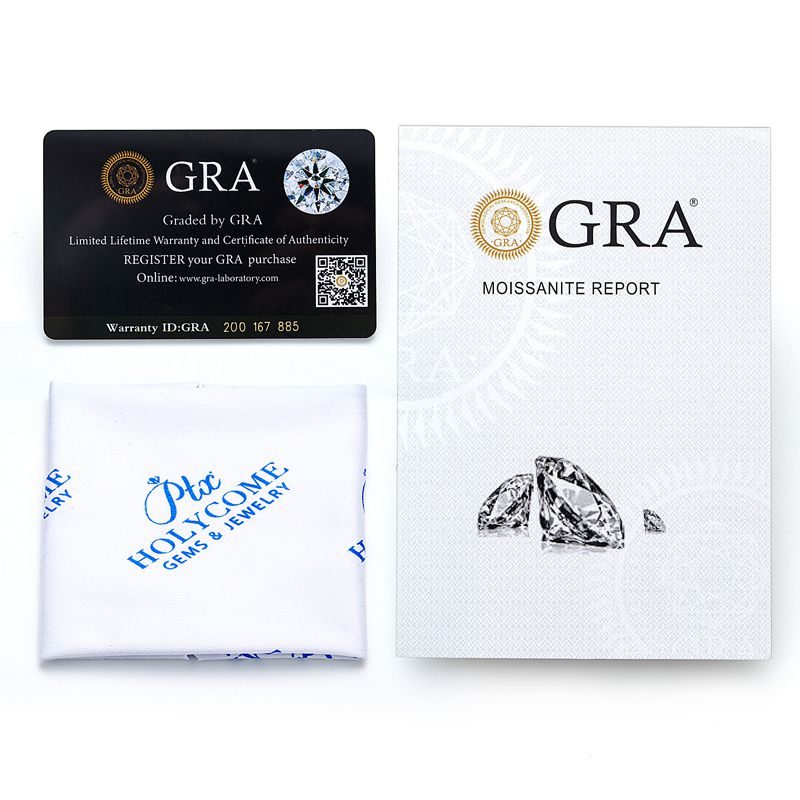
Branded moissanite (Forever One / Charles & Colvard) comes with a brand certificate of authenticity and a laser inscription on the girdle. Unbranded Chinese moissanite (the bulk of the wholesale market today) typically comes with a GRA (Gemological Research Association) or GRI certificate; these certificates are standard in the moissanite wholesale market but are not GIA/IGI and should not be marketed as such. Transparent wholesale suppliers will:
- Provide per-stone certificates with report numbers, girdle laser inscriptions, and online verification for stones 0.3ct and up.
- Guarantee that report numbers are unique per stone (not reused across a lot—reused numbers are the #1 sign of certificate fraud in low-grade moissanite).
- Offer stone-by-stone grading confirmation for center stones 1ct and up.
Always verify a few report numbers online against the issuing body's website when receiving a new shipment. If multiple stones in a lot share a report number, reject the lot.
MOQ, Pricing, and Order Structure
Wholesale moissanite is sold loose (for setting by the retailer or their jeweler) or pre-set in finished jewelry. Pricing and MOQs vary:
- Loose moissanite melee (0.7-2.9mm): Sold by the piece or per carat, MOQ typically 50-100 pieces per size. Wholesale prices $0.5-$6 per piece depending on size. Melee quality consistency matters enormously in pavé settings, where even slight color variation across a band looks bad to customers.
- Loose center stones (0.3ct-5ct): Sold per piece, MOQ often 1-10 pieces per size/shape for wholesalers selling to retailers. Wholesale prices $15-$350 per piece depending on size, color, and cut.
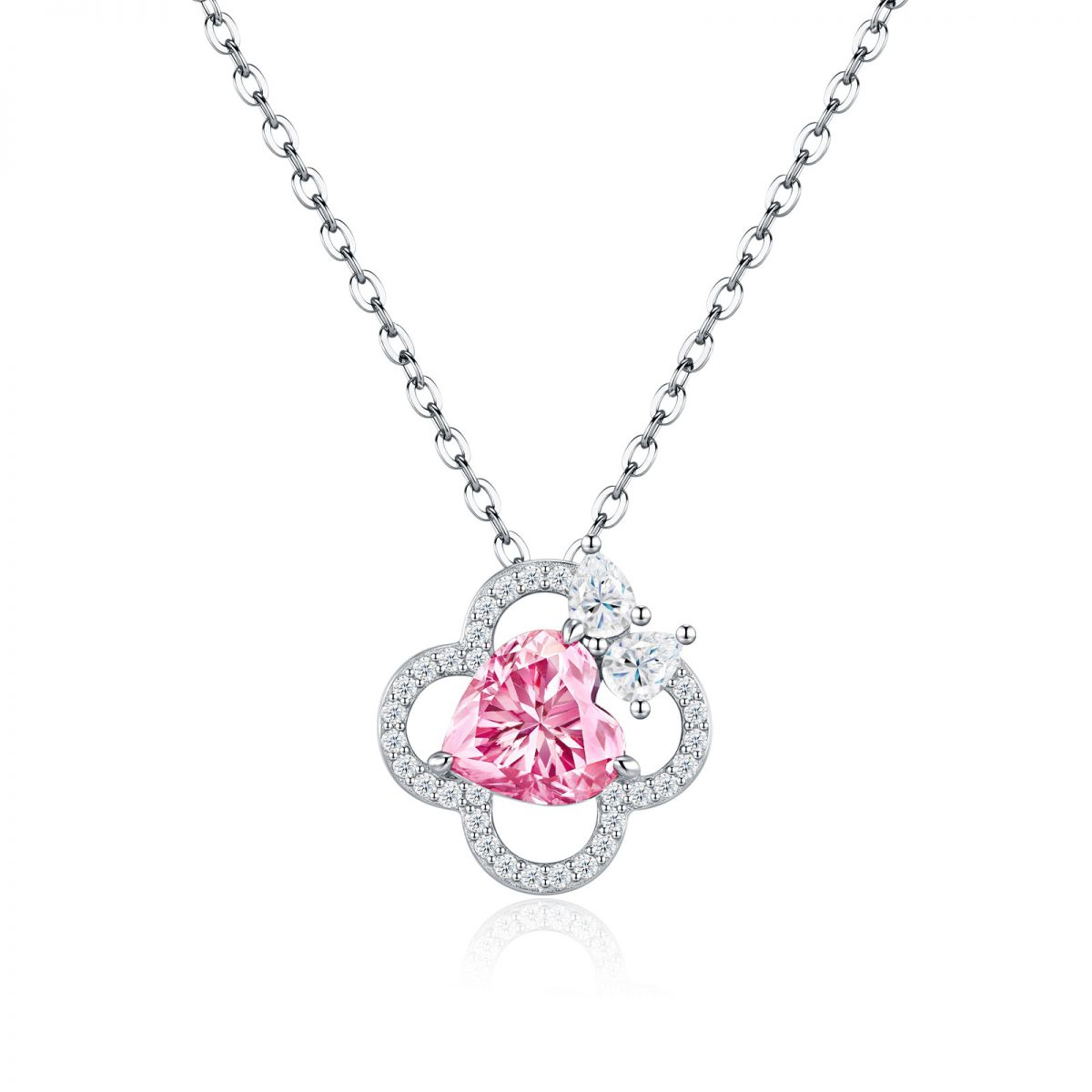
- Finished moissanite silver/vermeil jewelry: MOQ 30-100 pieces per style. Wholesale price $15-$150 per piece depending on metal and stone size.
- Finished moissanite solid 10K/14K gold jewelry: MOQ 10-30 pieces per style, wholesale $90-$600 per piece.
Lead times: in-stock loose stones ship in 3-7 days. Melee lots 0.8-3.0mm are usually stocked. Fancy shapes above 2ct and custom sizes may require 15-30 days production. Finished jewelry production runs 20-35 days depending on metal and volume.
Assortment Recommendations for New Moissanite Retailers
For a boutique retailer launching moissanite for the first time, start with a tight assortment that covers 80% of customer demand without tying up too much capital:
- Loose center stones: 0.5ct, 1.0ct, 1.5ct, 2.0ct rounds in DEF and GHI, 1-2 pieces each (8 pieces total); add oval and cushion 1.0ct and 1.5ct in GHI (4 pieces).
- Melee: 1.0mm, 1.3mm, 1.5mm, 1.8mm, 2.0mm DEF VVS, 100 pieces each (for pavé and sidestones).
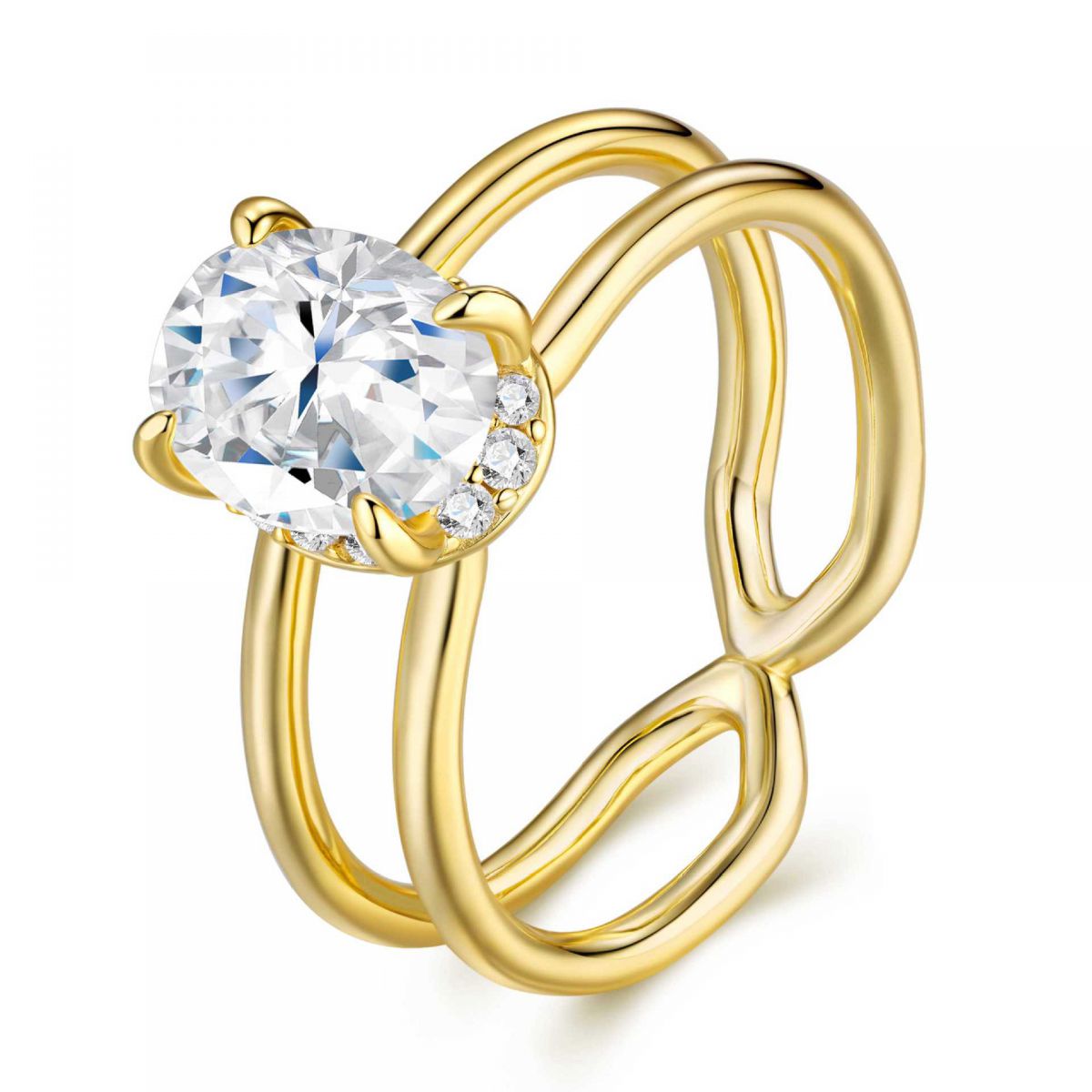
- Finished silver engagement rings: 10-20 best-selling SKUs (classic solitaire, halo, three-stone) in sizes 5-9, 3-5 pieces per size (150-250 pieces total for a starter opening order).
- Finished silver wedding bands: 5-10 styles in sizes 5-9.
- A small selection of pendants and earrings in 1.0ct and 2.0ct center stone size for impulse and gifting.
This gives a retailer a salable assortment with roughly $3,000-8,000 in opening wholesale inventory, which can retail for $12,000-30,000 at standard markups.
What Can Go Wrong: Supplier Red Flags
Watch for these red flags when vetting moissanite suppliers:
- "VVS1 DEF" pricing below $25/ct wholesale (genuine colorless VVS moissanite has a real cost floor; underpriced stones are usually H-I or J-K misgraded).
- Certificates with no online verification or reused report numbers across multiple stones.
- No girdle laser inscription (which makes it impossible to match a certificate to a specific stone).
- Inconsistent white-brightness across a single lot of "DEF" stones when viewed together under daylight or a 5000K lamp.
- Lead times of 3-5 days for large custom orders (real production of finished gold jewelry is not that fast; very quick turnaround often means shipped-from-stock low-quality generic product).
- No inspection return window. Reputable wholesale suppliers offer 3-7 day inspection returns for quality verification.
Marketing Moissanite to Your Customers
Successful moissanite retailers emphasize a few key selling points in their sales conversations:
- Brilliance and fire (more sparkle than diamond at a fraction of the price).
- Ethical and environmental story (lab-created, conflict-free, low environmental impact relative to mining).
- Durability for daily wear (9.25 Mohs, suitable for engagement rings and wedding bands worn daily).
- Price savings that let buyers either spend less overall or upgrade to a larger stone or better setting within the same budget.
Do not over-promise: moissanite is not diamond, and moissanite is not for every customer. Be transparent about moissanite's differences (slightly higher fire, possible double-refraction rainbow effect under certain lighting, branded vs unbranded) and let customers choose. The FTC requires that moissanite be clearly labeled as moissanite—not sold as diamond or as a "diamond alternative" without naming the stone.
Frequently Asked Questions
Q: Does moissanite cloud or lose sparkle over time?
Modern silicon-carbide moissanite is stable, inert, and does not cloud, fade, or change color with normal wear. Older-generation moissanite produced pre-2015 could have noticeable green tint in some lighting; modern production is much whiter and more consistent.
Q: Can a customer tell a moissanite from a diamond with the naked eye?
Most consumers cannot tell a well-cut white moissanite from a diamond by casual observation. Trained jewelers using a loupe may spot double-refraction (facet doubling) in moissanite under 10x, and thermal diamond testers will distinguish moissanite from diamond (moissanite conducts electricity in most cases). Customers buy moissanite for its own qualities, not to pass as diamond—transparency with buyers is the right approach.
Q: What is the difference between branded and unbranded moissanite?
Branded moissanite (Forever One/Charles & Colvard) carries the brand's name, consistent grading, and US-based warranty/support; it commands a 50-150% premium over equivalent unbranded material. Unbranded moissanite (primarily from Chinese manufacturers) is the bulk of the wholesale market today and offers good value when sourced from a reputable supplier with proper grading and certification.
Q: Can I get custom sizes and shapes in moissanite?
Yes—fancy shapes, large sizes (3-10ct), custom cuts, and colored moissanite (gray, black, blue, green, pink, yellow) are available from most wholesale suppliers at MOQ 1-10 pieces per size/color with 15-30 day lead times. Colored moissanite is a growing niche in fashion and alternative bridal.
Q: Does moissanite test as diamond on a diamond tester?
Basic thermal diamond testers may read moissanite as diamond (moissanite conducts heat similarly to diamond). Diamond/moissanite dual testers (which also test electrical conductivity) distinguish them reliably. If you sell diamond and moissanite in the same store, use a dual tester at intake and service.
Q: What's the typical retail markup on moissanite?
2.5x to 4x keystone markup is standard for moissanite jewelry at retail, giving gross margins of 60-75% depending on metal and overhead. Loose moissanite stones carry slightly lower markups (2-3x), while finished branded bridal carries the highest.
Key Takeaways
- Moissanite is a high-margin, growing category for bridal retailers, especially in the $299-$1,999 retail range.
- Color and cut quality vary across suppliers—always buy DEF samples from new suppliers and inspect under natural daylight before bulk orders.
- Verify certificates: check that report numbers are unique per stone and verifiable online; reject lots with reused certificate numbers.
- Start with a focused opening assortment (round centers in common sizes, melee in core mm sizes, and 10-20 finished silver ring SKUs) rather than trying to carry everything.
- Be transparent with customers: moissanite is moissanite, not diamond—sell its sparkle, durability, price, and ethical story, not resemblance to diamond.
- Work with a wholesale supplier that offers inspection returns, real grading (not inflated letter grades), and per-stone laser inscriptions.
Adding moissanite to a retail jewelry assortment is straightforward when you understand the grades, certification, and supplier verification steps. Start small, buy samples, verify certificates, and build a relationship with a single consistent wholesale source before scaling orders—that approach keeps margins healthy and returns low.
Related Reading
- Start a Jewelry Business Wholesale Guide - HOLYCOME
- 925 Sterling Silver Jewelry Wholesale Buying Guide - HOLYCOME
- Lab Grown Diamonds Wholesale Bulk Buying Guide - HOLYCOME
Related reading: Moissanite Buying Guide Wholesale Buying Guide, Moissanite Buying Guide 2026: Wholesale Buying, Moissanite Wholesale Price: Wholesale Buying.
Send your spec sheet — stone, cut, size, plating and quantity — and we will return a costed timeline.
Ask the workshop