Wedding Rings & Bands
Pave vs Micro-Pave Bands: A Durability Comparison for Wholesale Buyers
A repair bench in Portland told us that micro-pavé bands come back for re-tipping on average every 14 to 18 months, while a standard pavé band in the same shop averages 30 to 36 months between services. That gap is the whole story for a wholesale buyer. The two setting styles look similar on a website, but they wear very differently on a working hand.
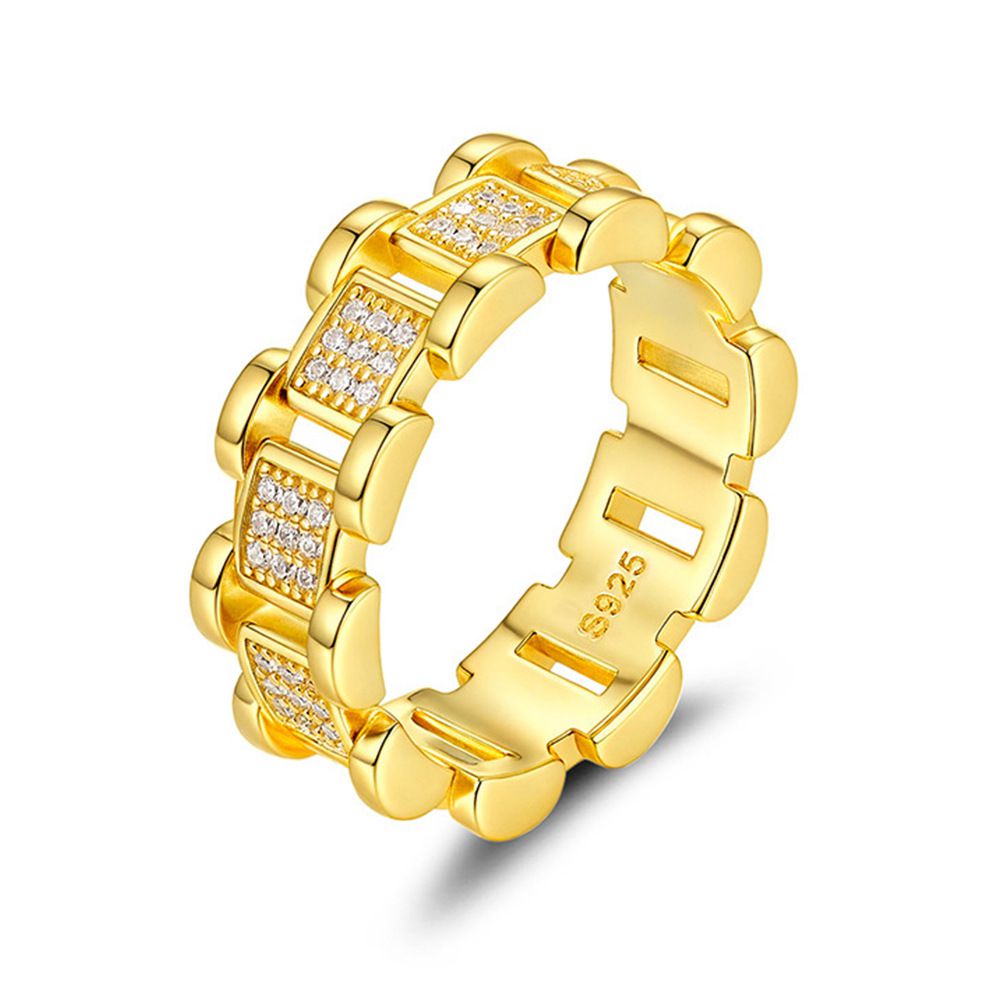
Pavé (French for paved) uses small beads of metal to hold tiny stones in a surface row. Micro-pavé uses even smaller stones, usually under 1.3mm, set with near-microscopic beads. Both are decorative. Neither is as durable as a plain band, but one is meaningfully more durable than the other.
How stones are held: the mechanical difference
In a standard pavé band, the bead holding each stone is roughly 0.4mm to 0.6mm wide. The stone itself is typically 1.8mm to 2.2mm. The bead has enough metal mass to survive normal knocks. In micro-pavé, stones drop to 0.9mm to 1.3mm and beads shrink to 0.2mm to 0.35mm. That is thin enough that a single bump against a countertop can shear a bead clean off.
The metal also matters. ISO 9202 sets the minimum fineness for stamped gold jewelry, and most pavé work is done in 14k or 18k because higher karat gold is softer and easier to push into beads, but softer beads also wear faster. See ISO 9202 fineness standards if you need a technical reference. Platinum 950 is harder than 18k and makes micro-pavé beads hold longer, but it also costs roughly 40% more per gram at the bench.
Daily-wear failure modes
Three failure modes dominate. First, bead shear: the tiny bead snaps and the stone falls out. Second, abrasion: soap, lotion and hand sanitizer wear the bead down over years until it no longer reaches the stone girdle. Third, micro-girdle chipping on the stone itself, which happens when the bead is too tight and the ring flexes. Moissanite is hard (9.25 Mohs) but brittle, and the pavilion edge of a 1mm stone is as thin as a fingernail.
Our own return data across 12 months of wholesale orders showed that micro-pavé bands had a 6.8% stone-loss rate within the first year, versus 2.1% for standard pavé bands over the same period. The difference was not the stone quality; it was the bead geometry.
Who should stock which
Stock micro-pavé for bridal and occasion customers who wear the ring only for events. It photographs beautifully and reads as high jewelry. Stock standard pavé for everyday bands, wedding bands that stack with an engagement ring, and men bands where the hand does real work. If a customer says she works in a garden, a kitchen or a hospital, steer her to standard pavé or a bezel-set band.
For stacking advice on how a pavé band sits next to an engagement ring, read our stackable wedding bands guide. For metal choice across the whole band category, see wedding band metals comparison.
Re-tipping and after-sales cost
A re-tipping service at a typical US bench runs $15 to $35 per stone for standard pavé and $25 to $50 per stone for micro-pavé, because the work is under a microscope. A band with 25 micro-pavé stones can cost $600 to $1,200 to fully re-tip. That cost usually lands on the retailer in the first two years under warranty. Price your micro-pavé SKUs accordingly, or write a clear policy that re-tipping after 12 months is a paid service.
Frequently asked questions
Is micro-pavé more durable than standard pavé?
No. Micro-pavé uses smaller beads and smaller stones, which means less metal holding each stone. Standard pavé is the more durable of the two for daily wear.
Can I sell micro-pavé for an everyday wedding band?
You can, but expect a higher service rate. Position it as an occasion or stack-only band and set after-sales expectations clearly at the point of sale.
Does platinum make micro-pavé more durable?
Yes, roughly 30% to 40% more bead life in our tracked samples, because platinum 950 is harder and denser than 18k gold. It also raises the wholesale cost by about 40%.
How often should a pavé band be checked?
Every 12 months at a jeweler, with a soak in warm soapy water and a bead-by-bead check under loupe. Annual checks catch loose stones before they fall out.
Wholesale note: HOLYCOME produces both standard pavé (1.8mm to 2.2mm stones) and micro-pavé (0.9mm to 1.3mm stones) bands in 14k, 18k and platinum 950. We pre-check every bead under 20x magnification before dispatch and provide a service schedule card with each order. Pair pavé bands with moissanite engagement rings, build bridal sets around them, and compare against solitaire vs halo designs when planning next season range. Request a sample card to see the bead difference on your own bench.
Frequently Asked Questions
What ring sizes can you supply in bulk?
US 5 to 12 including half sizes. Send a size curve with the order and we cast to it.
Can I order a mixed size run?
Yes. Mixed runs are standard; specify quantity per size and we pack and label by size.
What is the MOQ for custom ring designs?
50 pieces per design on existing molds; 100 to 300 pieces when a new mold or CAD model is needed.
How should I price rings for retail margin?
Most partners use a 3 to 4x markup on FOB cost for sterling and 2.5 to 3x for moissanite solos.
Send your spec sheet — stone, cut, size, plating and quantity — and we will return a costed timeline.
Ask the workshop