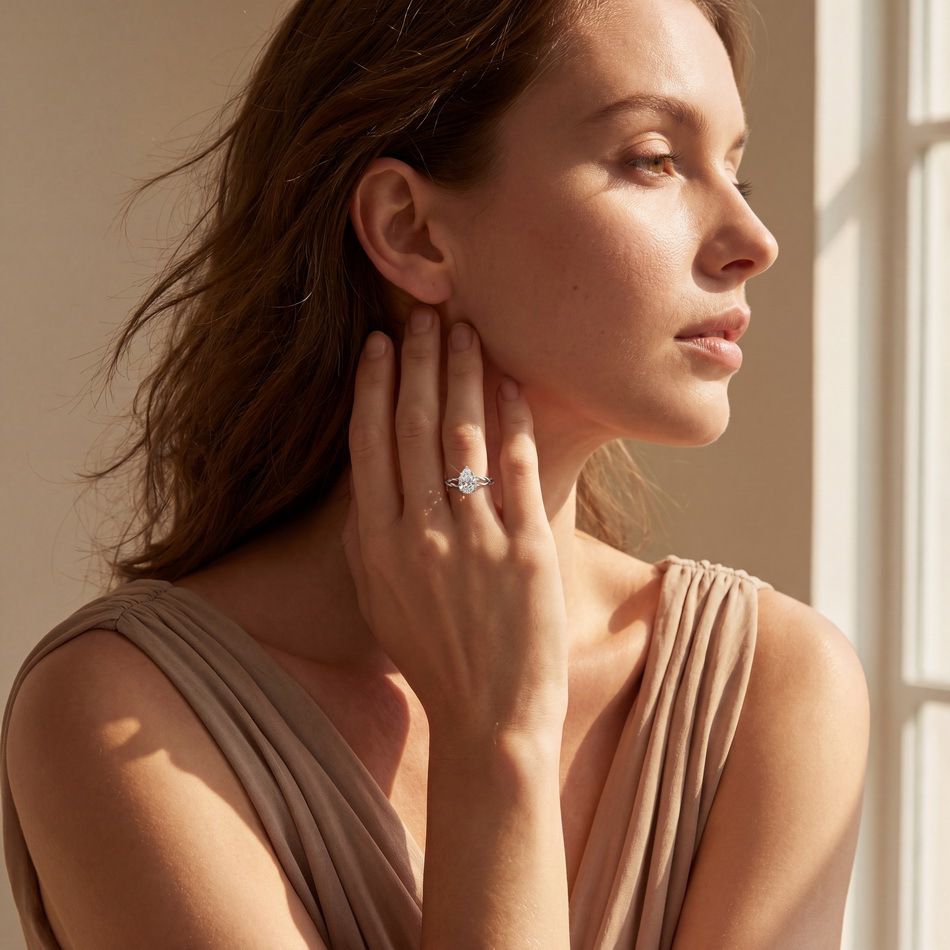
For independent jewelers across the United States, the wedding band is usually the second sale inside a bridal transaction, and the choice between a comfort-fit and a classic (standard-fit) band quietly decides whether that sale ends in a happy customer or a return. Understanding the engineering difference between these two profiles, and knowing which shoppers lean toward each, helps your sales team recommend with confidence, cut exchange rates, and build dependable reorders. As a factory-direct manufacturer of moissanite and 925 sterling silver bridal jewelry based in Wuzhou, China, GemWSL produces both profiles at scale for US retailers, and the question we hear most often from new buyers is simple: which one should I actually stock?
The answer is not one or the other. The most profitable showrooms carry both, because the two profiles attract different fingers, different budgets, and different wearing lifestyles. This guide walks through what each profile is, how they compare on the finger, which US shoppers prefer which, and how to balance them in your next wholesale order.
What Are Classic (Standard-Fit) Wedding Bands?
The classic, or standard-fit, band is the traditional shape most consumers picture when they imagine a wedding ring. Its inner wall is flat against the finger, with squared or softly eased edges where the inside meets the band's side walls. Historically, this is how rings were forged before comfort-fit tooling became common, and it remains the default in many jewelry departments because it is simpler and lower cost to produce.
On the finger, a standard-fit band sits with broad, even contact against the skin. That creates a secure, "present" feel that many wearers like, especially for a piece they will never take off. Because the interior is flat, sizing is straightforward: the measured finger size maps almost directly to the stamped ring size, and resizing a classic band requires minimal metal removal or addition. For a small independent shop without an in-house jeweler, that translates into lower after-sale service cost.
For retailers, the appeal is consistency. Classic bands photograph well, price sharply, and appeal to traditional shoppers who associate the shape with their parents' and grandparents' rings. They also tend to be the lowest-cost entry point in a wholesale bridal band program, which makes them a natural loss-leader tier next to your higher-margin moissanite styles.
What Are Comfort-Fit Wedding Bands?
A comfort-fit band is engineered around a curved interior. Instead of a flat inner wall, the inside of the ring is domed, so the band touches the finger along a narrower, rounded channel. The cross-section resembles a shallow "D" or a fully rounded pipe shape, with extra metal built into the lower wall to support the curve without thinning the outer face.
The result is a ring that glides on and off more easily, feels lighter on the finger despite often being thicker on the mandrel, and is noticeably more comfortable for people whose fingers swell during the day. That covers a lot of US customers: warmer climates, outdoor workers, pregnant brides, gym members, and anyone whose fingers change size between morning and evening. Comfort fit is now the default expectation for most men's bands sold in the United States and is increasingly requested by women who choose a wider band or who prioritize all-day wearability.
Because comfort fit requires more metal and precision tooling, it typically carries a modest upcharge at wholesale. That upcharge is almost always passed through to the consumer without objection, because the difference is immediately felt during a try-on. A shopper sliding a comfort-fit band over a knuckle rarely goes back to a flat interior afterward.
Key Differences at a Glance
- Interior shape: Classic bands have a flat inside wall; comfort-fit bands have a rounded, domed interior that reduces contact area.
- Weight and wall thickness: Comfort-fit rings use slightly more metal to form the curve, so they feel denser on the scale even when they feel lighter on the finger.
- Sizing nuance: Because comfort-fit slides on more easily, some wearers size down by a quarter size. Sales associates should always fit in person when possible.
- Resizing: Classic bands resize more cheaply; comfort-fit bands require careful trimming of the curved interior wall to preserve the profile.
- Price tier: Comfort fit typically sits above classic fit in the wholesale price ladder, supporting a healthier retail margin.
- Stacking behavior: Thin classic bands sit flush against an engagement ring; wide comfort bands may lift slightly if stacked tightly.
Which Shoppers Prefer Which?
Across our orders from US independent jewelers, the pattern is consistent. Brides selecting a 2mm to 3mm stackable or eternity-style band almost always choose classic fit, because the narrow width makes the comfort curve less noticeable and the flat interior sits flush against a stacked engagement ring. Grooms selecting 5mm to 8mm bands overwhelmingly choose comfort fit, especially when the band is worn daily for manual, outdoor, or active work.
There is also a generational signal worth training your team on. Younger couples, particularly millennial and Gen-Z buyers researching on their phones before entering a store, often arrive already asking for "comfort fit" by name. Shoppers over sixty are more likely to ask for "the traditional one." Recognizing these cues shortens the sale, reduces post-purchase regret, and prevents the common mistake of upselling a wide comfort band to a bride who actually wants a thin flush stacker.
Pricing, Margin, and Stocking Implications
Because comfort-fit bands carry a higher perceived value and a slightly higher wholesale cost, they also support a healthier markup. A 925 sterling silver comfort-fit band plated in rhodium, set with moissanite accents, can retail at a meaningful premium over a plain classic band while still landing well below a comparable solid gold or platinum piece. That is precisely the value position independent US jewelers need when competing against online mass retailers and lab-grown diamond chains.
Our recommendation for a balanced first order is roughly 60% comfort fit across widths 4mm and up, and 60% classic fit in widths under 3mm. This split mirrors real sell-through data and prevents overstocking the wrong profile. Moissanite-accented versions, in both fits, move fastest in bridal districts where price-sensitive couples are already comparing against lab-grown diamond quotes and appreciate the clarity and fire of a moissanite accent at a fraction of the price.
How GemWSL Manufactures Both Profiles
At our Wuzhou facility, both classic and comfort-fit bands are produced on the same CNC and hand-finishing lines, which means retailers can mix and match profiles in a single purchase order without splitting factories or paying extra consolidation fees. Every band is cast in solid 925 sterling silver, inspected for porosity under magnification, and finished in your choice of rhodium, 14K gold vermeil, or rose vermeil plating. Moissanite accents are calibrated to match the color and cut of the engagement rings in the same collection, so a bride who buys her solitaire from you can add a matching comfort-fit band six months later without a visible mismatch.
Sizing runs US 4 through 14 across most styles, with half sizes available on bestsellers. Reorders ship within two to three weeks for in-stock profiles, and private-label OEM engraving can be layered on without extending lead times beyond standard production windows. Each order is QC-checked for wall thickness, plating uniformity, and stone tightness before it leaves the factory.
Closing: Build the Fit Conversation Into Your Floor
The comfort-fit versus classic choice is one of the few bridal decisions shoppers cannot fully make from a website. That is exactly where an independent jeweler earns the sale. By carrying both profiles in the same widths and finishes, training your staff to feel the difference on a sizing mandrel, and explaining the all-day comfort advantage to active grooms, you turn a commodity band into a consultative sale. GemWSL stocks both profiles in 925 sterling silver with optional moissanite accents, ready for private-label shipment to your store. Review our wholesale catalog, compare the two side by side in your showroom, and let your customers' fingers decide.