Loose Stones
Moissanite vs Diamond: Display Signage That Converts Without Confusion
The single biggest barrier to a moissanite (per Wikipedia) sale is not the stone. It is the customer's uncertainty about what she is looking at. A loose moissanite in a tray, with nothing but a price tag, invites the question "is this real?" and most customers leave rather than ask. The right display signage answers that question before it is spoken — and does it without overclaiming.
Teach the facts that sell moissanite on its own terms
Moissanite has a real, defensible set of advantages that signage should lead with. It registers 9.25 on the Mohs scale, making it second only to diamond in everyday durability and well above sapphire. Its refractive index is higher than diamond's, which is why it throws more colored fire and looks livelier under typical retail lighting. It is priced at a fraction of a comparable diamond, which means a bride can buy a larger stone or a more elaborate setting on the same budget. It is a lab-created, ethical-consistent stone with no mined-supply questions attached.
These are facts, not adjectives. Put the Mohs number, the refractive behavior, and the price relationship on the card in plain language. Customers trust a card that sounds like a spec sheet far more than one that shouts "brilliant" or "luxury."
What not to put on the sign
The one line that causes trouble is any claim that moissanite is "the same as" or "identical to" diamond. It is not identical, and customers who feel misled after the purchase become the loudest returns. Trade description rules require clear disclosure that the stone is moissanite, not diamond. State it plainly: "Laboratory-grown moissanite." Honest labeling is also a trust-builder — it signals that the store is not trying to pass anything off.
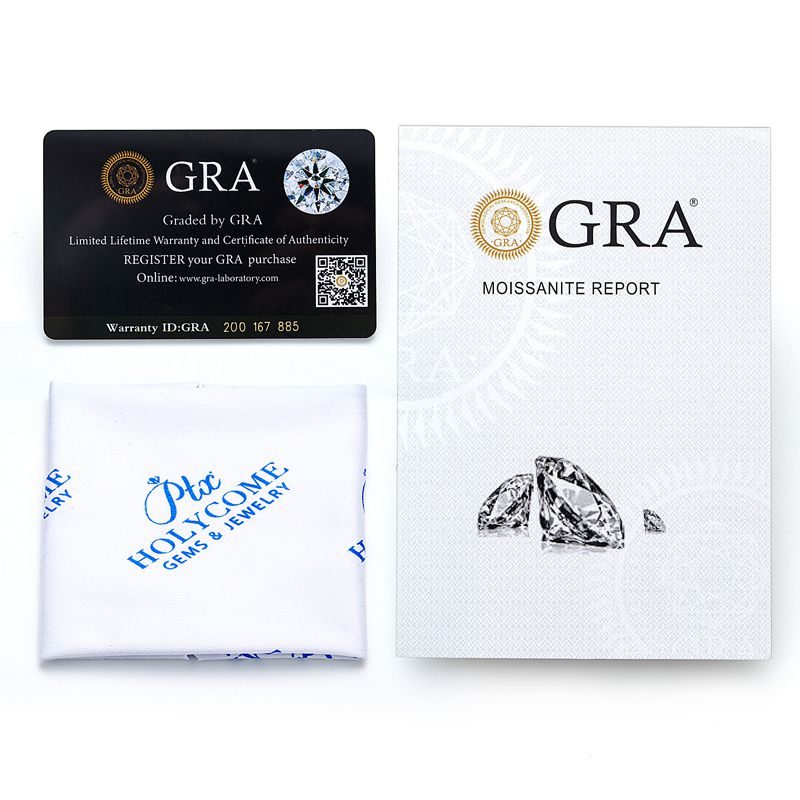
Show the certificate. A GRA certificate with a laser-inscribed stone number lets the customer verify the stone's parameters on the spot. Display the certificate in the tray next to the stone rather than in a drawer; the paper is what turns a skeptical browser into a confident buyer.
Design the comparison card, not a confrontation
A small side-by-side card helps: Mohs hardness, refractive index, origin, price tier, and care notes. Frame it as "choosing your stone" rather than "moissanite beats diamond." Some customers still want a mined diamond for sentimental reasons, and a store that respects that choice earns the next purchase regardless of this one.
The sign should also set the expectation that moissanite can be customized in size and cut, and that each stone ships with documentation. Buyers can source matched loose stones by carat and cut through our loose stones program to keep the display tray full and the certificates consistent.
The questions the sign should pre-answer
Certain questions come up on every loose-moissanite counter: "will it scratch?", "can I tell it apart from a diamond?", "is it lab created?", "what happens if I ever want to sell it?" A well-designed sign answers these in one line each. Moissanite scores 9.25, so it will not scratch under normal wear. It is lab-created, and that is stated up front. Resale value is lower than a mined diamond, and saying so honestly builds more trust than pretending otherwise. Customers appreciate a sign that anticipates their objection rather than one that only praises the stone.
Demo technique the sign enables
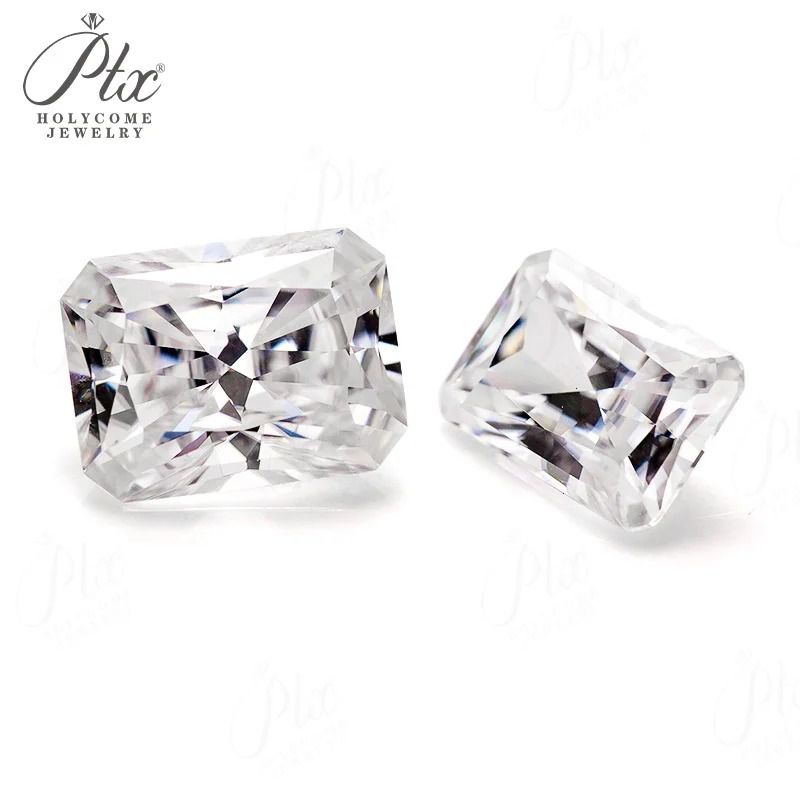
A loose stone looks flat in a tray. The sign should point the customer toward the loupe or the side-by-side light box where the fire is visible. Train staff to hand the customer the loupe rather than describe the brilliance — seeing the colored flash under the light is what closes the sale. The signage's job is to earn the trust that lets the customer lean in and look; the demonstration does the rest.
Keep the sign's visual weight light. A wall of text gets ignored; a clean card with four or five bullet specs, a small moissanite photo, and the certificate number reads as professional. Pair it with a lighted display tray so the stone itself does the talking. Buyers should refresh these cards seasonally, because worn, smudged signage undermines the credibility the whole card is trying to build. A store that keeps its comparison cards clean looks like a store that knows its product.
Some buyers worry that honest labeling reduces demand. In practice the opposite holds: customers who understand exactly what moissanite is buy it with confidence and do not return it. The sign that overhypes creates the returns; the sign that educates creates repeat customers.
Staff the conversation the sign starts
Signage does the first thirty seconds of selling; the staff does the rest. Train the counter to invite the customer to compare the moissanite against a diamond loupe or side-by-side, to explain the fire honestly, and to never pressure. A customer who understands the stone buys it. A customer who is told "you'll never tell the difference" returns it. Signage that educates, certifies, and stays honest converts more loose-stone sales and almost no complaints.
Frequently Asked Questions
Is moissanite a good diamond alternative for retail buyers?
Yes for price-sensitive customers who want brilliance and hardness. Moissanite ranks 9.25 on the Mohs scale, holds up to daily wear and costs a fraction of a natural diamond of the same size, so it resells fast in bridal and fashion lines.
What is the minimum order for wholesale moissanite?
MOQ starts at 50 pieces per design for stock items. Custom cuts and private-label settings usually start at 100–300 pieces depending on the mold.
Do you provide certificates with moissanite stones?
Yes. Every parcel ships with GRA or IGI documentation listing carat weight, color grade and cut. We recommend passing the certificate to your end customer for trust.
How long does sample and bulk production take?
Samples ship in 3–5 days. Bulk runs take 15–20 days under 500 pieces, and 25–30 days for custom work.
Send your spec sheet — stone, cut, size, plating and quantity — and we will return a costed timeline.
Ask the workshop