Loose Stones
Pairing Loose Moissanite Stones with GRA Certificates: What Buyers Need
Loose moissanite sold without a certificate (per GIA's diamond grading standards) moves at commodity prices. The same stone, shipped in a sealed packet with a matching GRA certificate, sells at a noticeable premium and unlocks the custom-order business that most bridal boutiques actually want to grow. The certificate is not a paperwork formality; it is the bridge between a loose stone bin and a bespoke engagement ring.
What the certificate actually records
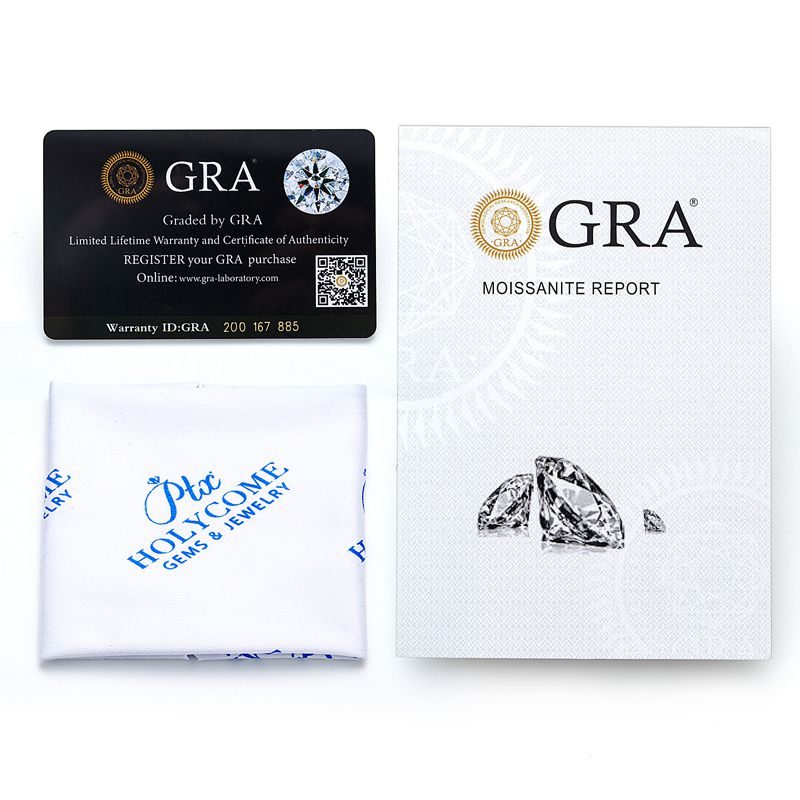
A GRA (Gemological Research Association) certificate for moissanite typically lists the stone's carat weight, cut shape, color grade, clarity grade, and dimensions. It is paired to the stone by a laser inscription on the girdle, which the buyer can inspect under magnification. The certificate also confirms the stone is moissanite rather than cubic zirconia or a simulacrum, which is the reassurance a retail customer needs before she commits to a setting.
For a wholesale buyer, the certificate does two jobs. It justifies a higher per-carat price to the retail end customer, and it gives the boutique a defensible answer when a customer asks how this stone is different from the $20 CZ in the mall. A stone that arrives with no paperwork is a stone the boutique has to explain alone.
Matching the certificate to the stone
The critical control is that the certificate must match the physical stone. This sounds obvious, but loose stones move through many hands, and a certificate can be swapped or misfiled. When a batch arrives, do three checks before the stones go into inventory.
- Read the carat weight on the certificate against the scale. A small tolerance is normal (a few hundredths of a carat), but a mismatch of more than five points means the cert and the stone are not paired.
- Read the cut shape and dimensions. A round brilliant certificate on a cushion stone is an immediate red flag.
- Inspect the girdle inscription under a loupe or microscope and confirm the number matches the certificate. This is the step that prevents a mismatched cert from ever reaching a customer.
Carat jumps and inventory planning
Loose stones sell in recognizable carat brackets. Keep a small depth at the volume brackets that drive custom engagement orders: the 1.0 to 1.2 carat range (the mainstream center stone), the 1.5 to 2.0 range (the upgrade), and the 3.0-plus range (the statement piece). Between brackets, stock lightly, because a customer who wants 1.3 carats will usually accept 1.2 or 1.5 rather than wait for an exact match.
Color grade matters for pairing. Most commercial moissanite is graded D to F colorless or G to near-colorless. The colorless tier commands a premium and is what most engagement-ring customers ask for. Near-colorless stones are a legitimate value option for pendant and earring use, where the stone is smaller and the color is less visible. Do not mix the two tiers in the same display bin; the customer who paid for colorless will notice.
Building the custom-order workflow
A loose stone with a certificate turns a boutique into a custom studio. The customer picks the stone from the tray, the cert travels with the stone to the setter, and the finished ring ships back with both the ring and the certificate in the box. That workflow justifies a higher retail price than an off-the-shelf ring, because the customer participated in choosing the stone. Ask your supplier whether the certificate can be reissued in the customer's name at the time of sale, or whether it stays in the supplier's lab name. Reissue options add perceived value.
What to ask your supplier
Handling the customer who has her own stone
Once a loose-stone program is in place, a second customer type appears: the bride who already owns a moissanite stone, perhaps from a family piece or an earlier purchase, and wants it set into a new ring. These customers are high-value but high-anxiety. They need to see their stone logged, photographed, and paired with a certificate or an appraisal before it leaves the counter. A shop that issues a signed receipt for the consigned stone, photographs it next to a size reference, and sets a clear turn time wins that customer permanently. A shop that takes the stone in without paperwork invites a dispute it cannot win.
Keep a loupe, a microscope, and a small stone tray at the counter so the customer can watch the stone being inspected. That ten seconds of transparency is worth more than any marketing claim about quality control; the customer who sees her stone under magnification trusts the shop with the rest of the order.
Before committing to a loose-stone program, ask for a sample packet of five stones with their certificates and verify every one of them against the checklist above. Confirm that the girdle laser inscription is legible at 10x magnification. Ask about the replacement policy if a stone arrives mis-matched to its cert. Inquire whether the supplier offers a matched pair of stones in the same carat and color for stud earrings, and whether it can supply graduated stones in the same color family for a pendant and earring set. A supplier that controls its own certification and girdle inscription is a supplier you can build a custom-order business around; a supplier that sources certificates third-party will eventually hand you a mismatch.
Frequently Asked Questions
Is moissanite a good diamond alternative for retail buyers?
Yes for price-sensitive customers who want brilliance and hardness. Moissanite ranks 9.25 on the Mohs scale, holds up to daily wear and costs a fraction of a natural diamond of the same size, so it resells fast in bridal and fashion lines.
What is the minimum order for wholesale moissanite?
MOQ starts at 50 pieces per design for stock items. Custom cuts and private-label settings usually start at 100–300 pieces depending on the mold.
Do you provide certificates with moissanite stones?
Yes. Every parcel ships with GRA or IGI documentation listing carat weight, color grade and cut. We recommend passing the certificate to your end customer for trust.
How long does sample and bulk production take?
Samples ship in 3–5 days. Bulk runs take 15–20 days under 500 pieces, and 25–30 days for custom work.
Send your spec sheet — stone, cut, size, plating and quantity — and we will return a costed timeline.
Ask the workshop