Loose Stones
Moissanite Laser Inscriptions: What They Mean and How to Verify
When a loose moissanite stone leaves a reputable source, it carries a tiny, near-microscopic engraving on its girdle: a laser-inscribed number that ties the physical stone to its laboratory certificate. Many buyers never notice it, and many jewelers underuse it. Understanding the inscription is one of the fastest ways to confirm a stone's identity, protect a resale, and answer a skeptical customer who wonders what they are really buying.
What a laser inscription actually is
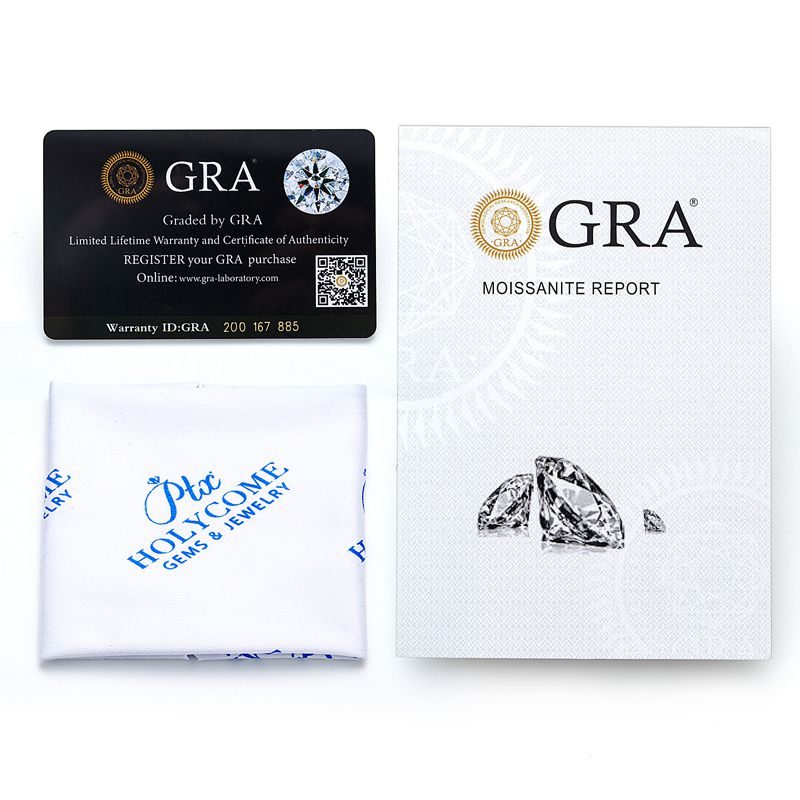
After cutting and grading, the laboratory uses a focused laser to etch a discreet serial number onto the thin edge of the stone. The mark is invisible to the naked eye but legible under 10x magnification. It is not painted on and cannot be polished away without removing material. For GRA-rated moissanite, the inscription typically includes a certificate number that matches the report documenting color, clarity, and carat weight. Learn the fields in our guide to reading a GRA certificate.
Why it matters for buyers
The inscription is the bridge between a piece of paper and the stone in your hand. When a customer asks how they know the ring on their finger matches the report, the answer is to compare the girdle number under a loupe against the certificate. That same proof matters at resale: a stone that can be matched to its report commands more confidence and a clearer price than an unmarked loose stone. It also deters swapping, which is a real concern in high-value custom work. See moissanite color and clarity grades for resale for how the paperwork supports the sale.
How to read it under magnification
Use a 10x jeweler's loupe or a small gemscope. Hold the stone by its girdle under bright light and rotate it slowly until the engraved strip comes into focus. The numbers are tiny and often positioned along one section of the edge. If the stone is already mounted, reading the inscription becomes harder because prongs block the view, which is one reason many buyers verify loose stones before setting. An experienced bench jeweler can usually still locate it from the side under magnification.
Inscription versus certificate
The inscription is only as trustworthy as the report it points to. Always confirm that the certificate number on the girdle matches the number printed on the lab document, and that the carat and dimensions described on the paper match the physical stone. Our overview of GRA versus other lab reports explains why consistent documentation matters. A genuine number on a forged or mismatched certificate is still a red flag, so treat the two as a pair rather than separate checks.
What about unmarked stones?
Not every loose moissanite carries an inscription, especially smaller parcels or lower-tier stones sold for accent work. An unmarked stone is not automatically fake, but it offers less protection. For center-stone investment, buyers should prefer a certified, inscribed stone. For side stones and pavé accents, unmarked stones are common and acceptable. Reference moissanite price tiers to understand where certification is expected in the price ladder.
Best practices for retailers
Keep a loupe at the sales counter and show the inscription to customers as part of the selling experience. Photograph the girdle number alongside the certificate for each custom order so there is a documented chain of identity. That small ritual builds trust, justifies pricing, and turns a skeptical buyer into a confident one. In a market full of lookalikes, the laser inscription is the detail that separates a serious purchase from a gamble.
What to tell skeptical customers
Some buyers have heard that moissanite is just a cheaper diamond lookalike, and the laser inscription is the perfect antidote. Walk them to the loupe, show the girdle number, and match it to the certificate in front of them. That demonstration does more to build trust than any sales pitch. Explain that the mark is permanent and that the report documents the stone's color, clarity, and carat, so they are not guessing. When customers leave with a verified, documented stone, they return for their next purchase and refer friends, because the transparency felt rare and reassuring.
Documentation at resale and insurance
An inscribed, certified stone also simplifies insurance and resale. Insurers ask for a documented value, and a matching girdle number plus certificate makes appraisal straightforward. If the ring is ever lost or the stone needs replacement, the record helps. When a client comes in years later wanting to upgrade, the original paperwork speeds the trade-in conversation. For retailers, keeping a digital copy of each stone's certificate and a photo of the girdle number reduces disputes and speeds service. In a market where lookalikes are everywhere, the inscription is the quiet guarantee that a serious buyer learns to look for.
Taking a few seconds to line up the loupe with the girdle number is a small ritual that pays off in trust, clarity, and resale value for years. In a market full of promises, the inscribed stone is the proof customers can see for themselves.
Gemstone grading terminology used here follows the Gemological Institute of America’s gem encyclopedia.
Frequently Asked Questions
Is moissanite a good diamond alternative for retail buyers?
Yes for price-sensitive customers who want brilliance and hardness. Moissanite ranks 9.25 on the Mohs scale, holds up to daily wear and costs a fraction of a natural diamond of the same size, so it resells fast in bridal and fashion lines.
What is the minimum order for wholesale moissanite?
MOQ starts at 50 pieces per design for stock items. Custom cuts and private-label settings usually start at 100–300 pieces depending on the mold.
Do you provide certificates with moissanite stones?
Yes. Every parcel ships with GRA or IGI documentation listing carat weight, color grade and cut. We recommend passing the certificate to your end customer for trust.
How long does sample and bulk production take?
Samples ship in 3–5 days. Bulk runs take 15–20 days under 500 pieces, and 25–30 days for custom work.
Send your spec sheet — stone, cut, size, plating and quantity — and we will return a costed timeline.
Ask the workshop