Loose Stones
Moissanite Color and Clarity Grades Explained for Resale
Moissanite grading (per GIA's diamond grading standards) language borrows from diamond grading, and that confuses retail buyers who have never set a lab-grown stone. A 'D VVS1' moissanite is not the same as a 'D VVS1' diamond. The scale is borrowed, the tolerances are wider, and the face-up result is what a customer actually sees. If you understand the difference, you can buy at the right tier and sell with confidence. If you do not, you will pay diamond-grade prices for commercial-grade stones and wonder why your customers do not react the way they did in the brochure.
Color: what D, E, and F mean on a moissanite
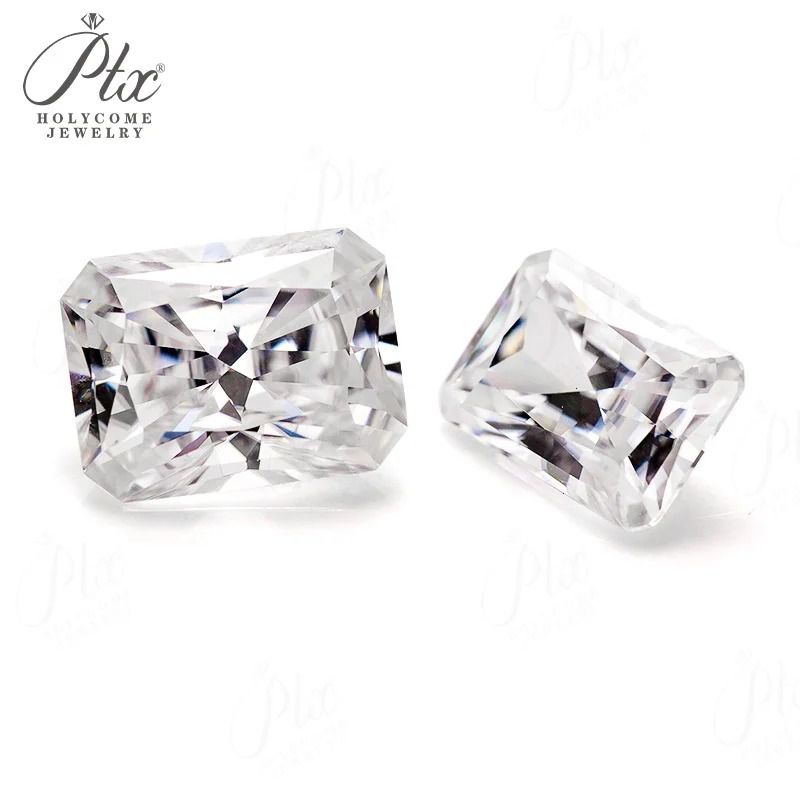
Commercial moissanite is produced in a narrow color band. The stones we stock are graded D color on the GRA scale, which is the top of the commercial range. Face-up against white gold or platinum, a D moissanite reads white. Face-up against rose gold or yellow gold, the underlying metal tint dominates anyway, so the color grade matters less. The stones you see marketed as 'DEF' or 'near-colorless' sit slightly lower; they are fine for accent stones and pavé, but they will look a touch warmer when set next to a known D sample. Buy a comparison stone and keep it in your safe.
| GRA color | Face-up look | Best use | Wholesale delta vs D |
|---|---|---|---|
| D | White, cool | Centers, solitaires, studs | Reference price |
| E - F | Slightly warmer near edges | Accents, pavé, earrings | -10% to -20% |
| G - H | Visible warm tint | Resale to cost-sensitive buyers only | -25% to -35% |
Clarity: VVS1 versus VS
Moissanite is produced through a crystal-growing process, and commercial stones are remarkably clean. The stones we stock are VVS1, which means under 10x loupe you have to look for inclusions rather than spot them in three seconds. Lower grades - VS and SI - exist in the market, but on a faceted 6.5mm stone the inclusion is rarely visible to the naked eye anyway. The reason to pay for VVS1 is not that your customer will see the inclusion. It is that the grade on the GRA card justifies the retail price. A VS stone in a solitaire setting wholesales a few dollars less, and you will not see the difference face-up; a VVS1 stone lets your sales team say the word 'VVS' at the counter, which is worth the cost.
The green-gray tint conversation
Older moissanite had a known green or gray overline the moment you looked through the table of the stone. Modern commercial moissanite, properly graded, reads white face-up and only shows a faint secondary tint in the most expert side-by-side. If a customer has heard the old story, be honest: tell her that modern D-grade moissanite does not show the green cast of the early stones, and offer to set her sample next to a known reference under your daylight lamp. The honest answer closes more sales than the hype one.
Batch consistency: the real quality test
The most important grading question is not what a single stone looks like. It is what the whole batch looks like. Moissanite production runs vary by lot, and a 'D' stone from one run can sit slightly warmer than a 'D' stone from the next. We hold every batch to a master comparison stone under daylight-balanced light and reject any run that drifts. When you open your first wholesale order, set every stone next to your own reference under a daylight lamp. If three or more in a dozen drift visibly warmer, send the batch back rather than discounting it into your case. You can review the current graded stock inside our wholesale loose stone range before you place a trial order.
The GRA card at the counter
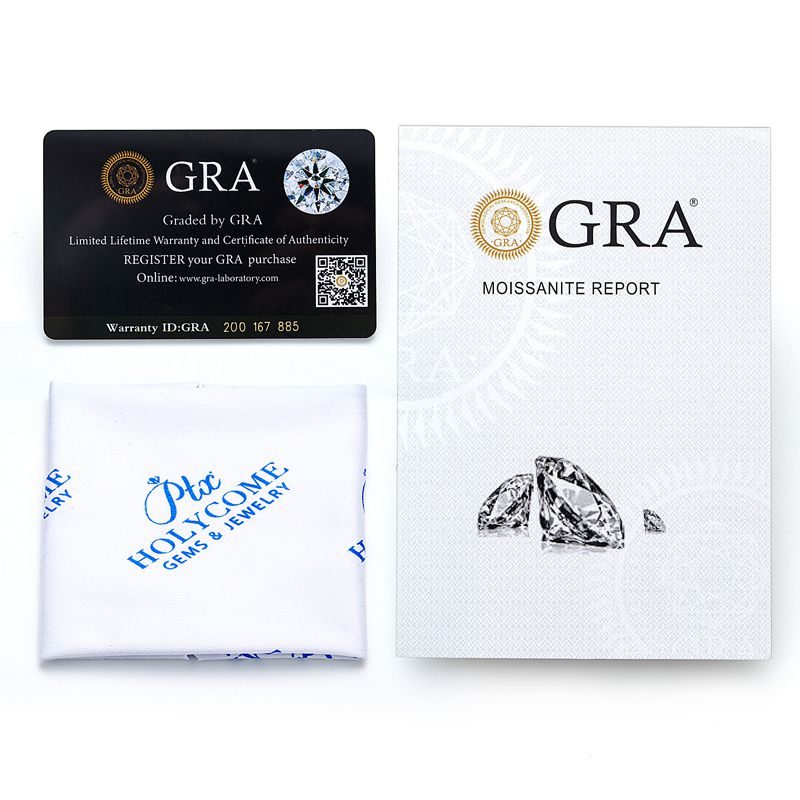
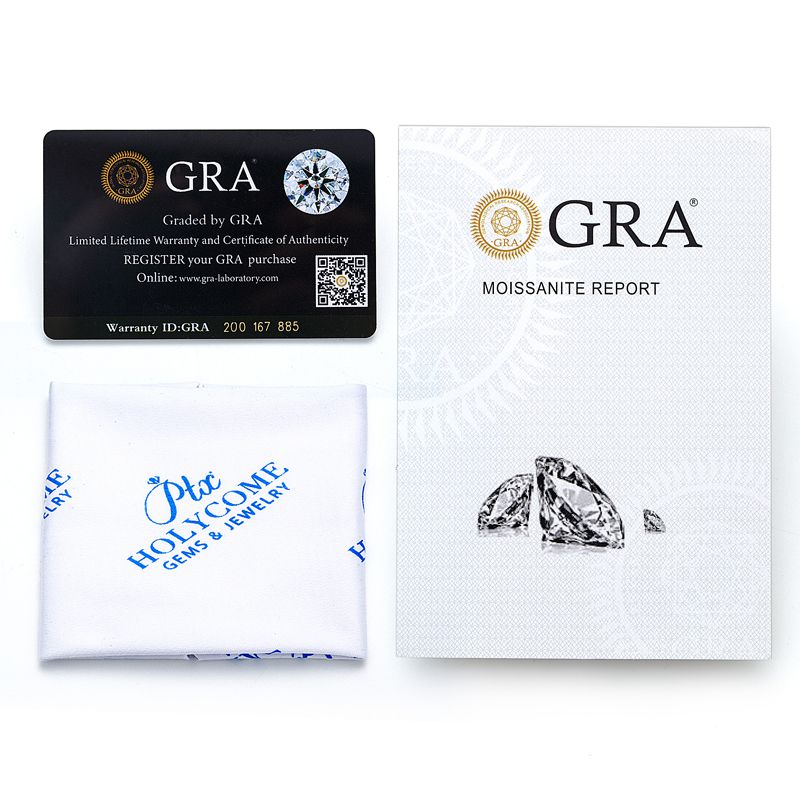
The GRA card is not a diamond-lab report, and you should not present it as one. It is a grading document that lists the stone's color, clarity, cut and measured dimensions. That is enough for a retail customer who wants to feel she is buying a graded product rather than a loose bead. Hand the card over when she asks about the stone, point to the D and VVS1 lines, and explain in one sentence what those grades mean. Do not over-explain, and do not compare the card to GIA; the comparison only invites questions you do not want to answer. The card does its job when the customer holds it next to the ring and feels she is taking home something documented.
Resale honesty and the long customer
Moissanite is sold on value, and the customer who buys it understands she is not buying a stone that holds diamond-style resale value. That is fine as long as nobody pretended otherwise. Train your staff to frame the purchase around what the customer gets: a white, bright, durable center stone at a fraction of a diamond's cost, for a ring she will wear every day for the next thirty years. That framing keeps the customer happy and the referrals coming. The shops that try to pitch moissanite as 'a diamond that will hold value' are the shops that get the awkward return conversation two years later.
The batch-check routine takes ten minutes and prevents the most common sourcing complaint:
- Set every new stone next to a known D-color reference under a daylight lamp.
- Reject any batch where three or more stones in a dozen drift visibly warmer.
- Keep the GRA card with the stone in its own labeled bag.
- Weigh the stone before it goes into a setting so you can identify it later.
Frequently Asked Questions
Is moissanite a good diamond alternative for retail buyers?
Yes for price-sensitive customers who want brilliance and hardness. Moissanite ranks 9.25 on the Mohs scale, holds up to daily wear and costs a fraction of a natural diamond of the same size, so it resells fast in bridal and fashion lines.
What is the minimum order for wholesale moissanite?
MOQ starts at 50 pieces per design for stock items. Custom cuts and private-label settings usually start at 100–300 pieces depending on the mold.
Do you provide certificates with moissanite stones?
Yes. Every parcel ships with GRA or IGI documentation listing carat weight, color grade and cut. We recommend passing the certificate to your end customer for trust.
How long does sample and bulk production take?
Samples ship in 3–5 days. Bulk runs take 15–20 days under 500 pieces, and 25–30 days for custom work.
Send your spec sheet — stone, cut, size, plating and quantity — and we will return a costed timeline.
Ask the workshop