Loose Stones
Buying Matched Loose Moissanite Pairs for Earrings
A loose moissanite chosen for a ring only has to look good next to itself. A pair chosen for earrings has to look good next to its partner — from across a room, under daylight, under restaurant light, and on camera. That is a different bar. Color, cut, and table size differences that are invisible in a 6.5mm center stone become obvious when two stones sit side by side on a pair of ears.
Why matching pairs is harder than buying singles
Moissanite is lab-grown, but every stone is still cut by hand or machine to slightly different tolerances. Two 6.5mm stones can have slightly different crown angles, which changes how they sparkle. Two stones of the same color grade can carry a faint undertone — grey, olive, or yellow — that only reads next to each other. When you buy loose stones for earrings, you are not just buying weight, you are buying a matched pair.
For a single stone in a ring, a slight undertone is part of the character. For earrings, the eye is incredibly good at spotting a mismatch. Guests may not say it out loud, but they will notice that one stud looks slightly cooler than the other in photos.
What to request from the supplier
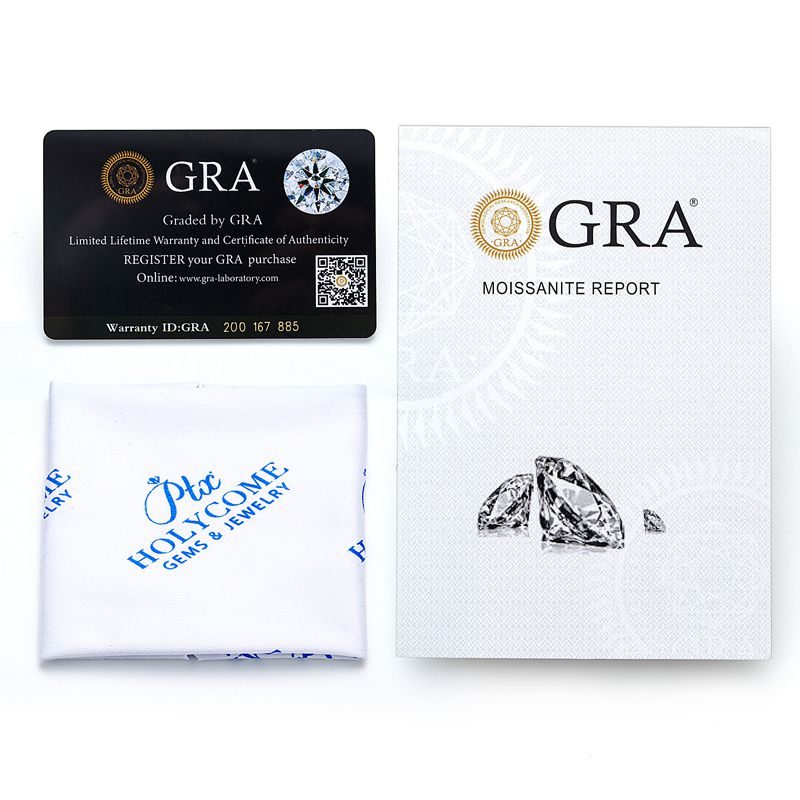
Ask explicitly for a matched pair. Reputable wholesalers photograph pairs together, describe them as a matched set, and ship them with their own GRA reports or a shared paired-stone certificate. If a listing only shows single stones and says “similar pair available,” ask for photos of the actual pair before committing. Our overview of buying loose moissanite wholesale covers how to read those listings.
Carat per stone vs. total carat
Earring listings confusingly mix “1ct total” with “1ct per stone.” For a pair of studs, a 1ct total pair means each stone is about 0.5ct equivalent, roughly 5mm. A 1ct-per-stone pair is closer to 6.5mm each and reads dramatically. If you are stocking or commissioning studs, be explicit on the spec sheet: carat per stone, not total. Our guide to moissanite stone size in mm makes that conversion concrete.
Cut and shape consistency
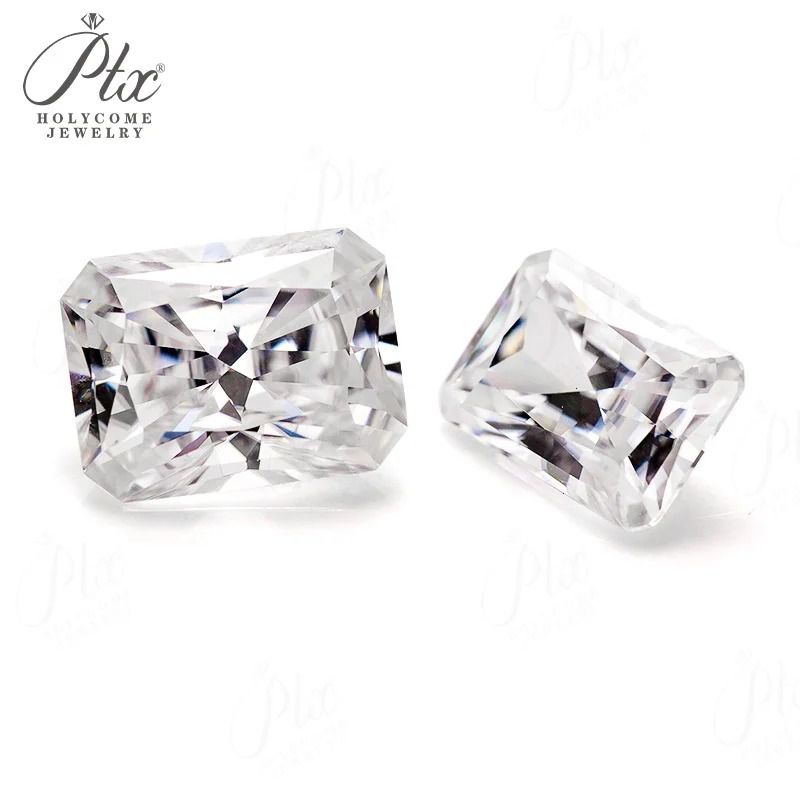
Round brilliant is the most forgiving cut for pairs because the symmetry hides small differences. Emerald, oval, and pear shapes are less forgiving — the eye immediately notices if one pear is slightly fatter or one emerald has a different step pattern. For fancy shapes, spend the extra time to review the actual pair photos rather than trusting a generic stock image.
Color consistency also matters under different light. A pair that matches perfectly under a store lightbox can look mismatched in warm restaurant light, because one stone runs slightly cooler. Ask the supplier to photograph the pair under both daylight and warm light. If you are ordering in person, hold the stones under a store light, then under your phone flashlight, then outside by the window. The pair that survives all three is the pair that will look right on your customers’ ears.
Reordering a matching pair later
If you already own a pair and want to add a second matching pair later, color consistency across production batches is the main risk. Ask the supplier to pull stones from the same batch or parcel. If that is not possible, request a side-by-side photo of the old pair next to the new stones before shipping. This small step prevents a multi-hundred-dollar mistake.
For retailers, displaying pairs correctly is also part of the sale. Keep matched pairs together in the case, side by side, so customers can see the match quality in person. A pair that looks cohesive under the display lights sells faster than a pair that has to be explained. The visual proof of a matched set does more for conversion than any spec sheet.
Storing paired stones before setting
If you buy the pair now and set them later, keep both stones in the same labeled pouch or vial. Mixing them with other loose stones in a drawer is how pairs get separated, and once they are apart you can never re-match them with certainty. Mark the vial with the carat, dimensions, and GRA numbers of both stones. This small habit saves hours of headaches when you are finally ready to commission the setting.
Setting the pair
Once the stones are matched, the setting does the rest. Four-prong basket settings are the most secure and most classic. Bezel settings suit brides who work with their hands. If you are building a custom pair, our guide to prong, bezel, and pavé settings applies just as well to studs as it does to rings.
A well-matched pair of moissanite studs is one of the most repeatable bridal sellers a jewelry business can stock. The work is in the matching. Once that is done, the earrings sell themselves, and brides who love their studs tend to come back for necklaces, pendants, and stacking bands from the same source. The pair you curate carefully today becomes the start of a long customer relationship, and a reputation for pairs that actually match travels faster than any ad campaign.
Independent background on moissanite — how its hardness and refractive index compare with diamond — is documented in the Wikipedia article on moissanite.
Frequently Asked Questions
Is moissanite a good diamond alternative for retail buyers?
Yes for price-sensitive customers who want brilliance and hardness. Moissanite ranks 9.25 on the Mohs scale, holds up to daily wear and costs a fraction of a natural diamond of the same size, so it resells fast in bridal and fashion lines.
What is the minimum order for wholesale moissanite?
MOQ starts at 50 pieces per design for stock items. Custom cuts and private-label settings usually start at 100–300 pieces depending on the mold.
Do you provide certificates with moissanite stones?
Yes. Every parcel ships with GRA or IGI documentation listing carat weight, color grade and cut. We recommend passing the certificate to your end customer for trust.
How long does sample and bulk production take?
Samples ship in 3–5 days. Bulk runs take 15–20 days under 500 pieces, and 25–30 days for custom work.
Send your spec sheet — stone, cut, size, plating and quantity — and we will return a costed timeline.
Ask the workshop