Loose Stones
Cushion-Cut Moissanite Loose Stones: Buying Guide
Among all the moissanite shapes available, the cushion cut sits in a sweet spot between square order and romantic softness. Rounded corners, a wider table, and a pattern of facets that blur into a pillow-like glow give the stone a vintage warmth that brides keep coming back to. Whether you are designing a custom ring or selecting a loose center stone for a bridal setting, the cushion cut rewards a little knowledge up front.
Moissanite's near-diamond hardness and high refractive index make it an excellent canvas for the cushion pattern. Because the shape concentrates light into larger facet areas, moissanite tends to show warm, colorful flashes that look especially alive in this cut. Here is what to know before you buy.
What makes the cushion cut distinctive
A cushion cut is essentially a square or rectangular stone with the corners rounded off, like a plump pillow. Two main facet styles dominate: the "brilliant" cushion, which resembles a round brilliant mapped onto a square outline, and the "old mine" or "chunky" cushion, which has larger, blockier facets that echo antique Victorian stones. Brilliant cushions feel modern and fiery; chunky cushions feel nostalgic and romantic.
The ratio matters too. A "square" cushion is close to a perfect 1:1, while an "elongated" cushion runs closer to 1.15 or 1.2:1. Elongated cushions tend to flatter long fingers and look larger for the carat weight. Square cushions feel traditional and balanced. Our wider moissanite shape comparison puts cushion in context alongside round, oval, pear, and emerald cuts.
Proportions to look for
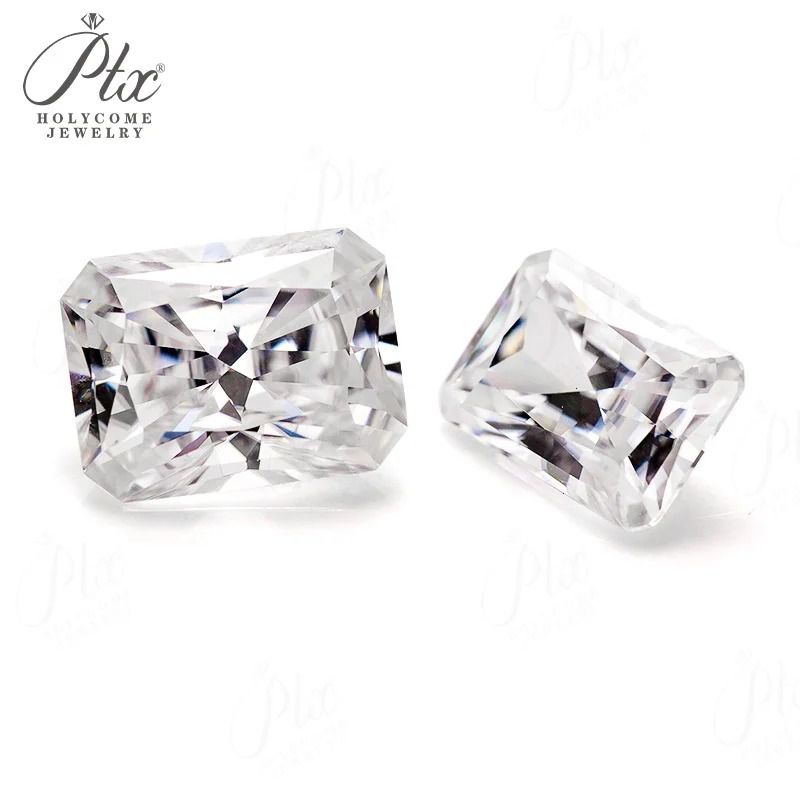
A well-cut cushion moissanite should not look windowed-meaning you should not see a dull, transparent patch in the center where light escapes. The table, crown, and depth need to be balanced. As a rough starting point, cushions generally perform best with a table between sixty and seventy percent and a total depth in the mid-sixties. Since every supplier cuts slightly differently, always ask to see actual specs and a photo of the loose stone face-up before committing.
Because moissanite is a consistent, lab-grown material, the variation is less about inclusions and more about cut quality. That means the biggest difference between a cheap cushion and a stunning one is the cutter's skill, not the raw material. Inspect the symmetry of the rounded corners and the alignment of the facets; uneven corners are the most common tell of a rushed cut.
Which settings suit a cushion
Cushion moissanite is remarkably versatile. It pairs beautifully with a halo, which frames the rounded corners with a border of smaller stones and adds drama. It also looks striking in a clean solitaire, where the soft silhouette stands on its own. Pave shoulders and cathedral arches flatter the shape's romance, while bezel settings protect the rounded corners with a smooth rim.
One practical note: because the corners are rounded rather than sharp, prongs sit slightly differently than they would on a princess cut. A six-prong setting often cradles a cushion more securely than four, since the rounded surface offers fewer natural gripping points. If you are working with a jeweler on a custom mount, share the stone's exact mm measurements-our carat-to-mm sizing guide helps you match a cushion to its band width.
Color and clarity expectations
High-grade moissanite is near-colorless, often described in D-to-G equivalent terms. Cushion cuts can show faint warmth more readily than round brilliants, because the larger facets reveal body color differently. If colorlessness is a priority, choose the whitest grade available and compare it side by side under daylight. Clarity in moissanite is rarely an issue, but watch for growth lines or clouding in lower grades, which become visible through the cushion's broad table.
For more on how these grades translate, review our overview of moissanite color and clarity grades. The cushion cut rewards picking a clean, white stone; there is no reason to compromise here when consistent moissanite is readily available.
Why the cushion keeps selling
Brides choose cushion cuts for a reason. The shape feels both familiar and distinctive-square enough to read traditional, soft enough to feel personal. It photographs beautifully, hides minor hand wear well, and looks equally at home in a modern gold band or a vintage-inspired mounting. For jewelers, cushion moissanite is a reliable mover because it appeals to traditional and fashion-forward buyers at once.
If you are sourcing (FTC jewelry industry guides) loose stones, request a cushion in both square and elongated ratios so the bride can see how each sits on her finger. That small step often clinches the decision-and it is the difference between a ring she likes and one she refuses to take off.
Pairing cushion with the right metal
The metal you choose quietly shapes how a cushion reads. Yellow gold warms the stone and leans vintage, which is why so many heirloom-style rings use it; white gold or platinum keeps the focus on the stone's fire and feels modern; rose gold softens the whole look into a romantic, blush-toned piece. Because the cushion cut already carries a lot of visual warmth, white metals are often the safer pick if you want the stone to feel bright rather than creamy. When in doubt, ask your jeweler to place the same cushion in two settings side by side-the difference is usually obvious once you see it.
Gemstone grading terminology used here follows the Gemological Institute of America’s gem encyclopedia.
Frequently Asked Questions
Is moissanite a good diamond alternative for retail buyers?
Yes for price-sensitive customers who want brilliance and hardness. Moissanite ranks 9.25 on the Mohs scale, holds up to daily wear and costs a fraction of a natural diamond of the same size, so it resells fast in bridal and fashion lines.
What is the minimum order for wholesale moissanite?
MOQ starts at 50 pieces per design for stock items. Custom cuts and private-label settings usually start at 100–300 pieces depending on the mold.
Do you provide certificates with moissanite stones?
Yes. Every parcel ships with GRA or IGI documentation listing carat weight, color grade and cut. We recommend passing the certificate to your end customer for trust.
How long does sample and bulk production take?
Samples ship in 3–5 days. Bulk runs take 15–20 days under 500 pieces, and 25–30 days for custom work.
Send your spec sheet — stone, cut, size, plating and quantity — and we will return a costed timeline.
Ask the workshop