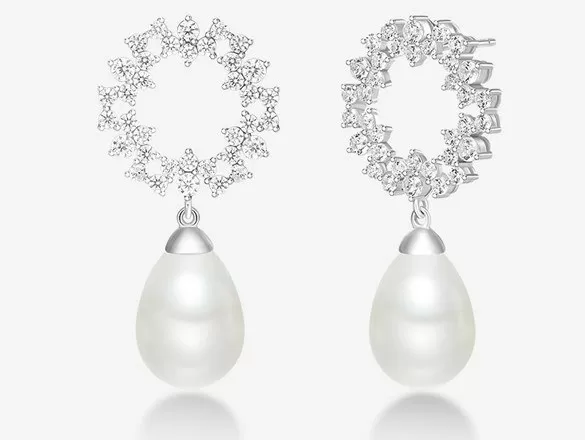
Earrings
Climber and Cuff Earrings: The Bridal Trend Worth Stocking
The bridal earring market has moved well beyond the single stud. Brides who want something more editorial than a classic drop but less formal than a full chandelier are reaching for climber and cuff earrings. These pieces trace an upward line along the earlobe and outer ear, creating the look of multiple piercings with just one post. For jewelers, the style fills a gap between simple studs and dramatic drops, and it photographs exceptionally well, which is the whole point of wedding-day jewelry.
What climbers and cuffs actually are
A climber earring is shaped as a graduated vine, spray, or row of stones that starts at the lobe and climbs upward along the ear's curve. It sits on a single post, often with a curved back, and follows the natural slope of the ear. A cuff earring wraps around the outer ear cartilage without needing a piercing at all, clipping on for a modern, slightly edgy look. Some designs combine both: a post at the lobe plus a cuff that catches the upper ear.
The effect is architectural and light. Unlike a chandelier, which hangs down and swings, a climber stays close to the face, framing the jawline without moving. That makes it a favorite for brides with updos, since the ear remains visible and the earring reads as part of the hairstyle rather than something hanging from it.
Why they fit the bridal moment
Wedding-day jewelry now has to do double duty. Brides want pieces that work for the ceremony under soft light, then transition to the reception and the honeymoon. Climbers do both. They are elegant enough for a traditional gown but sleek enough to wear again with jeans and a sweater the next weekend. That repeat-wear factor justifies the price for customers who are used to buying occasion pieces that never see daylight again.
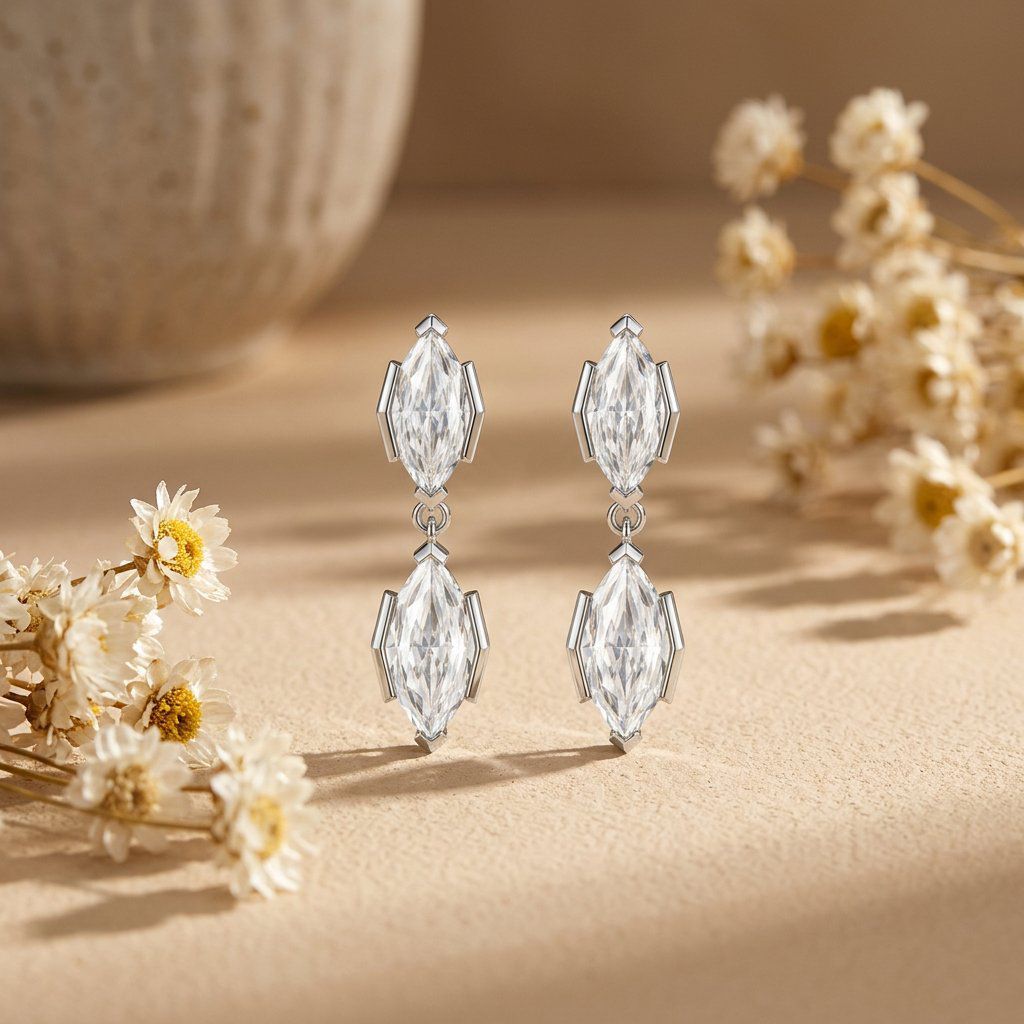
They also pair naturally with current bridal hair. Loose updos, low buns, and half-up styles leave the ear exposed, and a climber turns that empty space into a design feature. For customers choosing earrings by hairstyle, climbers are often the missing answer. Compare them with longer silhouettes in our shoulder duster earrings trend guide to help shoppers choose between upward and downward movement.
Setting and stone considerations
Because climbers sit close to the skin, small stones in graduated sizes read best. A row of tiny moissanite stones stepping up the ear catches light without looking heavy. Pavé along a curved vine is the classic construction, and the curve should follow the ear's natural slope so the piece sits flush. A poorly shaped climber will gap at the top or tip outward, which looks off from the side.
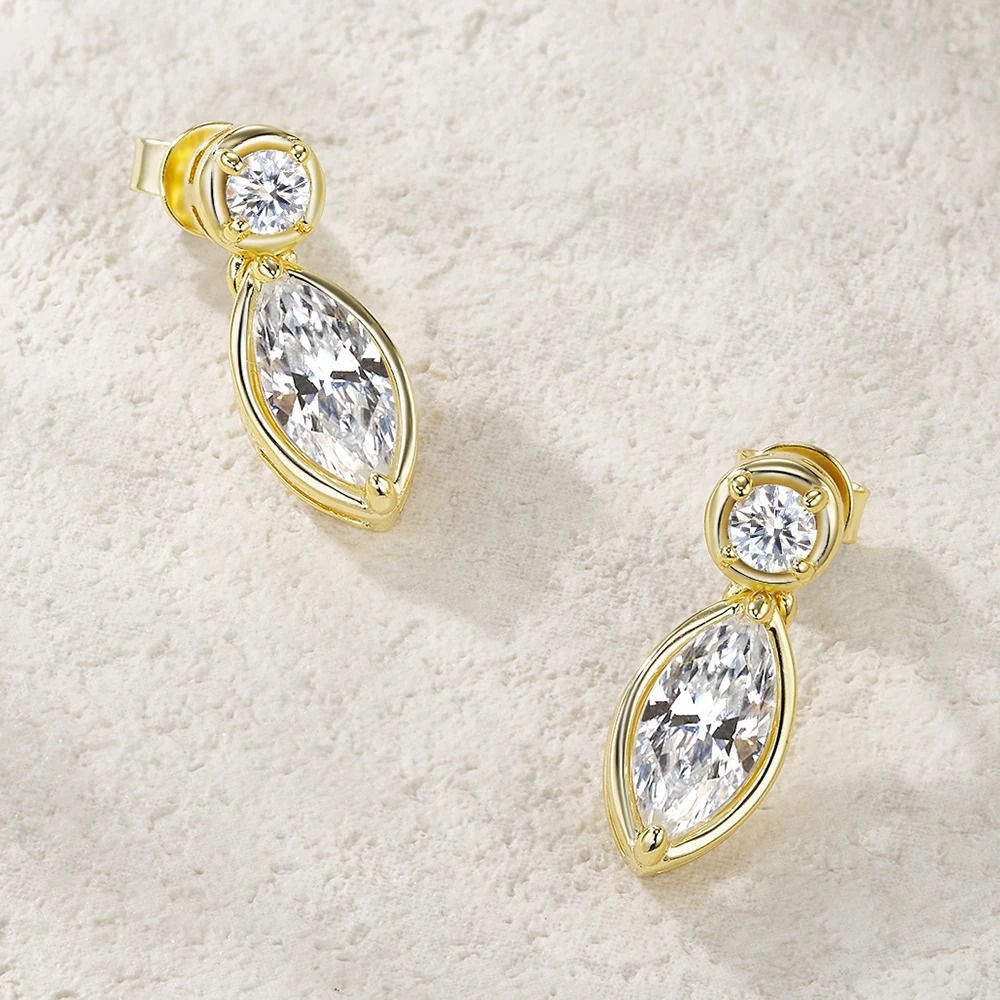
For brides who want more drama, a climber can be paired with a small drop or a single stud at a second piercing. This layering is where the style shines, and it gives customers a reason to buy two earring types at once. If you also stock drops, position the two together so staff can suggest the stack. Our bridal drop and chandelier guide covers the longer, more formal end of the bridal earring range.
Backs and comfort
A curved, tapered climber needs a secure back because the piece's weight is distributed along an angle. Standard flat backs can dig into the ear behind the curve. Look for pieces with adjustable or padded backs, and always confirm the post length is adequate. Comfort matters on a wedding day when the earring will be worn for twelve hours straight.
Walk customers through the backs. If you stock screw backs, push backs, and lever options, explain when each is appropriate in our earring back types guide. For a climber, a secure but comfortable push back usually wins out over a screw back that is hard to remove after a long day.
Merchandising and stocking strategy
Climbers are a visual category. They look flat on a card and stunning on an ear, so display them on ear forms or mannequin heads where the upward line is visible. A pair staged beside a low bun or veil sample helps customers imagine the wedding-day look. Stock at least two silhouettes: a delicate vine for minimalist brides and a wider, pavé-forward design for those who want more coverage.
Metal choice should match your bridal set. White gold or platinum climbers pair with cool-toned engagement rings, while rose gold versions complement warm bridal sets. A small depth in two metals covers most customers without overcommitting. Because the style trends younger, it also pulls in bridesmaids and guests who are not yet buying engagement rings, expanding your audience beyond the core bridal moment.
The takeaway
Climber and cuff earrings occupy a sweet spot: more interesting than studs, more wearable than chandeliers, and endlessly photogenic. For jewelers, they are a low-risk category to test because the pieces are relatively affordable and pair naturally with other earring styles. Display them on an ear, in two metals, and let the upward line do the selling. Brides looking for something that feels modern but still bridal will find exactly what they did not know they wanted.
For third-party reference, the Wikipedia article on moissanite details moissanite’s discovery, optical properties and use in jewelry.
Frequently Asked Questions
What ring sizes can you supply in bulk?
US sizes 5–12 including half sizes. Send a size breakdown with your order and we cast to that curve; comfort-fit inner bands reduce resize requests.
Can I order a mixed size run instead of one size?
Yes. Mixed runs are standard for wholesale: specify quantity per size and we pack and label by size at no extra labor cost.
What is the MOQ for custom ring designs?
50 pieces per design for existing molds; 100–300 pieces when a new mold or CAD model is required.
How should I price rings for retail margin?
Most partners use a 3–4x markup on FOB cost for sterling and 2.5–3x for moissanite solos, which keeps landed cost under 30% of retail.
Send your spec sheet — stone, cut, size, plating and quantity — and we will return a costed timeline.
Ask the workshop