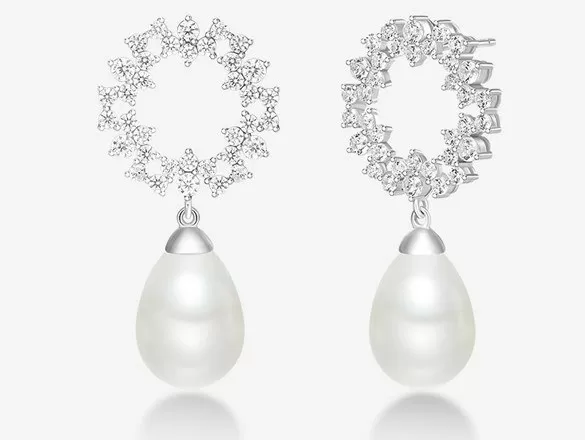
Earrings
Shoulder Duster Earrings for Brides: Length, Dress Pairing & Wear Tips
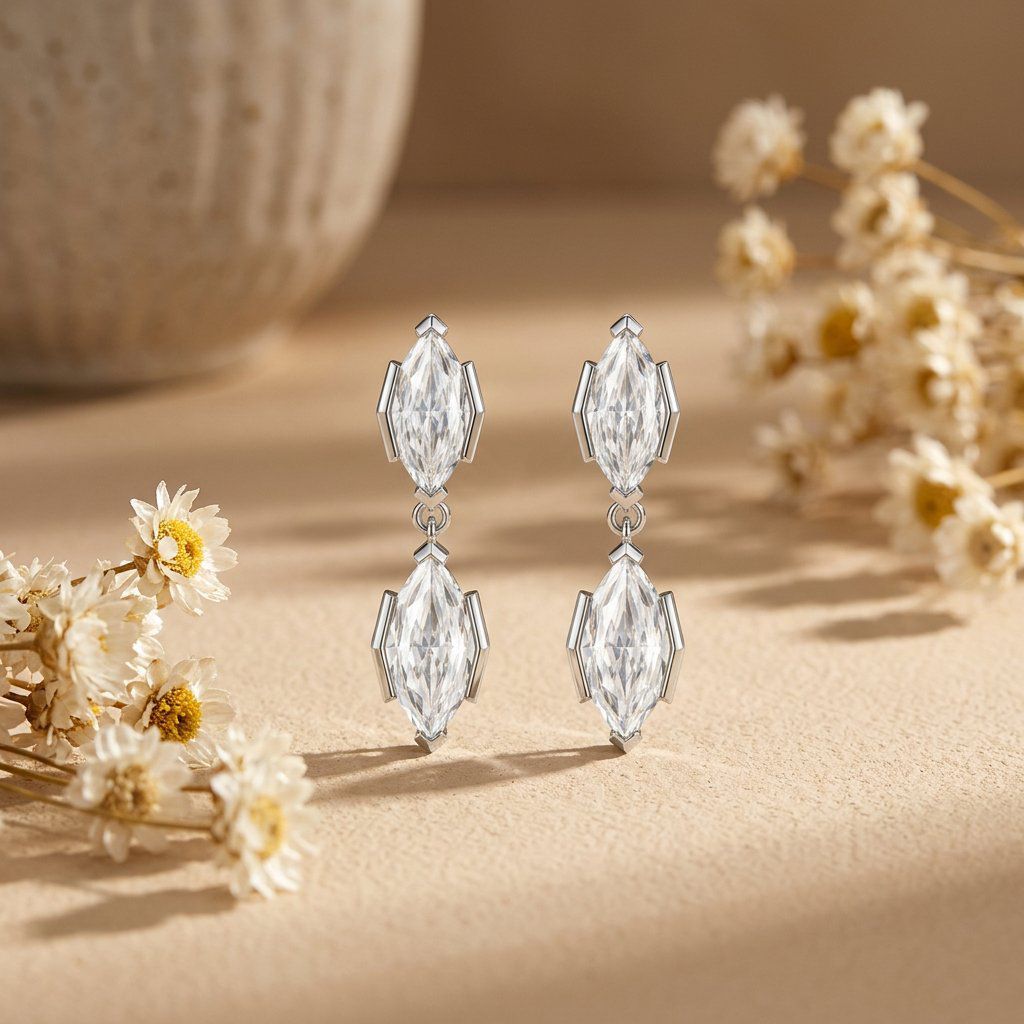
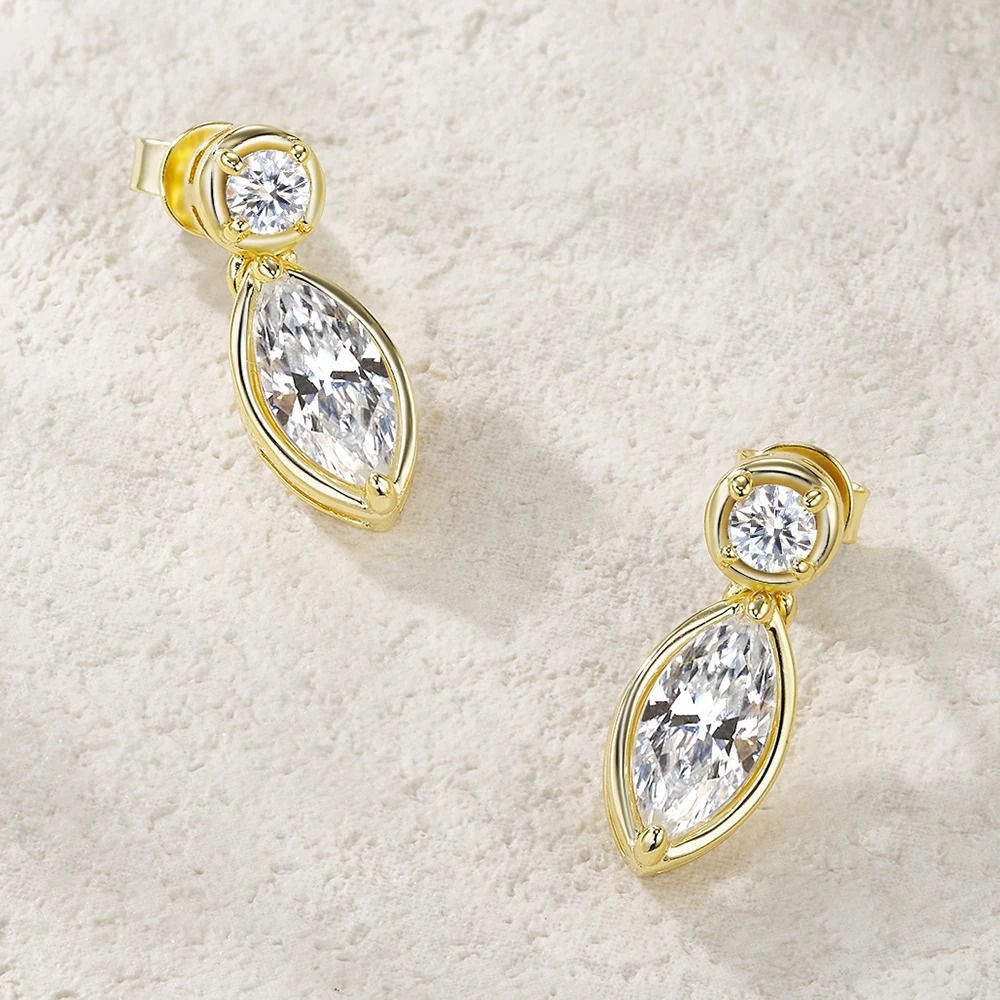
Among the earring silhouettes gaining in bridal showrooms, the shoulder duster is the one photographers keep asking about. Longer than a standard drop but shorter than a chandelier, a shoulder duster ends somewhere between the jawline and the top of the shoulder blade, usually 6 to 9 cm from the lobe. It draws a clean vertical line that narrows the face and flatters an updo.
The appeal is movement. A stud sits still; a duster sways when you turn your head, hug a guest, or laugh. On video that motion reads elegant rather than fussy. It is also a forgiving style for brides who do not want a full chandelier but need something more present than a stud next to a bare shoulder.
Length and where it should land
The length is everything. Earrings that hit exactly at the jawline can widen a round face. Earrings that brush the top of the shoulder elongate it. For most brides, a length that ends just above the bony point of the shoulder is the sweet spot: long enough to create a line, short enough not to tangle with a veil or catch on a strapless dress.
If you have a shorter neck, lean toward the 6 to 7 cm range. A very long duster on a shorter neck can visually shorten it further. If you have a longer neck or will wear your hair fully up, the 8 to 9 cm range looks graceful. Try the earrings on with your wedding hairstyle; a low bun changes the landing point compared with loose hair.
Pairing with dress necklines
Shoulder dusters are natural companions to strapless, sweetheart, and off-the-shoulder gowns. The bare shoulder gives the earring space to land, and the vertical line balances a horizontal neckline. They also work well with a simple slip dress or a column gown, where a statement necklace would feel like too much.
Be careful with high necklines, illusion backs, or heavily beaded bodices. A long earring next to a high neck can compete with the dress detail. In those cases, choose a shorter drop or a stud proportioned to your face. The rule is simple: if the dress is busy around the neck, keep the earrings shorter; if the dress is clean and bare, let the earrings travel.
Face shape and finish
Long linear earrings are universally flattering because they repeat the vertical line of the neck. Round and square faces benefit most, since the length softens width. Heart-shaped faces look best on a duster that widens slightly at the bottom rather than a thin, straight line. Oval faces can wear almost any version.
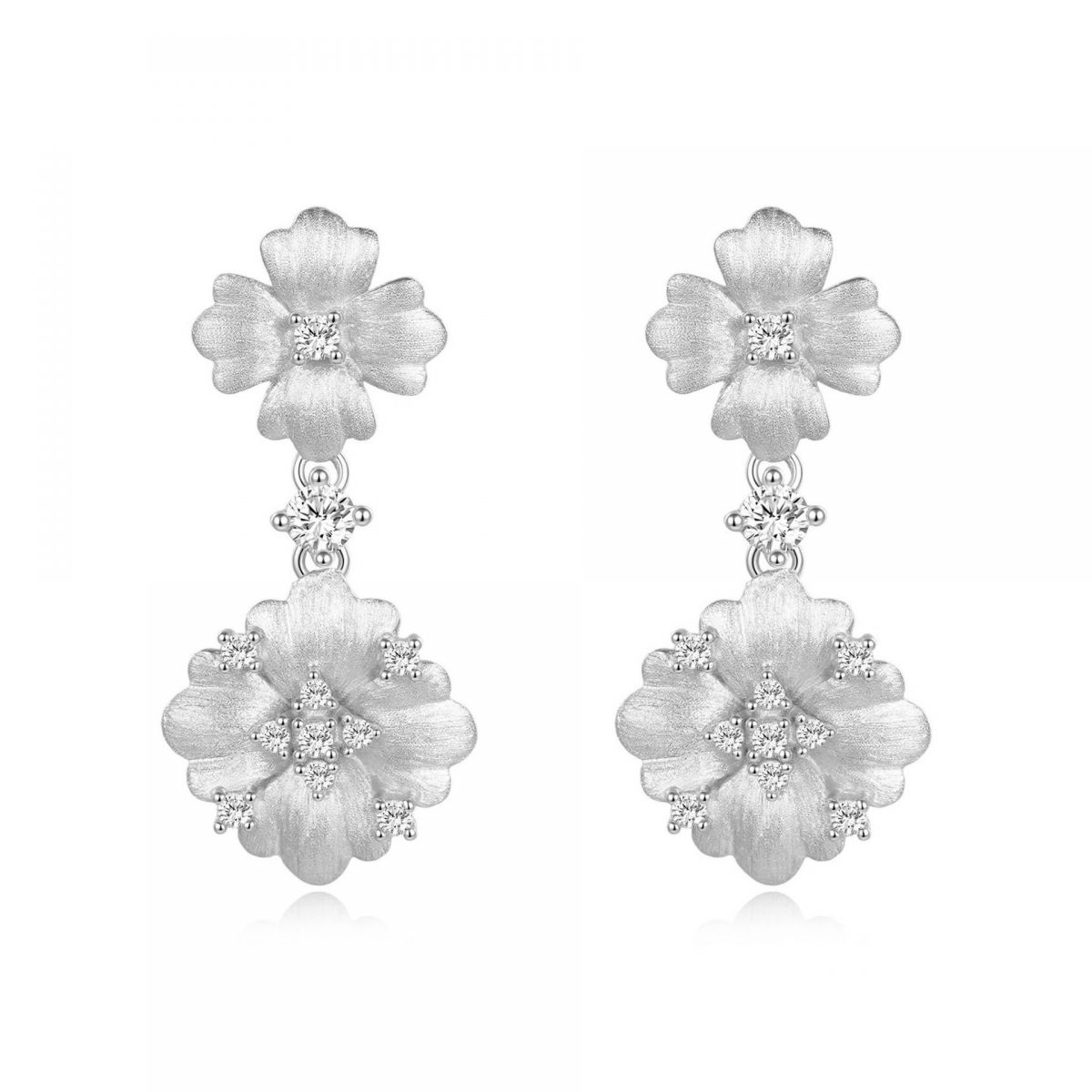
The finish should echo the rest of your jewelry. If your engagement ring is platinum, a white-metal duster keeps the tone consistent. If you are wearing dramatic earrings elsewhere in the bridal party, keep your own pair refined so you do not outshine the bridesmaids in a way that feels accidental. Small accents of pav along the length catch light beautifully without going over the top.
Wedding-day comfort and practical tips
Long earrings pull on the lobe, and a long day of hugging guests means pressure you do not notice until the reception. Screw backs or clutch backs rated for heavier drops are worth the upgrade. If your duster is on the heavier side, consider earlobe support patches that distribute the weight across the lobe rather than pulling through one piercing.
Also think about your veil. A veil attached at the crown will drape over the earrings and hide them entirely on the walk down the aisle. If the earrings matter to you, attach the veil at the side or remove it before the reception so the dusters get their moment. On the dance floor, long earrings also move with you; that is lovely on video but can catch on a partner's shoulder during a slow song. Choose a design with smooth, closed links rather than open hoops if you plan to dance all night.
Shoulder dusters are one of those bridal pieces that translate to the rest of your life. Pair them with a black dress, a silk blouse, or a sweater and jeans, and they still work. Unlike a veil or a garter, they are jewelry you will reach for again. That is the quiet test of a good bridal purchase: does it still feel like you on the Monday after the wedding?
Hairline and neckline details are worth a final check. If you have a short hairstyle or will wear your hair down, the earrings land against hair rather than bare skin, so choose a design with a polished, solid finish rather than open links that can catch on strands. If you are wearing a strapless gown, leave the rest of the wrist and neck deliberately quiet; the earrings already do the work of a necklace. Try them on with the exact shoes you plan to wear, because heel height changes the proportion of your neck and shoulder line. A duster that looked right in flats can look too long in five-inch heels. That small rehearsal prevents a surprise on the day.
The history and conventions of engagement rings are outlined in the Wikipedia entry on engagement rings.
Frequently Asked Questions
What ring sizes can you supply in bulk?
US sizes 5–12 including half sizes. Send a size breakdown with your order and we cast to that curve; comfort-fit inner bands reduce resize requests.
Can I order a mixed size run instead of one size?
Yes. Mixed runs are standard for wholesale: specify quantity per size and we pack and label by size at no extra labor cost.
What is the MOQ for custom ring designs?
50 pieces per design for existing molds; 100–300 pieces when a new mold or CAD model is required.
How should I price rings for retail margin?
Most partners use a 3–4x markup on FOB cost for sterling and 2.5–3x for moissanite solos, which keeps landed cost under 30% of retail.
Send your spec sheet — stone, cut, size, plating and quantity — and we will return a costed timeline.
Ask the workshop