Loose Stones
Buying Moissanite Loose Stones at Wholesale: A Retail Buyer's Sourcing Checklist
Retailers who offer custom engagement work live or die by their loose stone inventory. A customer walks in wanting a 1.5-carat oval in a specific warm tone, and if you cannot pull three options from a tray within ten minutes, they go home and design it online. Buying loose moissanite at wholesale is about building a tray that matches what your local clients actually ask for, not what looks impressive in a catalog.
Cut distribution: round carries the line, ovals grow it
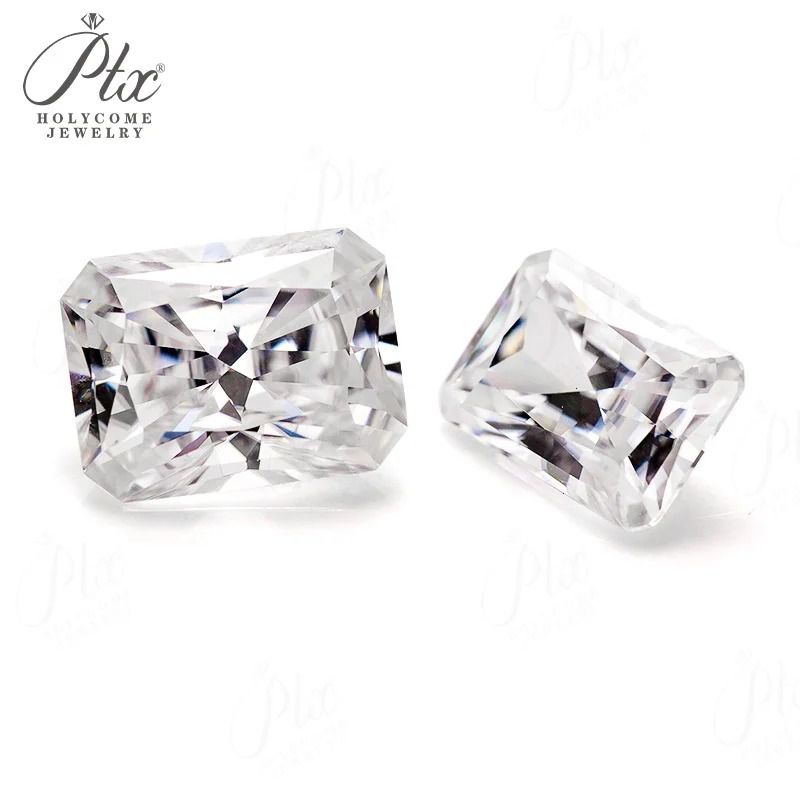
Across most bridal markets, round brilliant still moves first. It is the default for solitaire clients, it photographs the same in every setting, and it resizes and reprices cleanly. If you are starting a loose stone tray, build the core around rounds. A practical first buy is roughly 60 percent rounds, 20 percent ovals, and 20 percent split between pear, cushion, emerald and princess. Skip marquise and heart on the opening buy unless you already have clients asking for them; they are beautiful but slow movers.
Oval is the shape that has grown fastest over recent seasons. Clients come in asking for oval because they have seen it on social feeds, and a retailer without oval stock loses the sale at the first question. Keep ovals in at least two weights so you can cover both a budget solitaire and a halo build.
Size stacking: cover the weight gaps clients actually cross
Do not buy one stone per carat weight. Buy in clusters. Most engagement clients budget for a stone between 1.0 and 2.0 carats, so stock 1.0, 1.25, 1.5 and 2.0 in your hero shapes. The 0.8 to 0.9 range moves in smaller hands and budget-conscious clients; the 2.5 to 3.0 range moves in halo settings where the center stone reads smaller against a surround.
Avoid the trap of buying a single 5-carat "statement" stone. It sits in the tray for a year and ties up cash you could have used on four 1.5-carat stones that each sell within a season.
Color grade and what the certificate actually says
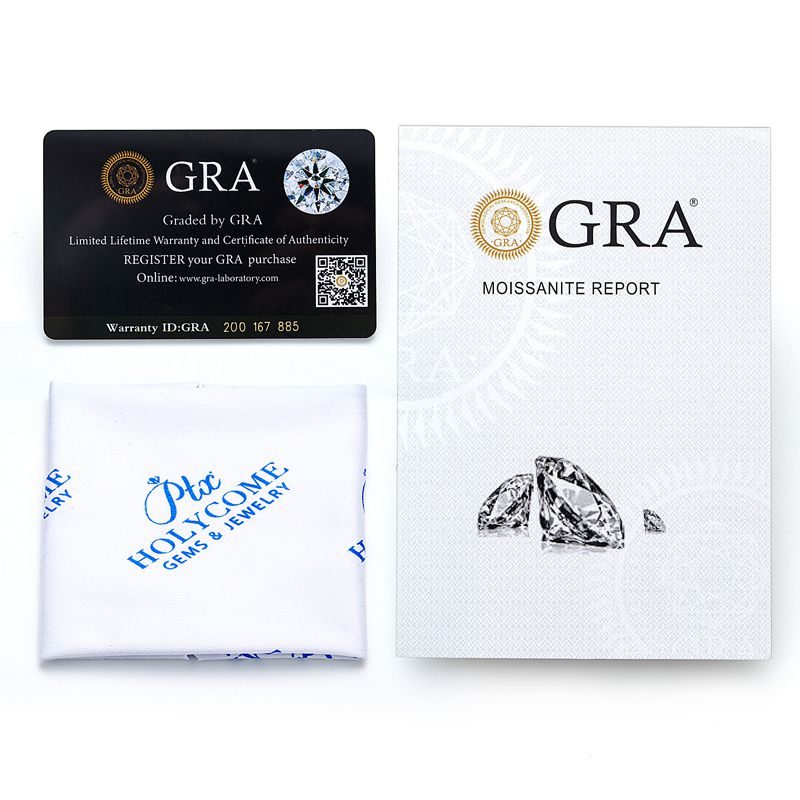
Moissanite is graded on its own scale, and the common confusion between white, near-colorless and fancy tones trips up new buyers. Ask your supplier for the grade sheet on every stone, and confirm whether the certificate (FTC jewelry industry guides) is GRA, IGIA or equivalent and whether it lists cut, color, clarity and carat weight. A loose stone sold without a matching certificate is a stone you cannot appraise for a retail customer, which means you cannot sell it as confidently.
When you receive the tray, inspect each stone under a 10x loupe in two light sources: natural daylight and a warm bench lamp. Moissanite's characteristic double refraction is normal, but obvious facet misalignment, girdle chips or clouding should be returned before you set anything.
Treat the tray as a working inventory, not a display
Loose stones move when you show them. Keep your tray in a locked drawer with a small polishing cloth and a set of plastic dipping cups so clients can try stones on settings. Photograph your top ten stones against a white background and list them on your site as "ready to set" pieces; that single step pulls in custom inquiries you would otherwise miss.
What to ask the supplier on the first order
- What is the smallest mixed-shape MOQ, and can I swap unsold shapes within 60 days?
- Are these stones factory-direct with a GRA/IGIA certificate, and is the certificate number laser-inscribed on the girdle?
- Do you offer a restock discount when I return empty setting frames from prior custom jobs?
- What is your lead time on a one-off fancy shape if a client wants something outside my tray?
Match the tray to your appointment calendar
Loose stone buying is not a one-time catalog exercise; it should follow your booking rhythm. If your boutique does most of its custom consultations on Saturdays, your tray should be restocked and polished by Friday. If your local wedding season peaks between April and June, buy your larger stones in January so they are on the bench when brides start booking. A tray that looks thin on a Tuesday morning tells clients you are not busy, and that perception becomes self-fulfilling.
A loose stone tray should turn over at least twice a year. If a shape has not left the tray in nine months, do not buy more of it; move it into a custom build at cost or offer it as a free upgrade on a ring setting. Holding dead stones "because they were expensive" is the most common tray mistake.
A well-built loose stone tray turns custom bridal from a lottery into a repeatable service. Stock the shapes your clients ask about first, pair every stone with a certificate, and reorder based on what actually leaves the tray. Read more about working with our loose moissanite stone program before your next buy.
The Gemological Institute of America’s gem encyclopedia is an authoritative, widely cited reference on moissanite and diamond quality factors.
Frequently Asked Questions
Is moissanite a good diamond alternative for retail buyers?
Yes for price-sensitive customers who want brilliance and hardness. Moissanite ranks 9.25 on the Mohs scale, holds up to daily wear and costs a fraction of a natural diamond of the same size, so it resells fast in bridal and fashion lines.
What is the minimum order for wholesale moissanite?
MOQ starts at 50 pieces per design for stock items. Custom cuts and private-label settings usually start at 100–300 pieces depending on the mold.
Do you provide certificates with moissanite stones?
Yes. Every parcel ships with GRA or IGI documentation listing carat weight, color grade and cut. We recommend passing the certificate to your end customer for trust.
How long does sample and bulk production take?
Samples ship in 3–5 days. Bulk runs take 15–20 days under 500 pieces, and 25–30 days for custom work.
Send your spec sheet — stone, cut, size, plating and quantity — and we will return a costed timeline.
Ask the workshop