Loose Stones
Buying Moissanite Loose Stones Wholesale: A Buyer's Field Guide
Buying loose moissanite wholesale is a different job than buying finished rings. With finished jewelry you are judging a setting. With loose stones you are judging light, and the same carat weight can read beautifully or flat depending on cut proportion. A boutique that stocks a small tray of loose stones turns custom clients around in days instead of weeks — but only if the stones in that tray are the shapes and sizes brides actually commission.
Price by carat bracket, not by single points
Moissanite pricing jumps in steps. A 1.0 carat and a 1.2 carat sit in a different price bracket, and the second bracket opens up fast. The buyer's job is to stock the brackets that match local engagement budgets. For most boutiques that means 0.8 to 1.2 carat as the anchor, a few 1.5 carat for halo upgrades, and a small reserve of 2 carat-plus for commission work. Buying a single 0.5 carat stone just in case ties up money for a transaction that rarely happens in a bridal case.
Which cuts to stock
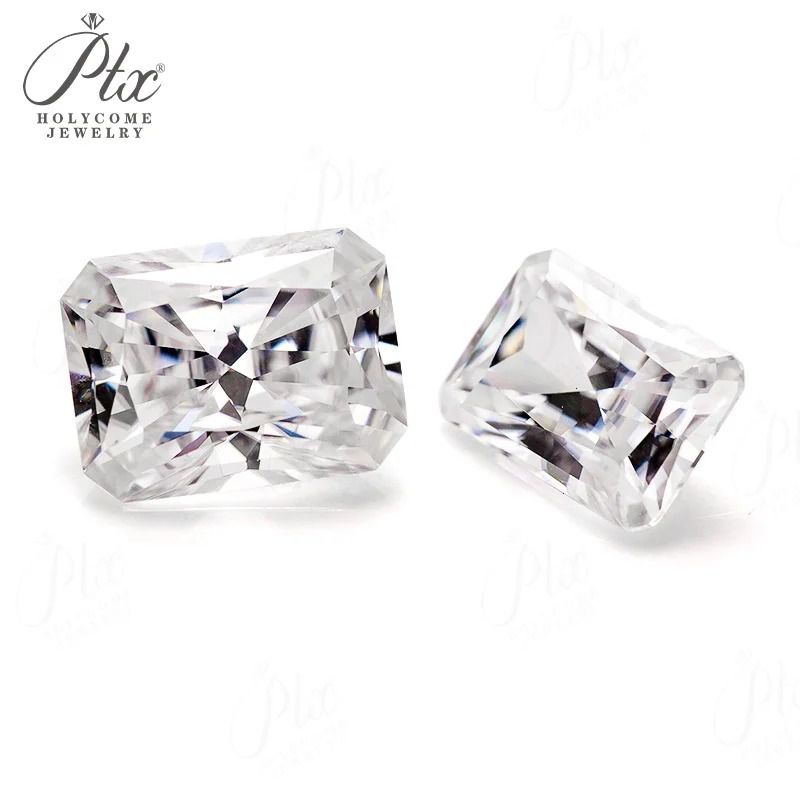
Round brilliant is the default and should take half the tray. Oval is the fastest-growing fashion shape and pairs well with east-west settings. Cushion reads soft and romantic and suits vintage-inspired brides. Princess still has a following among modern, geometric tastes. Pear and marquise are commission shapes — keep one of each in the safe, then source to order. Emerald and Asscher cuts in moissanite look elegant but move slowly; do not open the tray with them.
Color, clarity, and the certificate that matches
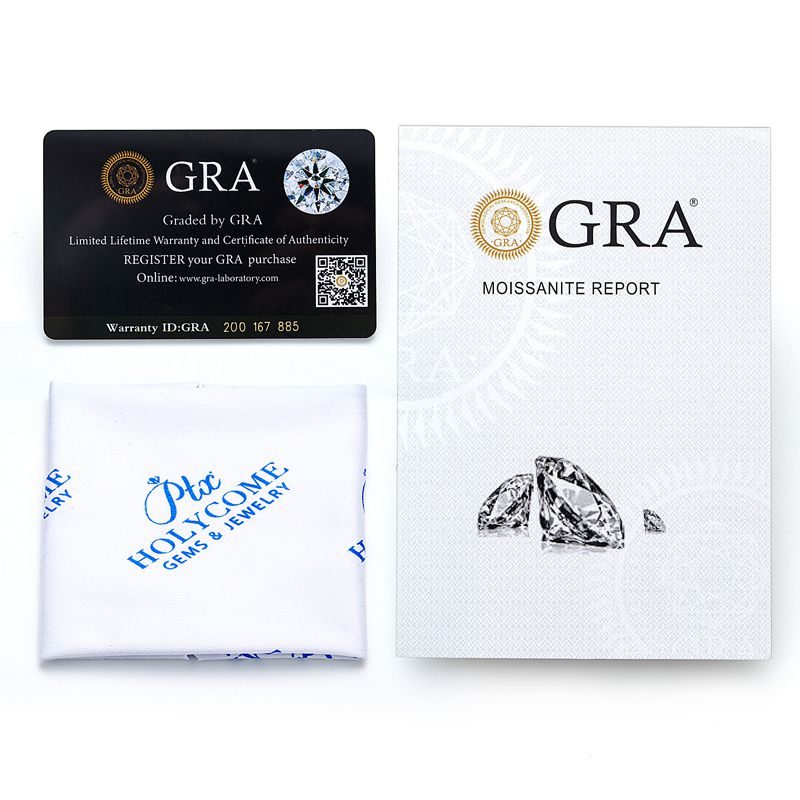
Moissanite is naturally near-colorless, but grading still matters because stones can drift warm under yellow gold. Ask the supplier for color-graded stock in the DEF-equivalent range for white and rose metal, and you can accept slightly warmer stones for yellow gold settings where the warmth reads as charm. Clarity grades are less critical than in diamond because moissanite inclusions are often silk-like and eye-clean; insist on eye-clean, not on laboratory clarity. Every stone should arrive with a grading report whose number matches the girdle laser. A certificate that does not match the stone is a return, not a negotiation.

Matching pairs for earrings
If you stock loose stones for earring mounting, buy matched pairs by hand, not by lot. Two stones of the same carat and grade can read different in fire and size on the ear. Ask the supplier to pair stones from the same parcel so their dispersion matches. Pairs cost a small premium over singles but save the return request that comes when one earring reads brighter than the other.
Stock versus custom source
The stock tray should cover what you can sell off-the-shelf this season. The custom order book handles what you cannot: a 2.5 carat pear, an Asscher in a specific tone, a marquise for a client who has already picked the setting. Mixing the two is what kills cash flow. A rule of thumb: seventy percent of loose spend on stocked anchors, thirty percent on commission reserve. When a custom order comes in, source the stone to order rather than carrying it. Confirm the lead time on commission cuts before quoting the bride; a pear in an unusual size can run four to six weeks, and that date belongs in the consultation, not discovered after she has paid.
Understand what a recut is worth
Moissanite can be recut if a stone's proportions are off, but recutting costs roughly as much as a new stone in the popular sizes and loses carat weight in the process. For a 1 carat round, buy a better-cut stone outright rather than planning to fix a cheap one. Recutting only makes sense for large or unusual shapes where the stone itself is the hard part to source. Ask the supplier which cuts it grades as "ideal" versus "commercial"; ideal cuts carry a small premium and read visibly brighter under the loupe, which is the detail a bride notices first.
Inspect on arrival
Open the tray the day it lands. Compare girdle numbers to certificates under 10x loupe. Check the culet and girdle for chips that happen in shipping. Weigh the stone to confirm the carat on the report. Any mismatch goes back immediately, while the supplier still remembers the parcel. The five minutes this takes prevents a twelve-week dispute later. Keep a small loupe, a grain scale, and a white tray on hand so the inspection happens at the counter rather than being deferred to a bench jeweler who will charge for it.
Loose moissanite turns a boutique into a custom shop without a workshop. Stock the right brackets, insist on matched certificates, and reserve the fashion cuts for commission work. See our loose stone offering for the carat brackets and cuts boutiques reorder most often.
Gemstone grading terminology used here follows the Gemological Institute of America’s gem encyclopedia.
Frequently Asked Questions
Is moissanite a good diamond alternative for retail buyers?
Yes for price-sensitive customers who want brilliance and hardness. Moissanite ranks 9.25 on the Mohs scale, holds up to daily wear and costs a fraction of a natural diamond of the same size, so it resells fast in bridal and fashion lines.
What is the minimum order for wholesale moissanite?
MOQ starts at 50 pieces per design for stock items. Custom cuts and private-label settings usually start at 100–300 pieces depending on the mold.
Do you provide certificates with moissanite stones?
Yes. Every parcel ships with GRA or IGI documentation listing carat weight, color grade and cut. We recommend passing the certificate to your end customer for trust.
How long does sample and bulk production take?
Samples ship in 3–5 days. Bulk runs take 15–20 days under 500 pieces, and 25–30 days for custom work.
Send your spec sheet — stone, cut, size, plating and quantity — and we will return a costed timeline.
Ask the workshop