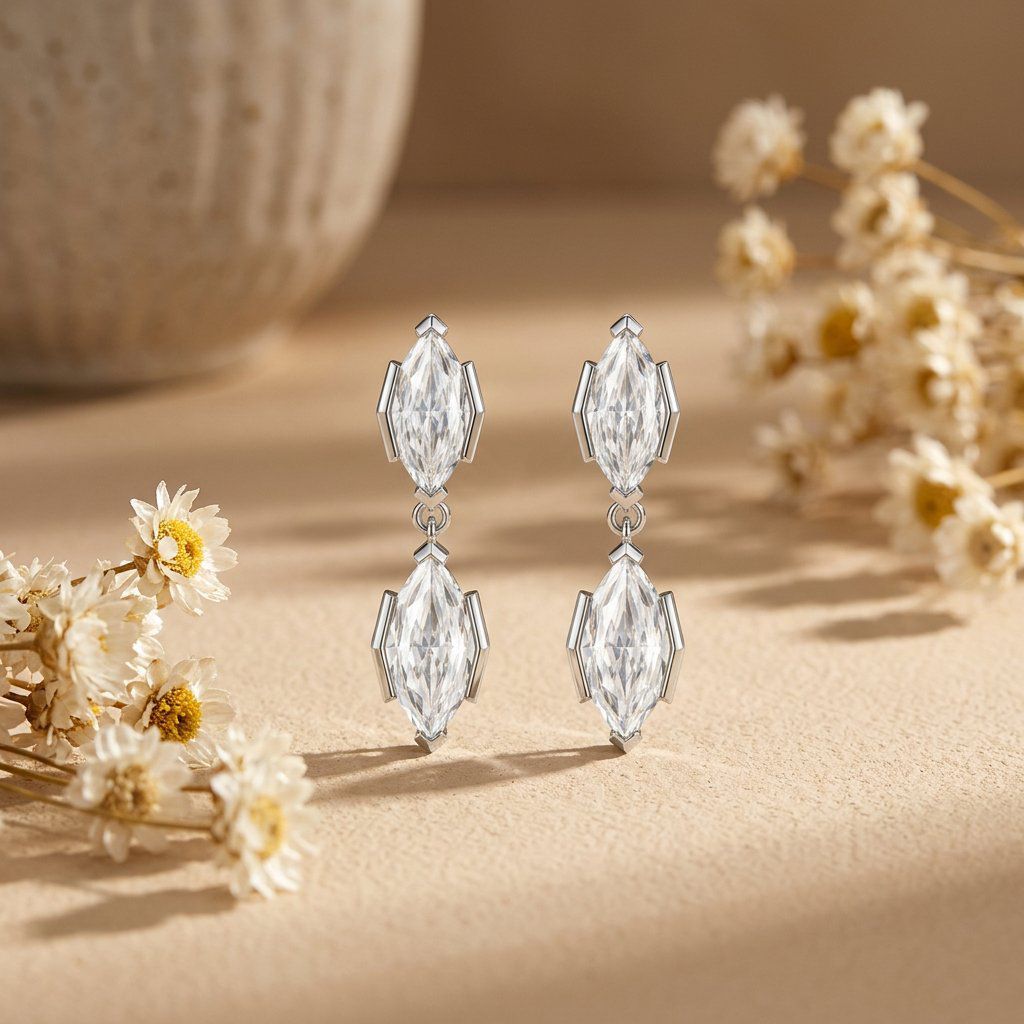
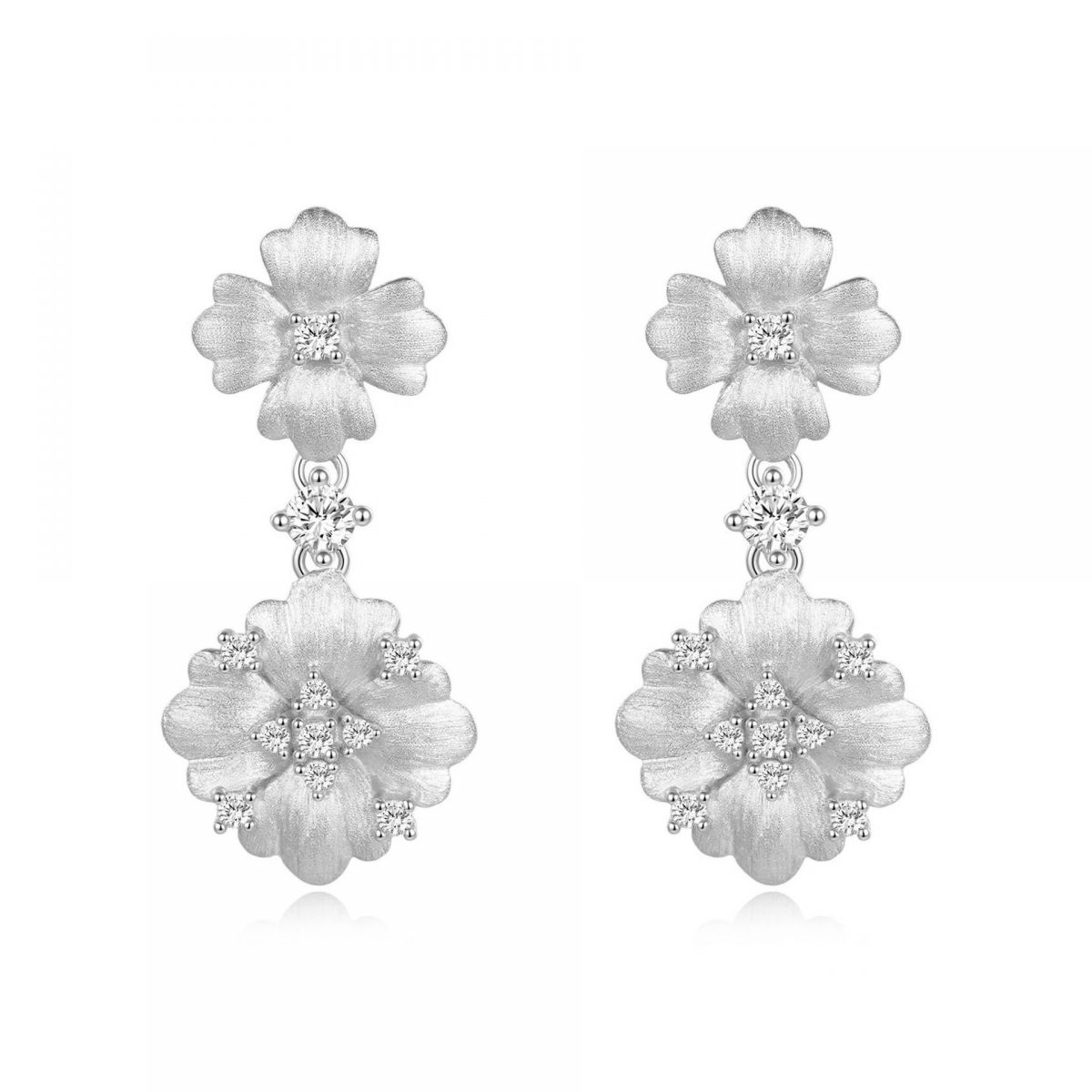
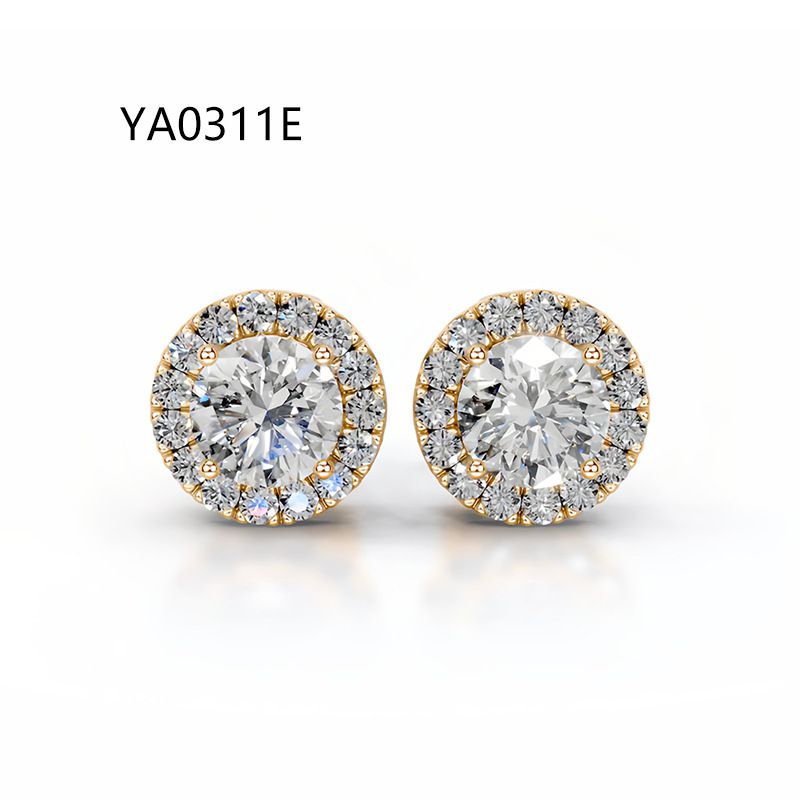
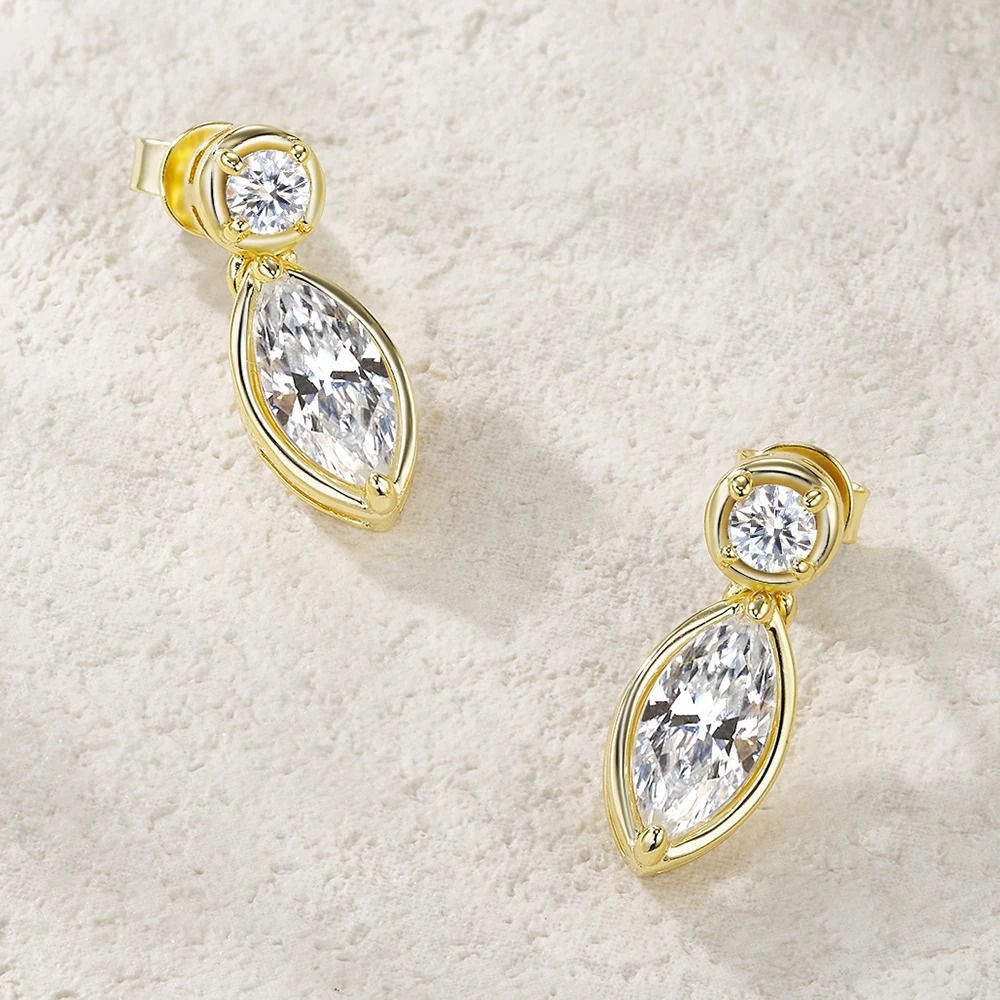
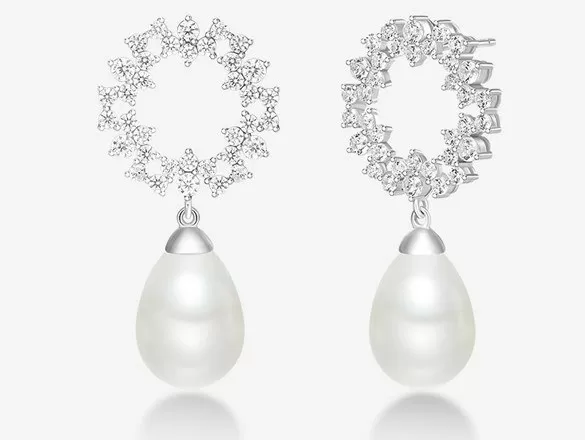
Earrings
Earring Size and Face Shape: A Bride's Buying Guide
Brides often choose earrings based on the dress neckline first, and stop there. But the earring that photographs beautifully on a stylist may disappear on one face and overwhelm another. The missing variable is face shape. Scale, length, and silhouette should be chosen to balance the face—not just to coordinate with fabric. A little attention to this detail makes the difference between jewelry that reads as "part of her" and jewelry that reads as "worn by her."
Why face shape matters on the wedding day
The camera flattens the face and brightens it, which means earrings that look understated in person often vanish in photos, while slightly dramatic pieces read perfectly on film. Face shape tells you which direction to add visual weight. The goal is balance: if the face is long, you want horizontal width; if it is wide, you want vertical length. The earring is one of the few accessories that actively reshapes perceived proportions.
Round face
A round face has roughly equal width and height, with soft curves. The aim is to add length and definition. Elongated drops, linear dangles, and slender chandelier earrings draw the eye downward and slim the appearance. Hoops should be medium to large rather than small, since small hoops echo the roundness. Heavy round studs centered on the lobe can widen the face visually; pair them with a drop instead. This is the face shape where a chandelier or graduated drop earns its keep.
Oval face
Oval is the most flexible canvas. Almost any earring shape works, because the face is already balanced. The only caution is proportion—a very long drop on a very small face can tip the balance. Oval faces can pull off statement hoops, bold studs, or asymmetrical drops with confidence. This is the client who wants to try the most dramatic piece in the case.
Heart-shaped face
A heart-shaped face is wider at the temples and narrows toward the chin. The aim is to add width and softness at the jawline, which means earrings that are wider at the bottom than at the top: pear drops, teardrops, and triangular chandeliers. Avoid studs or tops-heavy pieces that draw attention to the upper face. A soft pear-shaped moissanite drop is a classic match, echoing the face's taper in a flattering direction.
Square and oblong face
A square face has a strong jaw and angular lines. Curved, soft pieces—round drops, oval hoops, teardrops—counteract the angles without competing. An oblong or long face has narrow width and extended height; here the goal is horizontal, so medium hoops, cluster studs, or wide top-set drops add width and shorten the perceived length. Very long linear dangles are the one shape to avoid, since they extend the vertical line further.
Scale, not just size
Beyond shape, scale matters. A petite face cannot carry a two-inch chandelier even if the shape is right, just as a strong, wide face will disappear under a 6 mm stud. A useful rule of thumb: the earring's widest point should not exceed the width of the jawline at its broadest point. Length is easier to push, because dangling length reads as elegant rather than bulky.
Hairline, updo, and neckline
Face shape should be read alongside hair. A pulled-back updo reveals the entire ear and jaw, so earrings can be more dramatic—this is why the hairstyle guide and the face-shape guide work together. Hair worn down softens the face and hides the lobe, favoring slightly longer drops that emerge from beneath hair. The neckline of the gown also pulls weight: a high neckline pairs well with defined earrings, while a strapless or V-neck leaves room for a bolder statement.
How to advise a bride in the case
Ask her to pull her hair back and look in a three-way mirror. Try two shapes at once—a round stud and a linear drop—and compare the reflection. Most brides immediately sense which one "feels like her." If she is between two sizes, choose the larger. On the wedding day, under camera light and veil, jewelry reads smaller than it does in the showroom.
Metal tone and skin undertone
Once shape and scale are settled, the final variable is metal tone. Brides with cool undertones—pink or blue-veined skin—tend to look brightest in white gold, platinum, or sterling silver, which is why moissanite studs in white metal photograph so cleanly. Brides with warm undertones—golden or peachy skin—often glow in yellow or rose gold, especially in natural wedding light. This is a softer consideration than face shape, but it is worth mentioning because the wrong metal tone can make even a well-shaped earring look slightly off against the skin. When in doubt, hold both a white and a warm metal piece beside the jaw in natural light; the bride will immediately know which one "pops."
The earring that fits the face is the one brides will notice from the front row, and in every photo for the next fifty years. It is a small detail to get right, and one of the highest-return pieces of styling advice a jeweler can give.
Independent background on moissanite — how its hardness and refractive index compare with diamond — is documented in the Wikipedia article on moissanite.
Frequently Asked Questions
What ring sizes can you supply in bulk?
US sizes 5–12 including half sizes. Send a size breakdown with your order and we cast to that curve; comfort-fit inner bands reduce resize requests.
Can I order a mixed size run instead of one size?
Yes. Mixed runs are standard for wholesale: specify quantity per size and we pack and label by size at no extra labor cost.
What is the MOQ for custom ring designs?
50 pieces per design for existing molds; 100–300 pieces when a new mold or CAD model is required.
How should I price rings for retail margin?
Most partners use a 3–4x markup on FOB cost for sterling and 2.5–3x for moissanite solos, which keeps landed cost under 30% of retail.
Send your spec sheet — stone, cut, size, plating and quantity — and we will return a costed timeline.
Ask the workshop