Bridal Sets
Wholesale Packaging That Makes Bridal Jewelry Sell Itself
A bridal set sold wholesale does not end at the ring. It ends when the customer opens the box at home in front of her fiancé. If the box is a flimsy plastic pouch with a scuffed insert, the piece inside is judged as cheap no matter how good the moissanite is. If the box is a rigid two-piece with a soft satin insert and the GRA card visible under the lid, the same piece reads as deliberate and graded. As a wholesaler, the packaging you ship is part of the product, and it is the cheapest upgrade you can make to a retailer's conversion rate.
The box tiers that match the price
Packaging should scale with the ticket. A stud pair that retails at $60 does not need the same box as a bridal set that retails at $280. Matching the box to the piece prevents the customer from feeling shortchanged at either end.
| Piece | Retail price band | Box tier | Extra insert |
|---|---|---|---|
| Stud earrings | $50 - $90 | Stamped card pillow box | GRA card tucked behind |
| Pendant on chain | $80 - $160 | Two-piece rigid box | Anti-tarnish tab |
| Solitaire ring | $150 - $250 | Two-piece rigid, satin insert | Certificate pocket under lid |
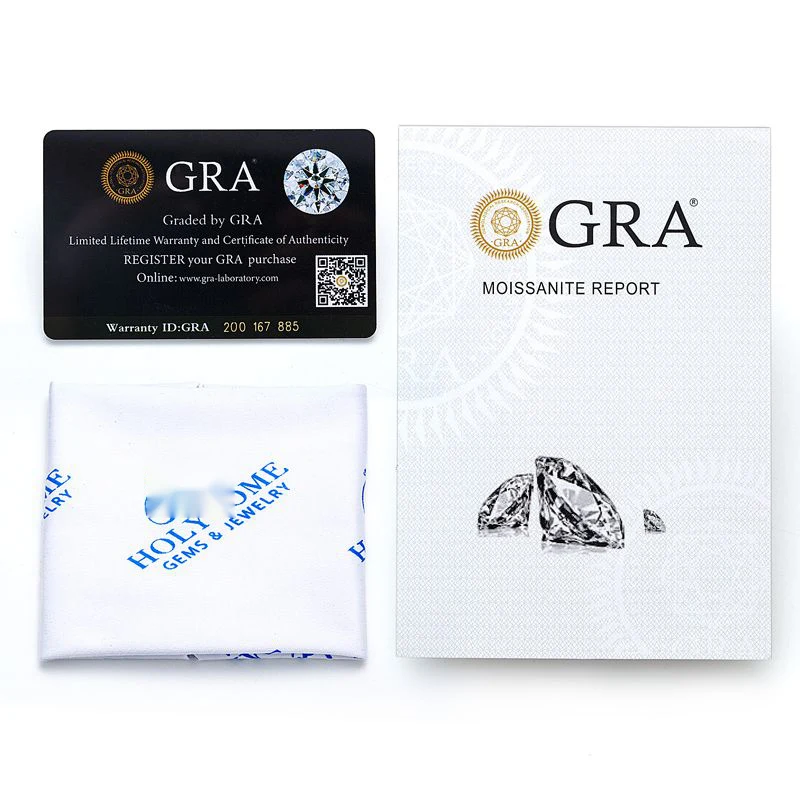
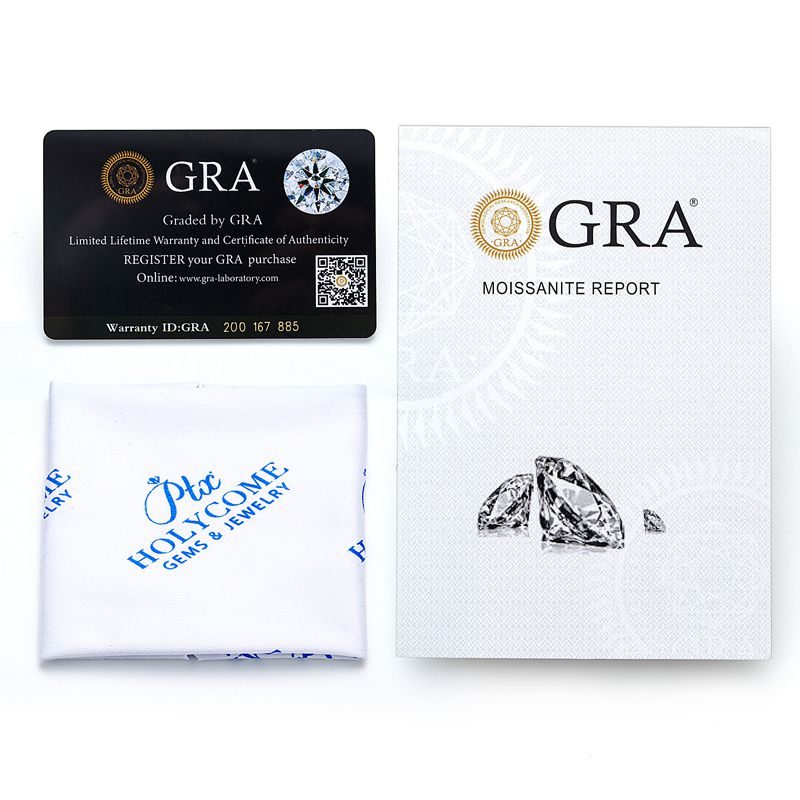
| Bridal set | $200 - $400 | Larger rigid box, split insert | Certificate, care card, polishing cloth |
The certificate and care card
A GRA card tucked into the box is expected on a bridal center stone. A care card is the small detail most suppliers skip and that retailers quietly love. A folded card that says 'rinse after sunscreen, avoid ultrasonic on plated silver, store apart from other pieces' tells the customer the shop knows what it is doing. It also reduces the warranty emails that otherwise land in the retailer's inbox, because the customer has been told in writing how to care for the piece. Include the card at no extra cost; it costs a few cents and it pays back in reduced returns.
Tissue, padding and the first touch
Inside the box, the piece should sit in a satin or velour insert so it does not slide during shipping. A sheet of unbleached tissue folded over the top makes the lid lift feel deliberate rather than empty. These are details the customer notices more than she can articulate. The woman who has just said yes will photograph the open box and post it; if the insert is crooked and the tissue is crumpled, the photo shows it. If it is neat, the photo becomes free social proof for the shop.
What retailers actually ask for
When we talk to retail partners about packaging, the requests are consistent. They want a rigid box that survives being mailed. They want a certificate pocket so the GRA card does not get lost in transit. They want a polishing cloth included on bridal sets, because customers expect one. And they want the option to order blank boxes they can stamp with their own logo. We ship every bridal set in the tier-three box with certificate pocket and cloth, and we offer blank-box orders for retailers who brand their own packaging. You can see the set range and what each ships with inside our wholesale bridal set collection.
The packaging upgrades that cost cents and earn dollars
You do not need to spend much on packaging to make a bridal set feel premium. A rigid box with a satin insert, a folded care card, and a polishing cloth added together cost a fraction of the wholesale price of the ring, and they change how the piece is perceived the moment the lid lifts. The customer does not buy a box; she buys the feeling that the box creates, and that feeling is what she posts about.
- Use a rigid two-piece box for any piece over $80 retail.
- Tuck the GRA card in a pocket under the lid, not loose in the box.
- Include a folded care card on bridal sets; it reduces warranty emails.
- Add a small polishing cloth to every bridal set at no extra cost.
- Offer blank boxes retailers can stamp with their own logo.
The shops that repackage our sets in their own boxes tell us the cloth and the card are the details their customers comment on, not the ring itself. That is a reminder that the sale continues after the customer leaves the store. The unboxing is the second impression, and it is the one she remembers when she recommends the shop to a friend.
Ask your retail partners what their customers comment on when they unbox. Almost always, the answer is the cloth, the card, and the neat insert, not the stone. That tells you where the next packaging upgrade should go. Spend on the details that get noticed, and keep the box itself simple and rigid.
Independent background on moissanite — how its hardness and refractive index compare with diamond — is documented in the Wikipedia article on moissanite.
Frequently Asked Questions
How do I verify a factory before placing a bulk order?
Request a production video, business license, export records and a paid sample run. A factory that accepts a 50-piece test order is usually a real manufacturer.
What payment terms do you offer?
30% T/T deposit with the balance against the bill of lading. This protects both sides on first orders and can move to net terms after a track record.
What is your normal reject rate?
3–5% under 10x loupe inspection for cast and set pieces. Defective units are replaced free in the next shipment.
Where is the factory located?
Wuzhou, Guangxi, China—the core lab-grown and moissanite manufacturing cluster. Shipments go via Guangzhou or Shenzhen ports.
Send your spec sheet — stone, cut, size, plating and quantity — and we will return a costed timeline.
Ask the workshop