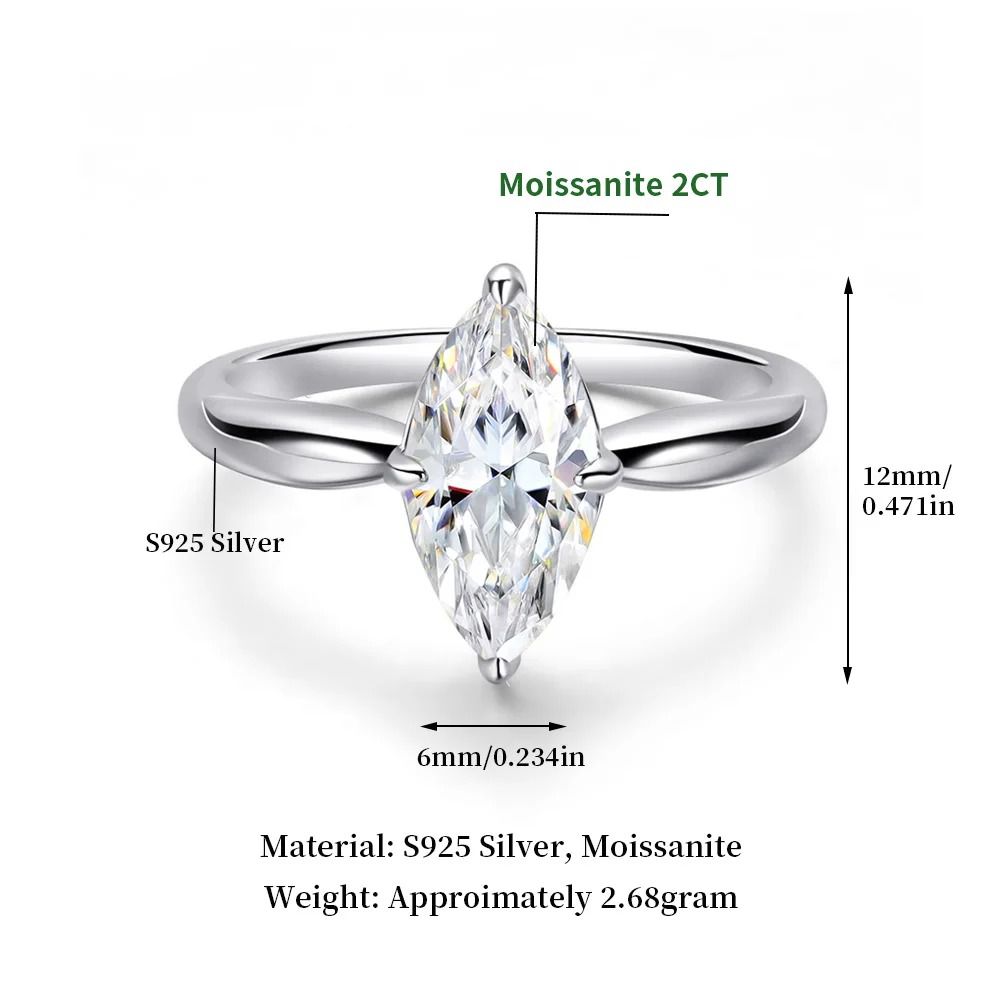
If the solitaire is the backbone of the bridal case, the halo is its growth engine. Halo moissanite engagement rings—one center stone surrounded by a circle of smaller stones—have been gaining share for over a decade and show no sign of slowing. For US independent jewelers, online boutiques, and bridal studios, a halo program delivered factory-direct from Wuzhou, China, is one of the highest-margin categories you can add.
Why Halo Rings Sell
The commercial appeal of a halo setting is straightforward: it makes the center stone look dramatically larger at a fraction of the price of stepping up in carat. A 6.5 mm (1 ct equivalent) center moissanite in a classic halo often appears comparable to a 1.5 ct or even 2 ct solitaire on the hand. For price-conscious US shoppers, that perceived size is the single most persuasive selling point.
Additional commercial reasons:
- Halos photograph exceptionally well, which drives social-media and Pinterest traffic for online boutiques.
- They read as 'more jewelry' at the same price point, increasing perceived value.
- They pair cleanly with most wedding bands, especially curved or contoured bands.
- They work in both white and warm metal finishes.
The Four Halo Variations US Retailers Should Stock
Not all halos are equal. Based on sell-through data from independent US jewelers and online bridal boutiques, four variations consistently perform:
1. Classic Round Halo
A round center stone surrounded by a round pavé halo. This is the volume SKU. It reads elegant, modern, and safe. If you stock only one halo style, make it a classic round halo with a 6.5 mm center.
2. Cushion Halo
A cushion-cut center with a cushion-shaped or round halo. Cushion halos feel softer and more romantic, and they skew slightly younger in buyer demographics. Strong sellers for October through December proposal season.
3. Double Halo
Two concentric rings of pavé stones around the center. Double halos maximize perceived size and are the most 'wow' option in the case. They carry the highest retail price and the highest margin, but turnover is slower. Stock 1 per 4 classic halos.
4. Twisted or Split-Shank Halo
A halo combined with a ribbon-twist or split pavé shank. This style reads contemporary and Instagram-friendly. Strong performers for online boutiques and bridal boutiques serving millennial and Gen-Z buyers.
Center Stone Sizing for Halo Inventory
Because the halo already adds visual size, you do not need to pair it with a huge center stone. The sweet spots for wholesale halo inventory are:
- 6.5 mm round center (~1 ct equivalent). The default. Sells consistently.
- 5x7 mm oval center. The most popular oval halo. Looks particularly large on the hand.
- 6 mm cushion center. Soft, romantic, strong margin.
Stocking halos with centers below 5 mm is rarely worthwhile; the halo itself starts to look busy relative to the center. Centers above 8 mm are special-order.
925 Sterling Silver vs. Plating Tradeoffs
Most wholesale halo engagement rings sold to US retailers are built on 925 sterling silver with rhodium plating. This is the right default for several reasons:
- The pavé stones in the halo and shank are held in silver prongs, which are easier to manufacture cleanly at scale.
- Rhodium plating gives a bright white finish that matches the moissanite.
- The wholesale cost allows retail pricing that competes with fashion jewelry but reads as a genuine engagement ring.
For warm-toned inventory, ask your Wuzhou factory for 18K yellow or rose gold vermeil plating over the same silver core. The pavé micro-setting quality is identical; only the finish changes.
Retail Markup on Halo Settings
Halo settings carry wider margin than solitaires because the customer perceives more jewelry. Typical wholesale-to-retail multiples:
- Classic round halo, 6.5 mm center: 3x–3.5x wholesale.
- Cushion or oval halo: 3.5x wholesale.
- Double halo or twisted shank: 3.5x–4x wholesale.
The wider margin on halos is one reason they are favored by online boutiques, which can advertise a $399 halo engagement ring that cost $110 wholesale and still look like a bargain next to $2,000 department-store alternatives.
Talking Points Your Sales Team Can Use
When a customer compares a halo to a solitaire, give your staff these commercial scripts:
- 'The halo makes the center stone appear roughly 1.5x larger on the hand.'
- 'Moissanite is ethically sourced and will never cloud, unlike CZ.'
- 'The 925 silver core is rhodium-plated, so it looks and wears like white gold.'
- 'Every ring ships with a GRA certificate, so the stone is fully documented.'
After-Sale Tips Your Customers Will Thank You For
Halo settings require slightly more maintenance than solitaires, because the small pavé stones in the halo and shank can loosen over time. Brief your customers on three points at pickup, and your return-rate for repairs will stay low.
- Every six months, have the ring checked and re-tipped. Most US jewelers offer this as a free or low-cost service.
- Avoid ultrasonic cleaners, which can loosen pavé stones. Soft-brush cleaning with mild soap is safer.
- Remove the ring before heavy handwork, gym, or travel. The halo catches on gloves and fabric more easily than a solitaire.
These few sentences build trust and reduce the number of customers who return a halo after a year complaining about a loose side stone.
How to Display Halos in Your Case
Halos sell best when customers can compare them side by side. If you have the case space, group halos by center shape rather than by metal finish. A customer who picks up a round halo will often want to see the cushion halo next to it, not a yellow-gold solitaire. Online, shoot halos on a light-gray hand model in natural light; the halo reads largest in soft daylight, and the photo will convert browsers at a higher rate than studio flash.
Sourcing Checklist
Before placing a wholesale halo order, confirm with your supplier:
- Pavé stones are set with micro-pavé, not glue-set. Glue-set halos shed stones.
- Prongs on the center stone are four or six, smooth-finished, not sharp.
- Rhodium plating is at least 0.1 micron; thinner plating tarnishes within months.
- Ring sizes 5, 6, 7, and 8 are available in stock, not made-to-order.
- GRA certificates are included for each center stone.
Closing
A well-chosen halo program is the fastest path to growth in a bridal case. Start with classic round halos in 6.5 mm centers, add cushion and oval variations, and reserve double halos and twisted shanks for higher-margin showcase SKUs. Buy factory-direct from Wuzhou, keep your order balanced across white, yellow, and rose finishes, and price at 3x–4x wholesale. Done right, halos will become your most profitable bridal category within a single season.