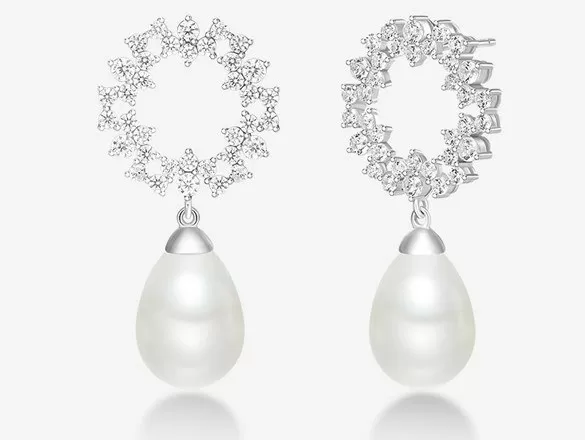
Earrings
How to Stock Bridal Jewelry for Winter Weddings: Earrings, Metals and Closure Pieces
Winter brides do not shop the same jewelry as summer brides. Long sleeves, high necklines, updos and heavier veils change what reads well, and a boutique that stocks its case the same way in November as in June leaves sales on the table. The seasonal shift is most visible in earrings.
Updos open the earring silhouette
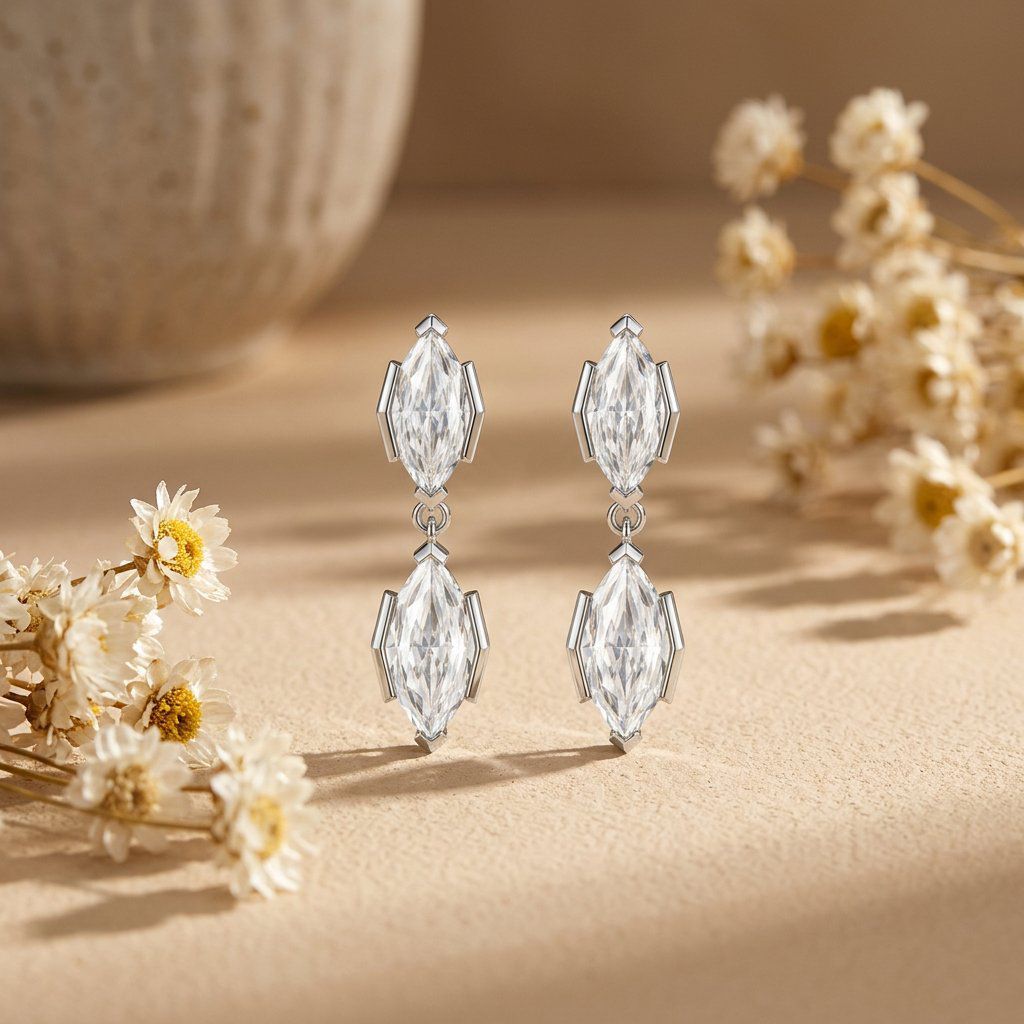
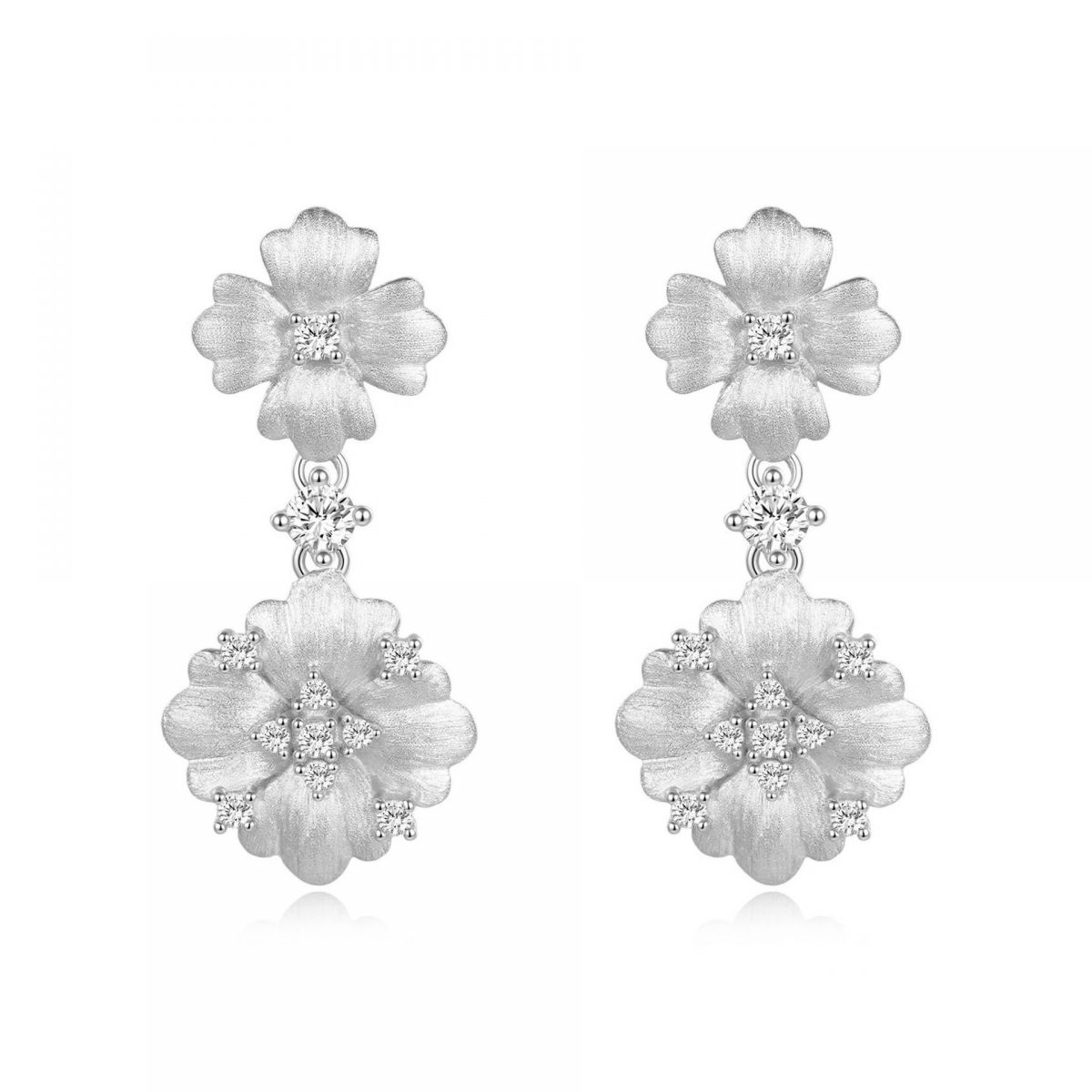
Winter brides wear their hair up more often: the coat collar, the veil comb and the photographer's request all push hair off the face. That opens the door to drop and chandelier earrings that would disappear under loose summer waves. Stock longer drops (4 to 7 centimeters) and light chandelier styles for the winter buy. The mistake to avoid is overbuying heavy chandeliers; winter gowns are often lace and beaded, and a 6-gram earring competes with the dress. Keep the drops under 4 grams.
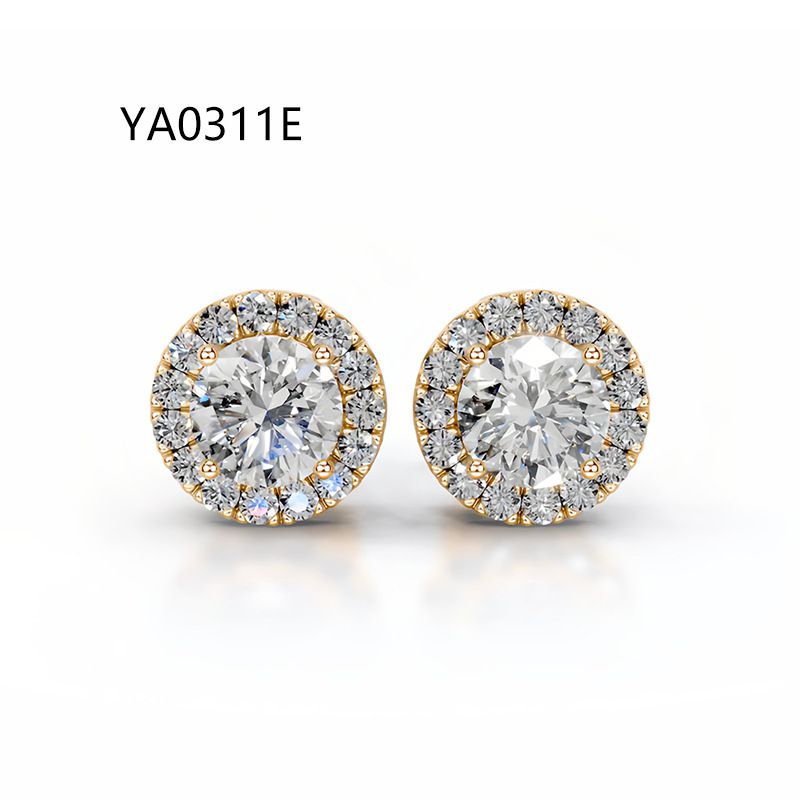
Studs still sell, but for winter they should read slightly larger. A 6-millimeter moissanite stud that looks right on a summer bride looks small against a high winter neckline. Size up to 7 or 8 millimeters for the winter stud display.
Veil-safe hooks matter more in winter
Winter veils tend to be longer and heavier, often attached to a comb that sits near the ear. Ear wires with large curves catch the comb. Stock post backs and close-set wires for the winter buy, and pull the long-hook styles from the front display. This is a small change but it removes a real objection at the counter.
White metals win in winter, but warm accents still sell
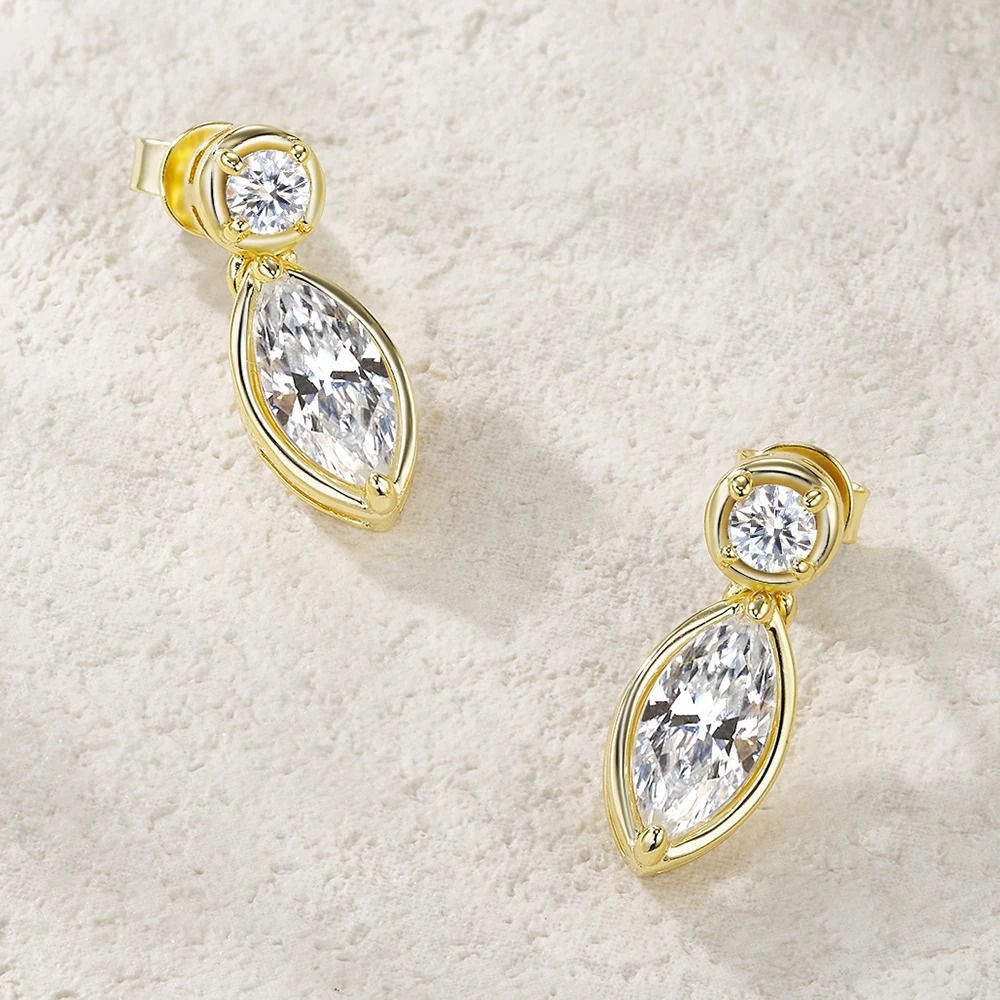
Pearl, ivory and velvet winter palettes push clients toward white gold and platinum. Allocate roughly 60 percent of your winter earring stock to white metal. Do not drop warm tones entirely: a small rose gold drop reads beautifully against a deep green or burgundy bridesmaid palette, and it gives the bride who wants warmth a home. Keep yellow gold for the reception-only earring (a second pair she changes into after the ceremony).
Closure pieces for long-sleeve gowns
Long sleeves mean bracelets are hidden during the ceremony, so winter brides buy bracelets to wear to the reception and to the rehearsal dinner. Stock slimmer, lighter tennis bracelets and bangles that slide under a cuff rather than over a hand. The winter buyer is not looking for a statement cuff; she is looking for something she can wear with a knit sweater afterward.
Necklaces shift too. High lace necklines mean front pendants disappear, so stock a small selection of collar-length pieces and back-drape necklaces for the winter buy. These are low-volume but high-ticket, and they make the boutique look thoughtful.
Timing the winter buy
Winter weddings run November through February. Your order should land in the shop by mid-September, because brides book their jewelry two to three months ahead. If you reorder in November, you have missed the booking window for December weddings. Plan the winter buy in July, place it in August, and refresh the display by mid-September.
Winter stocking checklist
- Long light drops (4 to 7cm, under 4g) in white metal.
- Slightly larger studs (7 to 8mm) for high necklines.
- Post backs and close-set wires, not large hooks.
- Slim bracelets that slide under cuffs.
- A small collar or back-drape section for high-neck gowns.
- Reorder deadline set for early August, not November.
Market the winter case as a separate edit
When the winter stock lands, do not mix it into the permanent case. Pull a small corner of the shop, call it the winter edit, and style it with a velvet bust, a sprig of greenery and a short explanation of why these pieces work with long sleeves and updos. Clients respond to a curated seasonal edit far more than to a full case refresh, and it gives your staff a story to tell on social channels. One short Reel of the winter edit, posted in early October, usually books more winter appointments than a month of general bridal posts. Tag local wedding venues and ask them to share; most will repost a seasonal edit because it makes their own feeds look current.
Do not forget the bridesmaid angle. Winter brides buy gifts for their attendants, and small stud earrings in a matching box are the easiest add-on sale of the season. Keep a tray of budget studs (under $60 retail) near the winter edit so the bride can pick them up in the same appointment. That tray alone often covers the cost of the winter buy, and it gives the bridesmaids a reason to walk into the shop themselves later, when they are shopping for their own events.
Stocking winter bridal is a different category than summer bridal. Match the silhouettes to updos and long sleeves, lean white metals, and order early this season. More seasonal assortments in our winter earring line.
For third-party reference, the Wikipedia article on moissanite details moissanite’s discovery, optical properties and use in jewelry.
Frequently Asked Questions
What ring sizes can you supply in bulk?
US sizes 5–12 including half sizes. Send a size breakdown with your order and we cast to that curve; comfort-fit inner bands reduce resize requests.
Can I order a mixed size run instead of one size?
Yes. Mixed runs are standard for wholesale: specify quantity per size and we pack and label by size at no extra labor cost.
What is the MOQ for custom ring designs?
50 pieces per design for existing molds; 100–300 pieces when a new mold or CAD model is required.
How should I price rings for retail margin?
Most partners use a 3–4x markup on FOB cost for sterling and 2.5–3x for moissanite solos, which keeps landed cost under 30% of retail.
Send your spec sheet — stone, cut, size, plating and quantity — and we will return a costed timeline.
Ask the workshop