Bridal Sets
Notched and Contour Wedding Bands: Getting a Flush Bridal Set Fit
Walk into any bridal appointment and sooner or later a bride will hold two rings together, squint, and ask why there is a visible gap between her engagement ring and the band she loves. The answer is almost always the same: a straight band was never shaped to nest against her specific setting. The fix is a notched, curved, or contour wedding band.
When you actually need a shaped band
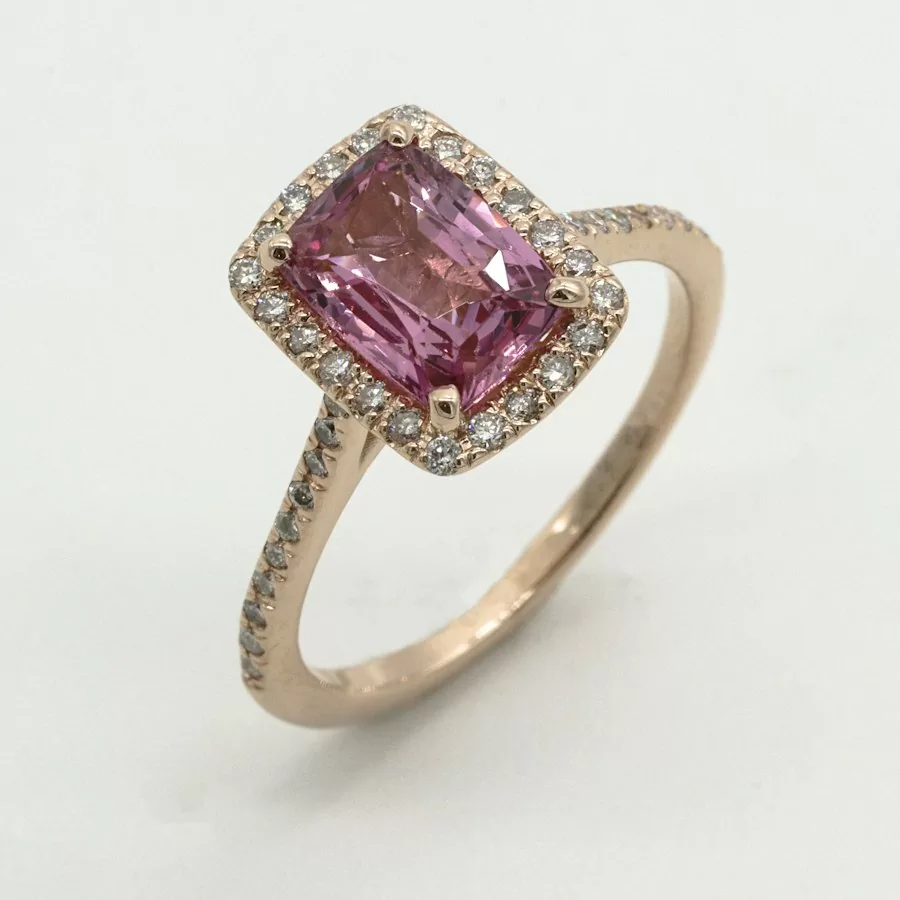
A plain straight band works perfectly against a simple solitaire with a low, flat profile. The moment the engagement ring has a raised halo, cathedral shoulders, side stones, or a thick bezel, a straight band will tilt or leave a wedge-shaped gap. If the bride wants the two rings to sit as one seamless set, a shaped band is the cleanest solution rather than forcing a compromise.
The three main shapes
A contour or curved band gently arcs up on one side to follow the ring's silhouette. A notched band has a small cutout or dip that clears a specific feature, such as a halo edge or a cluster of side stones. A V-shaped or chevron band angles to nest beneath a pointed setting like a pear or marquise. The choice depends entirely on the geometry of the engagement ring, which is why measuring the existing setting matters. Our guide to bridal set sizing and stacking conflicts covers how finger width changes the fit.
To gap or not to gap
Not every bride needs a perfect flush. Some couples intentionally embrace a small space between the rings, and that is a legitimate stylistic choice. The conversation starts with how the client wants it to look on the hand. A contour band leans into a tailored, matched-set feel; a straight band with a deliberate gap reads more layered and modern. Present both so the decision is conscious.
Sizing and soldering
Because shaped bands are cut to match a specific ring, they should be sized and fitted together, not separately. Many couples choose to solder the two rings permanently so they never rotate or rub, a decision we explore in wedding band soldering pros and cons. If they prefer to keep the rings separate for everyday flexibility, the contour shape still reduces movement and friction between the two pieces.
Stones versus plain
Contour bands can be plain metal or carry a half-eternity or pavé row that mirrors the engagement ring. A thin pavé contour is the classic bridal-set upgrade, while a plain metal contour keeps the look minimal and lets the center stone dominate. For clients weighing the longevity of a stone row, review eternity band considerations, since a fully stone-wrapped band is harder to resize than a half set.
What retailers should stock
Keep a small, flexible range: one plain curved band in white gold, one pavé curved band, and one V-shaped chevron that works for pointed center stones. Because shaped bands are custom-adjacent, offering a made-to-order option alongside ready-to-wear stock captures clients whose setting is unusual. When you solve the gap problem cleanly, the bridal set stops being a compromise and starts feeling designed.
Measuring before you order
The shaped band cannot be guessed from a photo. The jeweler needs the actual engagement ring on hand to trace its profile, measure the height of the halo, and check where the band would collide. If the ring cannot be brought in, detailed photographs from the side and top, plus the ring's known width, allow a close approximation, but a final fitting should still happen before soldering. This step is worth scheduling because a band ordered to the wrong contour will leave the same gap the bride was trying to remove. Finger size must also be confirmed on the full set, since stacking two rings changes how the combination feels on the knuckle.
Custom versus ready-made
Ready-made contour bands cover the most common halo and cathedral shapes, but unusually thick bezels or asymmetrical settings often need a custom cut. Position custom contour work as a small-batch service rather than a huge expense: the design challenge is modest, and the result is a bridal set that looks intentionally matched. Retailers who offer both an off-the-shelf curved band and a made-to-order notch option capture the price-sensitive and the particular bride in the same appointment. The payoff is a customer whose rings finally sit the way she imagined, which is the whole point of a bridal set.
Once the two rings sit flush, the difference is immediately obvious: the set reads as designed rather than assembled. That satisfaction is what turns a one-time band purchase into a client who trusts you with anniversaries, gifts, and future generations.
The Wikipedia entry on engagement rings gives an independent overview of engagement ring traditions and settings.
Frequently Asked Questions
What ring sizes can you supply in bulk?
US sizes 5–12 including half sizes. Send a size breakdown with your order and we cast to that curve; comfort-fit inner bands reduce resize requests.
Can I order a mixed size run instead of one size?
Yes. Mixed runs are standard for wholesale: specify quantity per size and we pack and label by size at no extra labor cost.
What is the MOQ for custom ring designs?
50 pieces per design for existing molds; 100–300 pieces when a new mold or CAD model is required.
How should I price rings for retail margin?
Most partners use a 3–4x markup on FOB cost for sterling and 2.5–3x for moissanite solos, which keeps landed cost under 30% of retail.
Send your spec sheet — stone, cut, size, plating and quantity — and we will return a costed timeline.
Ask the workshop